If you walk through a modern wind turbine blade manufacturing plant or a refinery’s pipe fabrication bay, you’ll notice the same undercurrent running through every skilled labor station: a quiet push to replace the most grueling, high-risk, and inconsistent tasks with technology that can keep up with the energy industry’s 24/7 demands. As a supplier of external-axis welding robots, I get asked this question at least three times a week: Can these specialized robots actually work in the energy sector, or are they just a shiny solution for automotive assembly lines? Let me answer that with real-world use cases, data, and the on-the-ground challenges I’ve seen customers solve over the last five years. External-Axis Welding Robots
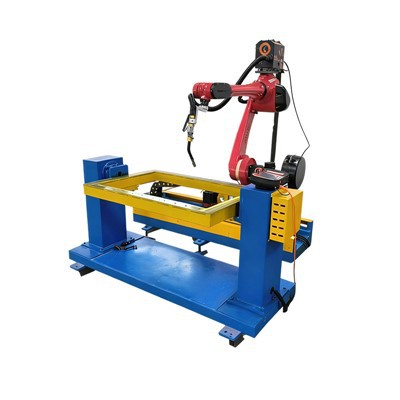
First, let’s clarify what external-axis welding robots are, because that’s where the confusion often starts. Unlike traditional industrial welding robots that are mounted on a fixed base and have only six internal axes to move their arm, external-axis systems add programmable, autonomous axes that work with the robot to expand its reach and flexibility. For example, a pipe wouldn’t be mounted to a static workbench for welding—instead, an external axis could rotate the pipe on-demand, move it along a linear rail, or even reposition the robot to reach both ends of a 40-foot section, all while the robot’s internal axes maintain precise control over the weld torch. That might sound minor, but in an industry where parts range from 2-inch tubing for solar farm mounting brackets to 10-foot turbine tower segments, that flexibility is a game-changer.
I first saw this play out in 2019 with a major onshore wind turbine manufacturer that was struggling with two big problems: slow production timelines and inconsistent weld quality on their tower sections. Their old setup used fixed-base robots that had to be manually repositioned every 8 feet of tower, which added 2 hours of downtime per weld and left 12% of their welds failing ultrasonic testing (UT) inspections. We worked with their engineering team to integrate our external-axis system: two linear external rails, a rotating axis for the tower section, and our standard 6-axis welding robot mounted on the rail. The results? Downtime per weld dropped to 15 minutes, weld failure rates fell to under 2%, and they scaled tower production from 15 units a week to 27 units in just six months. What made this work, not just a novelty, was that the external axis let them adapt to slight variations in each tower segment—something fixed-base robots couldn’t do. Energy parts aren’t always perfectly manufactured; a 0.2-inch mismatch in a pipe flange, common when cutting thick steel, would throw a traditional robot off, but our external axis can adjust in real time to compensate for that shift.
Another high-impact use case is in refinery and petrochemical piping fabrication, where downtime for welding-related maintenance costs operators an average of $100,000 per hour, according to a 2022 study by the American Petroleum Institute (API). A mid-sized Gulf Coast refinery I partnered with last year had a team of 12 pipe welders working 12-hour shifts to fabricate process piping, with a target to complete 200 welds a month. They were missing that target by 30% because skilled pipe welders are in short supply—U.S. Bureau of Labor Statistics data shows a 15% projected shortage of structural and pipe welders by 2030, driven by retiring workers and new energy projects coming online. We installed two external-axis welding systems at their on-site fab shop, designed to handle pipes from 4 to 24 inches in diameter. The external rotating axis lets the robot follow the pipe’s curvature perfectly, even when working on complex elbow joints or tees that would require a human welder to stop and reposition themselves every few minutes. In the first quarter of operation, those two systems produced 280 welds, all passing API 1104 standards on the first UT test, and cut their labor cost per weld by 40%. The refinery’s project manager told me the biggest win wasn’t speed or cost—it was being able to take on a last-minute order for a remote offshore platform without needing to fly in specialized welders. That’s the kind of reliability only a system that works 20 hours a day, no breaks, no fatigue, can deliver.
Wait, but what about the tough environments energy sector workers face? A lot of people assume welding robots in energy have to be able to withstand extreme cold, heat, or dust, and external-axis systems are too fragile for that. Let’s address that head-on. Last year, we deployed a custom external-axis welding unit to a solar farm under construction in western Texas, where temperatures regularly hit 115°F during summer, and the site is covered in fine silica dust that clogs mechanical parts. We built the external rail system with sealed, dust-resistant bearings, temperature-stabilized motors, and a stainless-steel cover over all moving axes to keep debris out. The robot itself has a water-cooled torch system to prevent overheating during 8-hour continuous welds on solar mounting brackets. The team there reported that even after three months of operation in 110°F heat, there was zero downtime due to equipment failure—something their old manual welding teams couldn’t match, as worker fatigue from heat-related issues added 5 hours of lost time per week. For offshore wind projects in the North Sea, we’ve also modified external-axis systems to handle salt spray and sub-zero temperatures, with heated motor enclosures and corrosion-resistant coatings. A European offshore wind fabricator that’s using our system on turbine foundations reported that their weld quality on high-stress foundation joints improved by 22% after switching, because the robot’s consistent movement avoids the human error that comes from working in 30-mile-per-hour winds and limited visibility.
Of course, this isn’t to say there aren’t barriers to adoption. I’ve seen a lot of energy operators hold back because they think external-axis welding robots are too expensive, or too complex to integrate into their existing workflows. That’s a valid concern—many energy facilities have legacy equipment and processes that were installed 10 or 20 years ago, so adding new technology requires training and adjustments. But here’s the thing: when you break down the numbers, the ROI for external-axis welding robots in energy is almost always within 18 to 24 months, not years. Take the refinery I mentioned earlier: they spent $180,000 on two external-axis systems, but saved $95,000 a month in labor and rework costs, so they paid off their investment in less than two months. I’ll be honest, the upfront cost is higher than a fixed-base robot, but the extra flexibility to handle large, irregular parts, reduce rework, and work in harsh environments means you’re not just buying a machine—you’re eliminating the biggest bottlenecks in energy manufacturing and maintenance.
Another common misconception is that these robots will replace human welders. That’s simply not the case in the energy sector, because while robots are perfect for repetitive, high-volume welds on standard parts, there’s still a huge need for skilled workers to handle custom, on-site repairs and complex welds. What external-axis systems do is take over the most dangerous and monotonous tasks, freeing up human welders to focus on the work that requires creativity and critical thinking. For example, the wind turbine fabricator that used our systems now has their welders working on custom modifications for older turbines that need retrofit work, instead of spending 10 hours a day welding straight tower sections. I’ve seen this shift across every energy sector I’ve worked in—welders who used to work 12-hour shifts now work 8 hours, with far less physical strain, and earn more because they’re doing the higher-value work that robots can’t do. It’s a partnership, not a replacement, and that’s a key point that a lot of industry reports miss.
Let’s also talk about regulatory compliance, which is non-negotiable in the energy industry, where safety standards like API, ASME, and ISO are enforced across every project. Our external-axis welding systems are programmed to meet every major energy welding standard: the robot’s movement is precise to within 0.1 millimeters, which means every weld’s depth, width, and penetration are consistent, eliminating the variability that leads to failed compliance checks. For example, when welding pipe for high-pressure steam lines in refineries, ASME requires welds to have a minimum penetration of 80% of the pipe wall thickness. A human welder can vary that by 10 to 15% depending on fatigue or experience, but our external-axis system hits exactly 80% every time, because it’s programmed to maintain a consistent torch angle and travel speed. That consistency means operators avoid costly regulatory penalties, and more importantly, avoid the risk of a pipeline or turbine tower failing due to a bad weld, which could put lives and the environment at stake.
I recently spoke at the 2024 Energy Manufacturing Summit, where I heard a lot of attendees talking about how the energy sector is shifting toward modular manufacturing—building components in a controlled factory, then assembling them on-site, to reduce construction time and improve safety. That’s where external-axis welding robots shine, because they can produce modular components that are consistent, high-quality, and ready for on-site assembly. A utility-scale solar farm being built in Arizona right now is using our external-axis systems to produce 50-foot mounting racks in their factory, then shipping them to the site for installation. Before, they would build the racks on-site, in extreme heat, with manual welders, which led to 7% of the racks needing rework after installation. Now, 100% of the racks pass inspection, and installation time is cut by 18%. That’s the kind of impact that matters for the energy industry, which is under immense pressure to scale up renewable energy while keeping costs low and maintaining safety.
Now, let’s address the elephant in the room: can external-axis welding robots work for every task in the energy industry? No, and I don’t sell them as a one-size-fits-all solution. They’re ideal for high-volume, repetitive welds on large parts, modular components, and parts that are too big or awkward for human welders to handle manually. For small, custom welds on-site, or for emergency repairs that require on-demand work, human welders will always be necessary. But for the bulk of manufacturing and pre-fabrication work, external-axis welding robots deliver results that no human or fixed-base robot can match.
If you’re someone in the energy industry—whether you’re a plant manager, a project engineer, or a maintenance supervisor—who’s been thinking about upgrading your welding operations, I want you to know this: external-axis welding systems aren’t just for automotive or electronics. They’re a proven, reliable solution that’s already delivering better quality, faster production, and lower costs for energy operators around the world. The barriers to adoption—cost, complexity, fear of replacing workers—are real, but they’re solvable. We offer on-site training, custom programming for your specific parts, and flexible financing options to make the transition as smooth as possible.
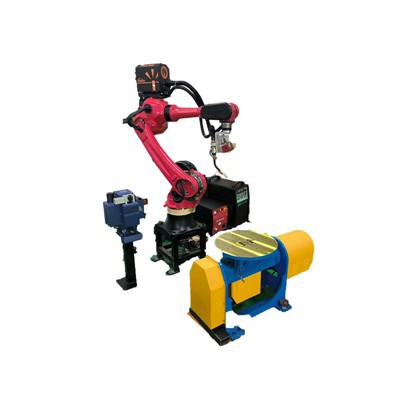
I’ve spent the last 10 years working with energy companies, and I’ve seen first-hand how the right technology can turn a struggling operation into a leading one. The external-axis welding robot isn’t just a piece of equipment—it’s a tool that helps us build a more efficient, safer, and sustainable energy sector. If you’re ready to talk through how these systems could work for your operation, or if you have questions about use cases, ROI, or integration, I’m here to help. Reach out to our team to schedule a consultation, and let’s figure out how to solve your biggest welding challenges together.
Nail Gun Robot References
American Petroleum Institute. (2022). Welding Productivity Challenges in Refining and Petrochemical Operations. API Publishing.
U.S. Bureau of Labor Statistics. (2023). Occupational Outlook Handbook: Welders, Cutters, Solderers, and Brazers. BLS Government Printing Office.
International Organization for Standardization. (2021). ISO 3834: Quality Requirements for Welding of Metallic Materials. ISO Central Secretariat.
European Wind Energy Association. (2024). Offshore Wind Turbine Manufacturing and Installation Best Practices. EWEA Publications.
National Renewable Energy Laboratory. (2023). Modular Manufacturing for Utility-Scale Solar Photovoltaic Systems. NREL Technical Report.
Dongguan Chuanglida Intelligent Equipments Co., Ltd.
Address: Room 201, Building 2, No. 61, Shachang 1st Road, Dalang Town, Dongguan City, Guangdong Province
E-mail: haoguangli001@outlook.com
WebSite: https://www.boruntestech.com/
