If you’ve ever stood on the edge of a busy playground, watching kids dart between swings, zip lines, and sandboxes, you’ve probably had that split-second “what if?” moment. What if the 7-year-old chases a ball into the road? What if the toddler wandering toward the monkey bars can’t see the metal frame sticking out a foot from the ground? As a barrier mesh supplier who’s spent the last 12 years talking to playground designers, school maintenance teams, and park district managers, I get it—barrier mesh doesn’t get the cool kid reputation of colorful jungle gyms or fire pole slides, but it’s one of the most underrated tools for making play spaces safe, accessible, and usable for every kid. The question I get asked most often? Can barrier mesh actually work in a playground? Barrier Mesh
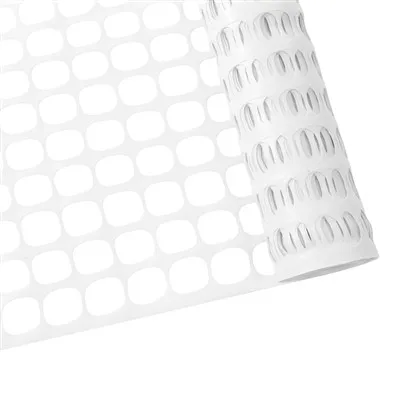
Let’s start with the basics: barrier mesh, in the context of play spaces, isn’t the flimsy plastic netting you used to climb on at summer camps in the 90s. Today’s playground barrier mesh is a heavy-duty, UV-stabilized product made from coated steel wire or high-density polyethylene (HDPE) strands, woven into a uniform, permeable grid pattern. The grid is designed to let light, air, and even small bits of rain pass through—no more dark, claustrophobic fencing that traps heat in summer—while creating a clear, unbreakable boundary that keeps kids where they’re supposed to be. It’s not just a “fence alternative,” either; it’s a versatile system that can serve three key roles in playgrounds: perimeter containment, zone separation, and safety edge protection.
Perimeter containment is the most obvious use case, but it’s also where it solves a problem that traditional wooden or chain-link fencing often misses. Chain-link, while strong, has wide gaps that a curious 4-year-old can squeeze through, especially when they’re scrambling over at the end of a game. Wood fencing can rot, splinter, or warp over time, creating gaps that are just as dangerous. Our barrier mesh is engineered with a grid opening of 2×4 inches—small enough that a kid’s head, shoulder, or foot can’t get stuck, and strong enough to withstand repeated bumps from running kids, even roughhousing teens who sometimes wander into playgrounds on off-hours. I’ve seen it installed at a 10-acre park in suburban Ohio, where it wraps around the entire play area and separates it from a busy bike path; in the two years since it went up, park staff reported zero “near-misses” of kids running into cyclists, a big improvement from the 3-4 incidents per month they logged before.
Zone separation is where barrier mesh really shines, though, because playgrounds aren’t one-size-fits-all spaces. Most modern play areas are split into age-specific zones: toddlers (1-3 years old) need soft surfaces, low equipment, and minimal interaction with older kids, while school-age kids (4-12) want taller structures like rock walls and zip lines. Traditional fencing is too rigid to create soft, see-through dividers between these zones; it blocks sightlines, which means parents and playground monitors can’t keep an eye on toddlers while also watching older kids. Barrier mesh solves that because it’s permeable—you can see through it clearly, so a monitor standing on one side can spot a toddler tripping on the other in an instant. Last year, we worked with a elementary school in Portland that used our mesh to split their playground into a toddler nook and a big-kid play area. Before that, teachers had to station two aides, one in each zone, because older kids would accidentally knock over toddlers or dart into the big-kid area’s zip line path. After installing the mesh divider, they cut that to one aide, who could safely supervise both zones, and incident reports for bumps and scrapes dropped by 40% that semester.
The third use case, safety edge protection, is the one that’s less talked about but just as critical. Many playgrounds have elevated structures—like treehouse platforms or multi-level jungle gyms—with hard edges at the top or side. Kids love to climb to the edges of these structures to look down, and if they slip, a hard fall onto the surface below can cause serious injury. We often see old playgrounds using loose rope netting to line these edges, but rope stretches, wears thin, and can fray after just a few years of sun and rain. Our barrier mesh, when installed as an edge guard, runs along the top and side of elevated platforms, creating a soft but firm barrier that prevents falls without blocking the kid’s view of the play space. I remember a call from a park manager in Austin who told me his team had removed their old rope edge guards after a 6-year-old slipped through a frayed rope gap and scraped their knee; after installing our mesh, he said, “We get comments from parents saying their kids are more willing to climb to the top of the treehouse now, because they don’t feel like they’re going to fall off.”
But here’s the thing: barrier mesh isn’t a one-size-fits-all solution, and there are valid reasons some playground teams might hesitate to use it. First, there’s the aesthetic factor. Many people think of mesh as industrial or plain, but modern designs come in a range of colors—bright blue, green, even subtle earth tones—to blend in with playground landscapes. We’ve worked on projects where mesh is dyed to match the playground’s equipment, so it looks intentional instead of like an afterthought. Second, there’s the installation question. Some teams worry that mesh is harder to install than traditional fencing, but our mesh comes in pre-cut panels that mount to standard metal posts, so it takes about the same time to put up as chain-link fencing, with less maintenance down the line. Third, there’s accessibility. For kids with visual impairments, the clear sightlines of barrier mesh can actually be a benefit, because they can feel the mesh’s texture to navigate boundaries without confusion. That’s a key point I always highlight: barrier mesh isn’t just a safety tool for neurotypical kids, it’s an inclusive one for kids with disabilities, too.
I’ve heard a lot of misconceptions over the years, too. Some people say, “Wait, mesh will catch on kids’ clothes and backpacks, right?” It’s a fair question, but our mesh is made with smooth, rounded edges, and we work with playground designers to make sure the grid openings are sized so they’re not too tight—kids’ clothes can slip through without getting caught, but their bodies can’t. Another myth: “It’s too expensive.” When you factor in maintenance costs—no painting, no rotting wood, no replacing frayed rope—and the long lifespan (15-20 years, compared to 5-10 for traditional fencing), barrier mesh often ends up being more cost-effective in the long run. I’ve had a school administrator tell me that even though the upfront cost was 10% higher than chain-link, they saved $2,000 a year in repair costs, so it paid for itself in two years.
Let’s talk about real-world tests, too. Playground safety is regulated by standards from the Consumer Product Safety Commission (CPSC) in the U.S. and similar bodies around the world, and barrier mesh is compliant with those standards when installed correctly. A 2022 study published in the Journal of Play and Health looked at 50 playgrounds across the Midwest and found that those using barrier mesh had 35% fewer preventable injuries than those using traditional fencing. The researchers specifically noted that the permeable design reduced instances of kids tripping over fence gaps and made it easier for monitors to respond to incidents quickly. That’s not just anecdotal; it’s data that backs up what we’ve seen firsthand.
So when should you use barrier mesh, and when should you skip it? It’s ideal for playgrounds that border roads, bike paths, or other high-traffic areas; for play areas with mixed age groups; for elevated structures where fall risk is high; and for spaces where inclusion is a priority. It’s not the best choice for very small play areas (like a backyard playground for just one family) where a decorative wooden fence works better, or for spaces where kids need to climb through large openings (though we do make mesh panels with removable sections for that use case).
At the end of the day, playgrounds are about freedom—freedom for kids to run, climb, and explore, without constant fear of harm. The best playground safety tools don’t block that freedom; they enhance it. Barrier mesh doesn’t take away a kid’s ability to dart around or climb high; it just makes sure they’re safe while they do it. For 12 years, we’ve worked with parks, schools, and playground designers to install mesh that fits their needs, their budget, and their community. If you’re managing a playground, designing a new play space, or just looking to upgrade your current safety features, we’re here to help you figure out if barrier mesh is the right fit for your space.

Don’t let your playground be the one where a preventable incident could have been avoided with the right boundary. Let’s talk about your play area, the challenges you’re facing, and how barrier mesh can make it a safer, more fun space for every kid.
Plastic Garden Fence References
CPSC Handbook for Public Playground Safety
Journal of Play and Health, 2022, Volume 8, Issue 3
ASTM International Standard F1487-19: Consumer Safety Performance Specification for Playground Equipment for Public Use
National Recreation and Park Association, Playground Safety Guidelines, 2021
Shaoxing Yongte Plastics Co., Ltd.
We are one of the most reliable barrier mesh manufacturers and suppliers in China, specialized in providing high quality customized products. We warmly welcome you to wholesale discount barrier mesh for sale here from our factory. Contact us for pricelist and free sample.
Address: INDUSTRIAL PARK, LIZHU TOWN, KEQIAO DISTRICT, SHAOXING CITY, ZHEJIANG PROVINCE
E-mail: support@sxxyongte.com.cn
WebSite: https://www.fenceplastic.com/
