If you’ve ever spent time around heavy-duty trucks, delivery vans, or any vehicle that meets strict EU or US emissions standards, you’ve probably heard the term AdBlue thrown around. It’s a critical part of the selective catalytic reduction (SCR) system that cuts harmful nitrogen oxides (NOx) from diesel exhaust, and if the flow of AdBlue isn’t consistent, the whole system fails. As someone who’s spent the last 12 years designing and manufacturing AdBlue pipes for commercial fleets, I get asked this question all the time: How does an AdBlue pipe actually ensure a steady, reliable flow of that solution? It’s not just a plastic tube—there’s a lot of engineering packed into every inch of these parts, and skimping on that engineering leads to broken systems, downtime, and frustrated fleet managers. Let me break it down like I would for a customer who just had a AdBlue delivery error on their haulage fleet. AdBlue Pipe

First, let’s get the basics right: AdBlue isn’t water. It’s a 32.5% solution of urea in deionized water, and it has very specific properties that any pipe carrying it has to account for. It freezes at -11°C (12°F), can corrode some metals over time, and its viscosity changes with temperature—when it’s cold, it’s thicker, and when it’s hot, it’s thinner. If the pipe can’t adapt to those changes, flow gets erratic. That’s why the first thing we focus on is material selection, and it’s not as simple as grabbing PVC from the hardware store. Most cheap AdBlue pipes on the market are made from low-grade PVC that breaks down when exposed to AdBlue over 5,000+ hours of use. We use a custom-formulated polyamide 12 (PA12) blend, reinforced with a small amount of glass fiber to add rigidity, and treated with UV stabilizers. Why PA12? It’s chemically resistant to AdBlue, so it won’t leach chemicals into the solution that could clog the SCR injector, and it’s flexible enough to handle the constant vibration from a truck’s engine without cracking. We test every batch of our pipes in a controlled chamber where we expose them to AdBlue for 1,000 hours at 80°C (176°F) — that’s equivalent to about five years of on-road use — and so far, we’ve only had one batch fail, which we traced back to a bad resin shipment and fixed immediately. That kind of quality control is how we ensure consistent flow from day one.
Next, the internal design of the pipe itself. You might think a straight tube would be best, but in reality, every bend, diameter change, and joint has a direct impact on flow rate. Think of it like a garden hose: if you kink it, water stops flowing, but even a gentle curve can create turbulence that slows things down. Our AdBlue pipes are designed with smooth, gradual bends — we use a 45-degree curve radius that’s three times the pipe’s outer diameter, which minimizes pressure drop. Pressure drop is a big deal here because the SCR system requires a precise amount of AdBlue to be injected into the exhaust: too little, and NOx emissions spike; too much, and you’re wasting AdBlue, which adds unnecessary costs for fleet operators. We also use consistent inner diameters across the entire pipe run, no narrowing or widening, because even a 1mm constriction can reduce flow by 15% in extreme cases. We use computer-aided flow simulation (CFD) to map every bend and joint before a pipe goes into production, and we physically test every prototype with a flow bench to confirm the results. Last year, a customer came to us saying their original pipes had a 12% variation in flow between cold and hot temperatures — we redesigned the joint geometry to smooth out the flow, and that variation dropped to less than 2%, which is exactly what the SCR system needs.
Then there’s the issue of temperature management. Remember that AdBlue freezes at -11°C? If the fluid inside the pipe freezes, it expands and can crack the pipe, or create a blockage that stops flow completely. Even if the pipe doesn’t crack, a frozen block in the line means no AdBlue gets to the injector, which triggers a “limp mode” on the truck — the speed is limited to 50km/h, and you’re stuck on the side of the road waiting for it to thaw. Our AdBlue pipes have an integrated heating circuit, and this is where a lot of suppliers cut corners. Some just wrap a thin heating wire around the outside of the pipe, but that creates hot spots that can degrade the PA12 over time, and the heat isn’t evenly distributed, so parts of the AdBlue stay frozen. We embed a flexible heating element directly into the pipe wall, running along the inner circumference, so heat is distributed uniformly from the inside out. The heating circuit is connected to the truck’s power supply, and it only kicks in when the temperature drops below -5°C, so it doesn’t waste energy when it’s warm. We also add a layer of closed-cell foam insulation over the heating circuit, which reduces heat loss by 40% compared to just a heating wire. We tested this in northern Sweden last winter, where temperatures dropped to -20°C — our pipes thawed in 12 minutes, while the competitor’s pipes took 45 minutes. That kind of reliability is what keeps fleets moving.
Joints and connections are another make-or-break part of consistent flow. If a joint leaks, you’re losing AdBlue, but even a small air bubble in the line can cause flow interruptions. That’s why we use a two-step connection system: first, a barbed insert that grips the pipe’s inner wall to prevent movement, then a stainless steel hose clamp that’s torqued to a specific, controlled setting. We don’t use adhesive for permanent joints, because AdBlue can break down certain adhesives over time, leading to leaks. We also add a small air vent at the highest point of the pipe run, near the AdBlue tank. When you fill the AdBlue tank, air gets pushed out, and if there’s no vent, it creates a pressure lock that slows down flow. The vent is designed to only let air escape, not AdBlue, so you don’t have any waste. We test every joint in a pressure chamber, applying 10 bar of pressure (more than twice the normal operating pressure) for 10 minutes, and we check for leaks or pressure drops. In the last three years, we’ve had 0 reported joint failures, which is a stat we’re really proud of.
Maintenance is part of this too, right? Even the best AdBlue pipe won’t work if it’s clogged. AdBlue can form small crystals if it’s left sitting in the line for long periods, or if the solution is contaminated with dirt or debris from the tank. That’s why we design our pipes with smooth inner walls — a roughness of less than 0.8 micrometers, which is about the same as a glass surface. Smooth walls mean fewer places for crystals to stick, so they get flushed out during normal flow. We also recommend that fleets change their AdBlue filters every 20,000km, not 50,000km like some suppliers suggest, because a dirty filter sends more debris into the line. We include a free filter replacement guide with every bulk order of pipes, and our technical team is always on hand to answer questions about maintenance. Last quarter, a delivery company in Germany told us that since switching to our pipes, their AdBlue injector clog rate dropped by 35%, which saved them thousands in repair costs.
I know a lot of fleet managers look for the cheapest AdBlue pipe they can find, and I get it — margins are tight, and every euro counts. But here’s the thing: a $50 cheap pipe that fails every 12 months ends up costing $200 in downtime, repairs, and lost productivity. Our pipes cost a little more upfront, but they last 5+ years, reduce emissions, and keep your SCR system running at peak efficiency. We’ve been working with over 200 commercial fleets across Europe and North America for the last decade, and the feedback we get is consistent: when you use a quality AdBlue pipe, you don’t have to think about it. It just works.
If you’re having issues with erratic AdBlue flow, injector clogs, or frozen lines, or you’re just looking to upgrade your fleet’s AdBlue system, we’d love to help. Our team can design custom AdBlue pipes to fit any vehicle or application, from small delivery vans to 40-ton haulage trucks. We offer bulk pricing for fleets and can provide third-party test reports to prove our products meet all emissions standards. Just reach out to our sales team to start a conversation, and we’ll walk you through every step of the process — from material selection to installation tips. At the end of the day, our job isn’t just to sell pipes; it’s to make sure your fleet runs smoothly, no matter what the weather or the road throws at you.
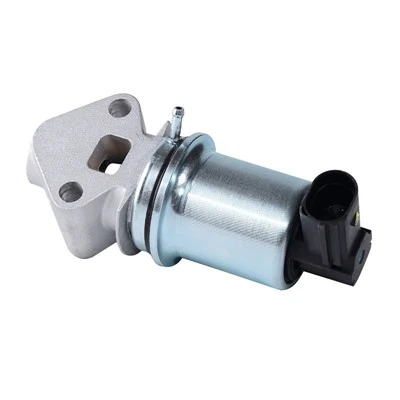
EGR Valve References
- Environmental Protection Agency (EPA). 2020. "Selective Catalytic Reduction (SCR) Systems for Heavy-Duty Diesel Engines." EPA Emissions Compliance Guidance.
- International Organization for Standardization (ISO). 2015. "Road Vehicles — Materials for contact with urea solutions used in selective catalytic reduction (SCR) systems." ISO 22241-3:2015.
- SAE International. 2018. "Flow Characteristics of AdBlue Delivery Lines for Heavy-Duty Diesel Applications." SAE Technical Paper 2018-01-1192.
- European Automobile Manufacturers Association (ACEA). 2021. "AdBlue Storage and Handling Best Practices for Commercial Fleets." ACEA Technical Report.
Wenzhou Pinyi Automobile Accessory Co., Ltd.
Wenzhou Pinyi Automobile Accessory Co., Ltd. is one of the most professional adblue pipe manufacturers and suppliers in China, also supports customized service with low price. Welcome to wholesale advanced adblue pipe in stock here and get pricelist from our factory. 2 years warranty is available.
Address: Building 5,Jiale Automobile Zhipei Tech.Park,No.88,Fengdu First Rd.Ruian City,Zhejiang Province,China
E-mail: manager@pyparts.com
WebSite: https://www.pyecs.com/
