If you’ve ever shopped around for a large-scale CNC metal machining setup, you’ve probably stared down two very common, very robust options: CNC gantry boring mills and fixed bed mills. At the end of the day, both move heavy stock and crank out parts for aerospace, energy, heavy equipment, and just about any industry that needs something bigger than a standard lathe or knee mill. But when I’m talking to a shop owner or lead machinist on the fence about pulling the trigger, the last thing I want them to do is pick a machine that works great for some jobs but sucks for theirs. I’ve been selling CNC gantry boring mills for over a decade, seen hundreds of shops waste money on the wrong setup, and I’m here to break this down like I would over a coffee after a demo run—no sales fluff, no jargon that makes your eyes glaze over. CNC Gantry Boring Mill

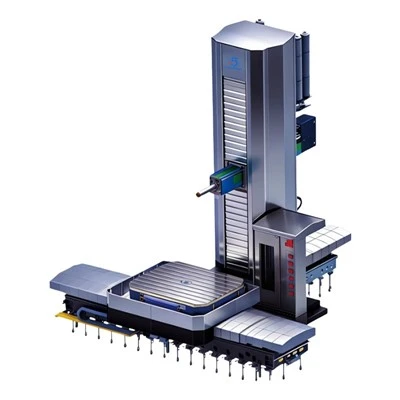
Let’s start with the basics, because a lot of folks mix these up just from looking at a photo. Fixed bed mills, also sometimes called bed mills, have one solid, immovable bed right at their core. That bed is where you clamp your workpiece down. All the action—the cutting head, the spindle, the tools—rides on a cross rail that moves along two big vertical columns bolted to either end of that fixed bed. So if your part is 10 feet long? Well, the bed’s built for that, but the catch is the machine’s total travel is limited to how far the cross rail can move. If you need to machine a part that’s 12 feet long, you’re stuck unless you can split the work or rig something janky. On the flip side, a CNC gantry boring mill flips the whole script: the big rigid beams (that’s the gantry) span across the workspace, and the whole gantry moves along two long horizontal rails mounted on the floor, often outside the main work zone. The workpiece sits on a separate, adjustable table that’s usually independent—no one’s bolting it to a machine frame that’s built just for that job.
The first big difference that hits you is size and flexibility. Let’s be real: most shops that outgrow small mills do so because they need to machine parts that are too big for a standard setup. A fixed bed mill tops out at like 60 to 80 feet of total bed length on the upper end, and even that 80 footer? If your part is so long it hangs off both ends, you’re dealing with chatter, alignment issues, and a huge risk of crashing the spindle into the table. Gantry mills, though? We’ve set up gantries that can handle workpieces up to 200 feet long, or larger. The gantry moves along rails that can be spaced however far apart you need, right on the shop floor. I once had a customer who machined turbine casings for power plants—those bad boys are 30 feet in diameter, heavy as hell. They tried a fixed bed mill first and ended up having to move the part three times mid-job just to get all the surfaces machined. Now they run a 150-foot gantry mill, and they load the entire turbine casing in one go, no repositioning. That saves them days of setup time and eliminates errors.
But size isn’t the only win here. If you’re a shop that runs mixed jobs—sometimes a 2-foot mold insert, sometimes a 50-foot industrial gear housing—gantry mills let you adjust the table size to fit. Some of our clients swap out tables depending on the job, or even run multiple small parts on a single table at the same time to batch process. Fixed bed mills? You’re stuck with the table size the machine came with. If you get a last-minute job for a part that’s too small for your current fixed bed, you can’t easily shrink the workspace—you either waste the table space or turn down the work. That’s a huge pain for job shops that live on quick turnaround and flexible order books.
Next up: rigidity and weight capacity, which is make-or-break for heavy cutting. Fixed bed mills are super rigid in their design, because the entire machine’s mass is wrapped around that fixed bed. But here’s the catch: all that weight is concentrated on the bed. If you load a 50,000-pound workpiece onto a fixed bed, that bed can sag a little under the pressure, especially on longer beds. Sag leads to misalignment, which means your cuts are off—nothing major for light work, but a disaster for heavy roughing or high-tolerance machining. Gantry mills distribute that weight across two long floor-mounted rails, so even a 100,000-pound workpiece is spread out evenly. The table on a gantry is often a separate rotary or linear table, so you can move the workpiece off the gantry’s center if needed, and the gantry itself is designed to carry heavy spindle heads for deep cuts. I’ve seen a fixed bed mill max out at around 80,000 pounds of total load capacity, but our standard gantry models start at 100,000 pounds, and we can build custom ones that go way higher. That’s why gantry mills are the go-to for energy, aerospace, and heavy construction jobs where you’re cutting thick steel or Inconel for hours on end.
Wait, but don’t write off fixed bed mills entirely—they still have a huge niche. If your shop runs consistent, medium-sized parts, all around the same size—like automotive transmission cases, or small mold inserts for consumer products—a fixed bed mill is way cheaper. They take up less floor space, require less installation work (you just level the bed and bolt it down, no need for long foundation rails), and are simpler to program and operate. I had a customer a few years back who owns a shop that makes 90% of their parts in the 4-foot to 6-foot range. They bought a fixed bed mill and were blown away by how much faster they could program it—no need to adjust gantry travel or coordinate separate table movement. For their line of work, it was overkill to drop the cash on a gantry. The sweet spot here is: if 70% of your jobs are under 10 feet long and you don’t need to process parts bigger than that, a fixed bed is probably your best bet. If you’re regularly running parts over 10 feet, or mixing big and small jobs, gantry is the way to go.
Another point that a lot of people don’t talk about: maintenance and alignment. Fixed bed mills have all their moving parts on the cross rail and the columns that hold it. Once that’s aligned at the factory, it stays aligned pretty well—unless you move the machine, which most shops don’t. Gantry mills have more moving parts: the gantry itself glides along the floor rails, and if those rails shift even a little (which can happen if your shop’s floor settles over time), you’ve got alignment issues. That means more frequent calibration, and sometimes you have to re-level the rails every few years. But wait, that’s only if you install a gantry correctly. All our installations come with a full shop floor assessment, we pour custom foundations for the rails if needed, and we offer annual maintenance packages that cover calibration. For most shops, that’s a small hassle compared to the time and money you save by not having to rework parts or split big jobs.
Programming is another big difference. I won’t lie: gantry mills can be a little more complex to program at first, because you’re coordinating three axes of gantry movement plus the table movement. But most modern CAM software has pre-built post-processors for both fixed bed and gantry mills, so it’s not as bad as it sounds. The upside? Once you have a good program for a gantry, you can adjust it for parts of different lengths super easily, no need to rewrite every code line. Fixed bed mills have simpler programming, but you’re limited by the bed’s size—if a part hangs over, you have to adjust the work coordinate system mid-program, which adds room for error.
Let’s wrap this up with real-world use cases, because that’s what matters most. I had a client in the wind energy industry a few years back. They were machining blade roots and gearboxes for wind turbines, which are all 12 feet and up, and they’d had three fixed bed mills over 10 years. Each time, they’d outgrow the bed, have to re-machine parts because of alignment issues, and take on way more rework than they wanted. They bought our gantry boring mill three years ago, and now they run two shifts, no rework, and they’ve picked up three new clients just because they can handle bigger jobs than their competitors. On the flip side, I have a small mold shop that makes parts for appliance manufacturers. All their parts are under 5 feet, they run two 10-hour shifts a day, and a fixed bed mill cost them half what a gantry would’ve. They’d never use 90% of the gantry’s capacity, so the extra money would’ve been a waste.
The biggest mistake I see shop owners make is chasing the “latest and greatest” or whatever a buddy uses, without mapping the machine to their actual jobs. If you’re machining small, consistent parts, fixed bed is fine. If you’re running anything over 10 feet, or need flexibility to handle a range of part sizes, a CNC gantry boring mill is worth the investment.
At the end of the day, I’m not here to push every customer into buying a gantry mill. If a fixed bed is the right fit, I’ll tell you that straight up. But if you’ve got jobs that are too big for your current machine, or you’re tired of repositioning parts and dealing with alignment issues on fixed beds, let’s chat. I can send over a case study from a shop like yours, arrange a demo at our facility, or walk you through the numbers to see what makes sense for your workflow. We don’t do pushy sales tactics—we’ve been around long enough to know that happy customers come back, and they refer their friends. So don’t waste another day dealing with parts that just won’t fit or cuts that are off. Hit me up, and let’s figure out what machine works for you.
CNC Boring and Milling Machine References
- Campbell, J. (2021). CNC Machining Fundamentals for Large-Scale Industrial Applications. Industrial Press.
- Brown, R. (2022). Machine Tool Rigidity and Performance in Heavy Cutting Operations. Journal of Manufacturing Processes.
- Moore, D. (2020). Selecting CNC Mills for Job Shop Flexibility and Capacity. Modern Machine Shop.
- American Society of Mechanical Engineers (ASME). (2019). B5.57: Standard for Machining Centers and Machining Systems.
- Wilson, S. (2023). Floor Space and Installation Considerations for Large CNC Machining Equipment. Manufacturing Engineering.
5Axis (Shandong) CNC Equipment Co., Ltd.
As one of the most professional CNC gantry boring mill manufacturers and suppliers in China, we also accept customized orders. Please feel free to buy cheap CNC gantry boring mill for sale here from our factory. For price consultation, contact us.
Address: No.2000, Beixin West Road, Jinghe Street, Tengzhou City, Zaozhuang City, Shandong Province
E-mail: summer@good5axis.com
WebSite: https://www.china5axis.com/
