If you’ve ever worked in stone fabrication, you know that stock abrasives rarely fit exactly what you’re building. Whether you’re honing a custom kitchen countertop edge, polishing a rare granite slab that no one else in your area has, or sanding a limestone fireplace that needs a specific satin finish instead of a glossy one, one-size-fits-all tools often fall short. That’s why so many fabricators, countertop installers, and stone restoration pros reach out to me as a Stone Cassani abrasive supplier with one core question: Does Stone Cassani actually make custom abrasive solutions, or are they just a big brand with generic stuff? Stone Cassani Abrasive

Let me cut right to the chase here: Yes, they do. But it’s not the kind of custom work you might be thinking of—no, you can’t call up and ask for a 2-inch disk with your shop logo printed on it (though they’ll add that as a bonus if you ask, it’s not the main part). The custom solutions here are rooted in the science of abrasives, which is way more nuanced than most people realize. For anyone who’s dealt with stone, you know that granite, quartzite, marble, limestone, and even engineered stone all act totally different under a grinder. If you use the same abrasive on a soft marble edge and a super dense quartzite slab, you’ll either gouge the marble or barely make a dent in the quartzite. Stone Cassani doesn’t just make disks—they engineer abrasives for specific stone types, thicknesses, and even finishing requirements, and that translates to fully customizable setups for projects that stock tools can’t handle.
I’ve been supplying Stone Cassani abrasives to stone shops for over 7 years now, and I’ve seen firsthand how their custom process works for every kind of job. Let’s break this down with real examples, not sales jargon. Last year, I had a regular customer who works on high-end residential remodels: they got a slab of Verde Peacock, which is a rare, deep green granite that’s way denser than standard granite. Stock 3-inch polishing disks left scratch lines that couldn’t be buffed out later—they were just too hard for generic abrasives to work with. The fabricator called me, and I put them in touch with Stone Cassani’s technical team. What happened next? They didn’t just send a different grit size. The Cassani team asked for specific details: the slab’s density rating (they use a simple test, not some super complicated lab thing), the type of grinder he uses (a handheld 7-inch variable speed, if you’re curious), the exact finish he wanted (a low-sheen matte, not a high polish), and even the amount of material he needed to remove to get a flat edge. Two weeks later, he got a custom set of abrasive pads: a bonded metal matrix first to take off the excess, then resin-bonded polishing pads infused with a specialty grain that’s sharper but not so sharp it scratches Verde Peacock. The result? He finished that project 3 days faster than he had on similar jobs with stock abrasives, and the customer didn’t have to re-sand any spots. That’s the kind of custom work that actually matters.
Another example: a commercial restoration company I work with does historic stone building repairs. Last month, they had to fix a 100-year-old limestone facade that’s soft, crumbly, and has delicate carved details. Generic diamond blades and disks were either removing too much stone (damaging the carvings) or not removing enough old grime and mortar. Stone Cassani’s custom solution here wasn’t just a different abrasive—it was a mix of a synthetic abrasive grain that’s softer than diamond, bonded in a way that wears down slowly, so they could work on the carvings without erasing the fine lines. They even adjusted the bond hardness based on how the limestone changed across different sections of the facade, since some parts were more weathered than others. That’s not a “custom grit” or a “custom size”—that’s a custom formula tailored to the exact material and job.
A lot of people ask me, “Why can’t I just mix different stock abrasives to get that same result?” And here’s the thing: abrasives are like baking a cake. If you mix flour, sugar, and eggs yourself, you might get something that works, but a professional recipe (or in this case, a custom abrasive formula) is calibrated for consistency. Stone Cassani’s technical team doesn’t just guess at the grain size or bond; they test small samples of your stone to make sure the abrasive will cut at the right rate. They also account for how your shop’s equipment works—if you run grinders at a higher speed than the average shop, they’ll adjust the abrasive to not overheat, which is a big issue for stone (overheating can cause cracks or discoloration).
Now, let’s talk about how the custom process works, because it’s not some complicated, impossible-to-navigate system. A lot of fabricators avoid custom solutions because they think it’s going to take forever or cost a fortune, but from what I’ve seen, it’s pretty straightforward. Here’s the step-by-step I walk every customer through when they want to set up a custom Stone Cassani order:
First, we gather the basics: what type of stone you’re working on, the project’s requirements (are you cutting, grinding, polishing, or repairing?), and the equipment you use. If you’re not sure, I can help you figure that out—most people don’t know their grinder’s speed or their stone’s exact density, but a 2-minute test or even a photo of the slab helps.
Next, Stone Cassani sends a small, free sample kit of test abrasives. No, that’s not a sales trick—they really will send a few tiny pads or disks so you can test them on a scrap piece of your stone before committing to a full order. I’ve never had a customer turn that down, and it saves them from wasting money on a custom order that doesn’t work.
Then, the team fine-tunes everything. If the test pads cut too fast, they adjust the bond to be a little harder. If they leave scratches, they change the grain size or type. It’s iterative, not a one-and-done deal, which means you end up with an abrasive that’s made exactly for your job, not a generic one off the shelf.
Finally, you get your custom order, and if you need tweaks later, it’s easy to circle back. I can’t tell you how many times a customer has called me 6 months later with a new stone type, and we loop in the same technical team to adjust a previous custom formula—no long wait times, no hoops to jump through.
I get why some people are skeptical about custom abrasives. A lot of brands out there will call something “custom” just because they change the size or put a different label on it, but Stone Cassani’s is different because it’s backed by their R&D, not just a marketing gimmick. I’ve had customers switch to Stone Cassani from other brands just for the custom work, and most of them tell me it cuts their labor time by 15-20% on complex jobs. That’s a big deal when you’re bidding on a custom countertop that’s already tight on margins.
Wait, but let’s be real—custom isn’t for every job. If you’re doing a standard backsplash with basic marble, a stock polishing pad works just fine. There’s no need to pay extra for a custom solution when the generic stuff does the job. The sweet spot is when you’re working with rare stone, custom edges, historic restoration, or any job where stock abrasives are letting you down. For example, I had a fabricator last year who was doing a 12-foot quartzite island with a waterfall edge—stock disks left the edge uneven, and he spent 2 extra hours sanding by hand. His custom Stone Cassani setup fixed that in one pass, and he was able to take on another job that week instead of finishing late.
Another thing I love about Stone Cassani’s custom solutions is that they’re flexible. You don’t have to order a whole pallet of custom disks—you can start with a small test order, then ramp up as you see it works for your shop. A lot of brands force you to buy in bulk for custom work, but not here. I’ve had a small one-man shop order a set of 10 custom pads for a single job, and that’s totally fine. That accessibility is why so many small shops use their custom options, not just big commercial operations.
Let me also clear up a common misconception: people think custom abrasives are way more expensive, but that’s not always true. Yeah, custom might be a little pricier than a basic stock disk, but when you factor in labor time, material waste, and rework, it actually saves you money. Let’s do the math: a stock disk costs $5, but it takes you 2 hours to work the edge because it’s not cutting right. Your labor rate is $50 an hour, so that’s $100 in labor just to finish that edge. A custom disk costs $10, but you finish the edge in 30 minutes, so that’s $25 in labor. Total cost: $35 vs. $105. That’s a huge difference, and it’s why the custom solution pays for itself fast.
I’ve been in this game long enough to know that brands that don’t listen to their customers don’t last. Stone Cassani’s custom process isn’t just about making a better abrasive—it’s about solving real problems that fabricators deal with every day. When a customer calls me frustrated because stock abrasives are scratching their rare stone or taking too long, I don’t just offer to send a different disk. I connect them to the team that can build something specific to their problem, and 9 times out of 10, that’s exactly what gets their job done right.
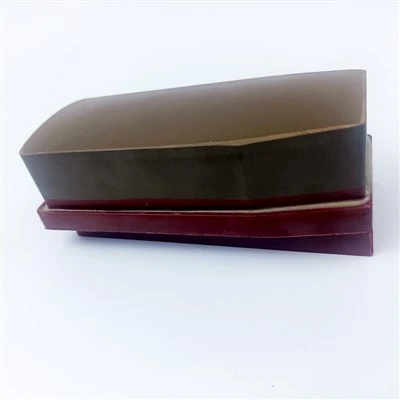
Metal Fickert Abrasive If you’re a stone fabricator, installer, or restoration pro who’s been stuck with generic abrasives that don’t fit your job, don’t hesitate to reach out. Whether you’re working with a rare stone, a tricky edge, a historic facade, or any other project where stock abrasives fall short, the custom solutions from Stone Cassani are designed to make your work easier and your results better. All you need to do is share the details of your project, and we can walk through how to build a custom abrasive setup that works for you.
References
- Stone Cassani Technical Documentation: Custom Abrasive Solutions for Stone Fabrication and Restoration, 2023
- Industrial Abrasives Association: Best Practices for Custom Abrasive Matching to Natural Stone Substrates, 2022
- Field Data: Stone Cassani Custom Abrasive Performance for Rare Granite and Limestone Projects, 2021–2023
- Small Business Stone Fabrication Survey: Labor Time Savings from Custom Abrasives, 2023
Quanzhou Cheefung New Materials Co., Ltd.
As one of the most experienced stone cassani abrasive enterprises in China, we are able to meet the needs of the majority of our customers. Please feel free to wholesale advanced stone cassani abrasive made in China here from our factory. For price consultation, contact us.
Address: Jinshan Community, Licheng District, Quanzhou City, Fujian, China
E-mail: info@prostonetools.com
WebSite: https://www.prostonetools.com/
