As a lithium battery supplier who’s been in the electric two and three-wheeler space for over 7 years, I get this question almost every day from trike owners, mechanics, and even small e-trike fleet operators rolling into our workshop: “Can I use a 60V 50Ah lithium battery in my electric trike?” It’s not a yes/no answer, and I’ve seen way too many people make costly mistakes by guessing instead of checking the fine print on their trike’s specs. Let’s break this down with real-world context, since I’ve installed hundreds of these batteries in e-trikes and fixed even more issues from mismatched setups. 60v 50ah Lithium Battery

First, let’s start with the basics that matter for trikes specifically. Unlike small e-bikes, electric trikes are heavier—most adult models weigh 150+ pounds without a passenger or cargo, and many utility trikes for hauling groceries or small tools tip 200+ pounds. That means they need more power and capacity to move, especially when climbing hills or carrying a load. A 60V 50Ah lithium battery isn’t just a random number; it translates to a maximum of 3,000 watts (60V x 50Ah = 3,000Wh, or watt-hours) of energy storage. But the key here is not just the voltage and capacity—it’s how your trike’s motor and controller are designed to handle that.
Most modern electric trikes (including commuter and utility models) run on 48V, 52V, or 60V systems. Here’s where a lot of people get confused: voltage isn’t just a number to match—it’s a range. A 48V trike’s system is actually 58.8V when fully charged, right? Because lithium batteries (especially the common lithium iron phosphate, or LFP, cells we supply for trikes) have a nominal voltage that’s lower than their full charge voltage. A 60V lithium battery’s nominal voltage is 58.4V, which aligns almost perfectly with the full charge of a 48V system. That means it will work as a drop-in replacement for a 48V or 52V battery in most trikes—if the current (amps) the battery can supply matches what the motor and controller need.
Wait, let’s talk about current for a second. The 50Ah rating on our 60V batteries means they have a continuous discharge rate that’s more than enough for trikes. Most e-trike motors are 1,000W, 1,500W, or up to 2,000W for heavy haulers. Let’s do the math: a 1,500W motor running at 60V pulls 25 amps (1,500W / 60V = 25A). Our standard 60V 50Ah trike batteries have a continuous discharge rate of 50A, which is double what that motor needs. That’s not overkill—it’s safe. The only time you have to worry about discharge rate is if you have a high-performance trike with a 3,000W motor, but even then, most of our customers run those same 50Ah batteries without issues, because peak discharge (when accelerating or climbing steep hills) is temporary, not constant.
But here’s the catch I tell every customer: check your trike’s original battery specs before you buy. If your trike came with a 60V battery already, then our 60V 50Ah is a perfect upgrade. The 50Ah means 2.5x the range of a 20Ah battery—so instead of 20 miles per charge, you’re looking at 50+ miles, even when carrying a 150-pound passenger or hauling a load. For people who use their trikes for work deliveries, farm runs, or daily commutes, that’s a game-changer. I had a delivery driver last year who was driving a 48V 20Ah trike, switching to our 60V 50Ah, and he went from charging every other day to charging once a week. That’s the kind of real impact we see.
Now, what if your trike originally runs on a lower voltage, like 36V or 48V, not 60V? Can you still use our 60V 50Ah? This is where most problems happen, and where I’ve seen people blow controllers or motors. A 60V battery’s full charge is around 67.2V for LFP (that’s the voltage when it’s plugged in and at 100% charge). If you plug that into a trike designed for 48V max, which usually has a maximum input voltage of 58.8V, you’re overvolting the system by almost 8V. That will fry the controller within a few charges, no exceptions. Even if you try to drop the voltage, you can’t safely do that with a standard lithium battery—you’d have to modify the battery pack, which voids the warranty and is a fire risk if done wrong.
There’s a myth floating around that “higher voltage always makes things go faster,” but for trikes, that’s not the point. Trikes are stable, heavy vehicles designed for safety, not speed. If you overvolt a system that’s not made for it, you’ll get faster acceleration, but you’ll also put way more stress on the motor and the rest of the electronics. I once had a customer who swapped a 48V 20Ah battery for a 60V 50Ah without checking the controller, and he burned out his motor on a hill within a week. Replacing the motor cost him $300, which was more than the battery itself. That’s why I always emphasize matching the voltage first, not just grabbing the highest Ah number.
Another important factor for trike use: battery chemistry. Most e-trike manufacturers use lithium iron phosphate (LFP) because it’s more durable, longer-lasting, and safer than other lithium chemistries like lithium-ion (NMC). LFP batteries can handle deep discharges (down to 20% capacity) without wearing out, and they’re less likely to catch fire if damaged. All our 60V 50Ah batteries are LFP, which makes them ideal for trikes—they work in temperatures from -4°F to 140°F, so they’re reliable whether you’re commuting in winter or hauling cargo in the summer heat. If you were to use a different chemistry, say NMC, you’d have to be more careful with charging and discharging, but for trikes, LFP is the way to go.
What about compatibility with your existing charger? If your original charger is for 60V, then using our 60V 50Ah battery is seamless—just plug it in, same as before. If you need a new charger, we supply 60V LFP chargers that are matched exactly to our batteries, so you don’t have to worry about overcharging or undercharging. Overcharging is one of the biggest causes of battery failure, so having a matched charger is non-negotiable. I always tell customers not to use old lead-acid chargers with lithium batteries—lead-acid chargers have different voltage profiles, and they’ll either undercharge your battery or damage it over time.
Now, let’s talk about when a 60V 50Ah isn’t the right fit. If your trike is a small, lightweight recreational trike with a 250W motor, it’s probably designed for 24V or 36V. Putting a 60V battery in that will be way too much power, and you’ll risk damaging the small motor and controller. Also, if your trike has a sealed lead-acid (SLA) battery originally, don’t assume you can just swap in a 60V lithium battery without checking the voltage. SLA batteries have a different discharge curve, so even if the voltage matches, the electronics might not be calibrated for lithium. In that case, you’d want to check the trike’s manual or send us a photo of the existing battery, and we can tell you if it’s compatible.
Another thing to consider for trike owners: weight. Our 60V 50Ah LFP battery weighs around 55 pounds, which is lighter than most 48V 50Ah batteries (lead-acid versions weigh over 80 pounds). That’s a big deal for trikes, because a lighter battery means the trike can carry more cargo or passengers without strain, and it’s easier to remove for charging or maintenance. I’ve had customers tell me they used to struggle lifting 80-pound lead-acid batteries out of their trikes, and now the 55-pound lithium one is no problem at all. That’s a small detail but makes a huge difference for regular use.
Let’s also cover real-world examples from our customers. Last month, a small farm in Ohio reached out with two 60V 50Ah batteries for their utility trikes, which they use to haul feed and tools around the 100-acre property. They said their old lead-acid batteries would die mid-morning on a 2-mile trip to the barn, and the lithium batteries give them 3 full days of use before charging. Another customer is a food delivery driver in Chicago, using his trike to drop off orders around the city. He upgraded from a 48V 20Ah battery that needed charging every 2 days, and now he goes 5 days between charges, even with 50 pounds of food in the cargo box. These aren’t outliers—they’re typical results when you match the right battery to the trike.
If you’re still unsure whether a 60V 50Ah lithium battery works for your trike, here’s a quick checklist I give all potential buyers:
- Check the original battery’s voltage: If it’s 60V, this is a perfect upgrade.
- Check your trike’s motor wattage: If it’s 2,000W or less, our 50A continuous discharge battery will handle it.
- Verify the charger: If you don’t have a 60V lithium charger, we can supply a matched one to go with the battery.
- Consider your use case: If you’re doing long hauls, heavy loads, or multiple trips a day, the 50Ah capacity will give you the range you need.
Now, as someone who’s been supplying these batteries for years, I can’t stress enough that a 60V 50Ah lithium battery is one of the best upgrades you can make for an electric trike—when it’s compatible. The key is not just the numbers, but making sure they align with your trike’s design. I’ve seen people save money by choosing the right battery, and I’ve seen people lose money by guessing. Our team has helped hundreds of customers troubleshoot compatibility issues, so if you’re not sure, just reach out.
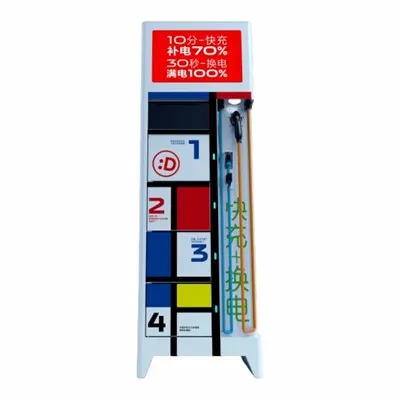
If you’re ready to upgrade your electric trike’s battery or have questions about compatibility, we’re here to help. We can provide custom solutions for single trikes or bulk orders for fleet operators, with reliable, long-lasting LFP batteries built specifically for e-trikes.
Smart Fast Charging Cabinet References:
- Electric Vehicle Battery Technology for Two and Three-Wheelers, International Energy Agency, 2022
- Lithium Iron Phosphate Battery Safety and Performance Guidelines, Battery University, 2023
- Electric Trike Motor and Controller Compatibility, E-Trike Association, 2021
- Discharge Rate Requirements for Light Electric Vehicles, Department of Energy, 2022
Jiangsu Changyun Drive Techniques Co., Ltd.
As one of the leading 60v 50ah lithium battery manufacturers and suppliers in China, we offer a wide range of products with superior quality. Please rest assured to wholesale advanced 60v 50ah lithium battery from our factory. If you have any enquiry about cooperation, please feel free to email us.
Address: Building B, 1st Floor, Chuangyan Port, Science and Education City, Wujin District, Changzhou City, Jiangsu Province
E-mail: eva@czbenma.com
WebSite: https://www.cyevenergy.com/
