Hey there, if you’re in the industrial water treatment game—whether you’re running a food and beverage plant, a power facility, a mining operation, or a pharmaceutical production line—you’ve definitely encountered reverse osmosis (RO) membranes. They’re the backbone of nearly every reliable water purification system out there, right? As an industrial RO membrane supplier, I get asked this question all the time: “What’s the safe pH range for my RO membranes? Too high, too low—how do I not destroy my investment before it even pays for itself?” That’s why I’m breaking this down plainly, no jargon overload, just real talk from someone who works with these membranes day in and day out. Industrial RO Membrane
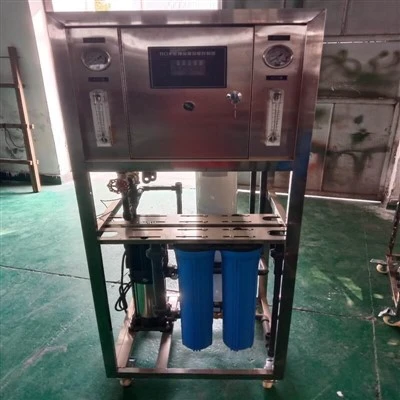
First off, let’s cut to the chase: most standard industrial RO membranes (the ones we supply for general industrial use, not specialty ones for extreme pH applications) have a core pH operating range of roughly 2 to 11. Wait, I can already hear you—“That’s super wide, why do I still mess up my systems?” Because it’s not just the operating range; it’s how you use it, how you clean it, how you prep your feedwater, and what that pH swing does to the membrane’s material. Most industrial operators only focus on the 2 to 11 number and forget that prolonged time at the extremes of that range is where the damage happens. Let’s dive into why that range exists, because it’s not arbitrary.
RO membranes are basically thin, tight films with tiny pores that push contaminants out while letting water pass through. The ones we use most often (polyamide thin-film composite, or TFC, membranes—trust me, these are the workhorses) are coated on a polysulfone support layer. Polyamide hates being too acidic or too alkaline for long. At a pH lower than 2, the membrane’s polyamide surface starts to hydrolyze—think of it like leaving a plastic bucket in acid for months; it breaks down, loses its tensile strength, and those tiny pores stretch out, letting more salt and gunk pass through. On the flip side, a pH higher than 11 does the same thing, just with a different breakdown mechanism: it attacks the bonds in the polyamide layer, making it brittle, and over time, it leaves your membranes fouled and ineffective.
But here’s the part most suppliers and even some operators get wrong: that 2 to 11 range is for short-term exposure, like during cleaning cycles. Your normal operating pH—the pH of the feedwater you’re processing on a daily basis—should be narrower, and that depends on a few factors. Let’s break that down: for most standard industrial RO systems, day-to-day operation should sit between 4.5 and 10.5. Why the gap between short-term and long-term? Cleaning chemicals are harsh by design. If you run a high-pH cleaner (like caustic soda) for 30 minutes once a week, that’s nothing compared to running your feedwater at pH 11 24/7, 365 days a year. I’ve seen customers come to us after burning out membranes in 6 months because their RO system had a feedwater pH of 10.8 for over a year—way above that 10.5 sweet spot, even though they thought 11 was the “max.”
Now, let’s talk about specialty RO membranes, because not every industrial application is the same. If you’re dealing with feedwater that’s naturally super acidic (like mining runoff with pH 1.5 or 2.5) or super alkaline (like some industrial process water with pH 12), you can’t use that standard 2 to 11 membrane. We have specialty membranes designed for pH extremes: low-pH membranes that can handle pH down to 1, and high-pH membranes that go up to 13. But a lot of new operators try to save money by buying standard membranes for these jobs, and that’s a recipe for disaster. I had a customer in the metal finishing industry try that last year—they had rinse water with pH 1.8, bought our standard membranes (thinking they could just adjust pH back to 2), but their adjustment system broke for 3 days and the membranes were shot. They ended up needing the low-pH specialty ones, and saved themselves from having to replace another set a month later.
Wait, let’s also cover what happens when pH is too far off, because this isn’t just a “membrane dies” problem—it hits your whole system. If your pH is too low, you might see more heavy metals leaching from the membrane’s support layer (polysulfone can break down at very low pH, releasing bisphenol A or other compounds into your product water—super bad for food and pharma customers). Too high pH, and you get scaling? Wait no, scaling is more about hardness, but high pH can cause silica scaling to form faster, and also make natural organic matter (NOM) in feedwater stick harder to the membrane surface, leading to more frequent cleanings, which in turn can stress the membrane even more. It’s a vicious cycle.
Let’s get practical, because no one wants a textbook. What should you actually do? First, test your feedwater pH regularly—like every day, not just when you set up the system. I had a food and beverage client that thought their pH was stable at 5.5, but a leak in their chemical feed line made it drop to 3.2 for 2 weeks. By the time they caught it, 3 of their 8 membrane elements were ruined. That’s $$$ down the drain, all because of a simple test you can do with a cheap digital pH meter (way more accurate than test strips, by the way—test strips are for swimming pools, not RO feedwater).
Second, adjust your feedwater to hit that sweet operating range. For most systems, that means a small pH trim system: if your feed is too acidic, add a small amount of caustic (sodium hydroxide) to bump it up; if it’s too alkaline, add a tiny bit of acid (sulfuric is most common, though phosphoric works too for some food applications) to lower it. Don’t overdo it—even a 0.5 pH shift above 10.5 or below 4.5 over months can shorten membrane lifespan by 50% or more. Our data shows that membranes operated at 6-8 pH have an average lifespan of 3-5 years, while those operating at the extremes of the 4.5-10.5 range only last 1-2 years. That’s a huge cost difference, right?
What about cleaning? This is where the short-term pH range matters most. When you’re cleaning your membranes to get rid of biofouling or scale, you can (and should) use pH levels outside the operating range, but only for the length of the clean cycle—usually 30 minutes to 2 hours, no more than 4 hours total. A common clean cycle is high pH (11-12) for organic fouling, or low pH (2-3) for mineral scale like calcium carbonate. But here’s the rule: after cleaning, you need to flush the system thoroughly to get the pH back into operating range before resuming production. I’ve seen a customer leave their system at pH 12 after a clean over the weekend, and come back to membranes that were so brittle, they cracked when we pulled them out to replace them. No joke—crumbled, like old plastic.
Now, let’s address common myths I hear all the time. Myth #1: “The pH range is 2-11, so I can run at pH 11.” No—short-term vs. long-term, like I said. That 2-11 is a max short-term limit, not a daily operating target. Myth #2: “All RO membranes have the same pH range.” Nope, as I mentioned, specialty ones are different—if you’re dealing with extreme pH, don’t skimp on the right membrane. Myth #3: “pH doesn’t matter if I’m using a high-pressure system.” Wrong, the polyamide layer is pH-sensitive regardless of pressure—pressure just makes the water move faster, so if there’s already damage, it gets worse faster.
What about for different industries? Let’s make this specific, because that’s what matters. For food and beverage: your product water has to be safe, so you need to keep pH between 5.5 and 8.5—too low can corrode your pipes, too high can cause off-flavors, and also, your RO membranes here are usually standard TFC, so that 5.5-8.5 is perfect. For power plants: they might have feedwater with higher pH (to prevent boiler corrosion), so we recommend their RO systems run at 7.5-9.5, right in the middle of that safe 4.5-10.5 operating range. For mining: their feedwater is often acidic, so they either adjust pH to 4-5 and use standard membranes, or get low-pH specialty membranes if adjustment isn’t possible. For pharma: super strict, so pH is kept between 6-8, no exceptions, because even tiny amounts of membrane leachate can mess with drug formulations.
As an industrial RO membrane supplier, I can’t tell you how many times I’ve gotten a call from a customer panicking because their membranes are failing early, and the first thing I ask is, “What’s your feedwater pH, and what’s your operating pH?” 9 times out of 10, it’s off. The good news is that this is an easy problem to fix. Most of the time, it’s not even a bad membrane—it’s a lack of monitoring or a small mistake in pH adjustment.
Wait, let’s wrap this up with actionable takeaways, because that’s what you came for. 1. Know the difference: standard TFC RO membranes have a SHORT-TERM pH limit of 2-11, and a RECOMMENDED LONG-TERM operating range of 4.5-10.5. 2. Test pH daily—digital meters, not strips. 3. Adjust feedwater to hit 6-8 if you can, it’s the sweet spot for most applications and will maximize membrane lifespan. 4. If you have extreme pH feedwater, don’t use standard membranes—get the right specialty ones. 5. When cleaning, keep pH excursions short (under 4 hours total) and flush back to operating range after.
Look, I get it—managing RO systems is a lot of work, and there’s a million little things to track. But the pH of your feedwater is one of the most impactful factors in how long your membranes last and how much your system costs to run. At the end of the day, a $50 pH meter and a small trim system is way cheaper than replacing $10,000 worth of membranes every year.

If you’re dealing with pH issues, or you’re not sure which membranes are right for your specific industrial application, hit us up to connect on a chat or a call. We don’t do one-size-fits-all solutions, so we’ll work with you to figure out the right pH management plan and membrane setup for your needs. No pushy sales stuff, just real advice from people who’ve been in the water treatment game for years.
Compact EDI Modules References:
- American Water Works Association. Reverse Osmosis and Nanofiltration: Treatment Technology and Design. AWWA, 2012.
- Matsuura, T. Membrane Science and Technology: Reverse Osmosis. Springer, 2001.
- Dow Water & Process Solutions. Technical Data: Filmtec Reverse Osmosis Membranes Operating Guidelines. 2023.
- Hydranautics. Industrial RO Membrane pH Compatibility and Cleaning Protocols. 2022.
Huamo Group
Fujian Huamo Technology Co., Ltd. is one of the most professional industrial ro membrane manufacturers and suppliers in China, featured by quality products and good service. Please rest assured to wholesale the best industrial ro membrane made in China here and get price list from our factory. Contact us for custom service and OEM service.
Address: No.6 Hengtong Rd, Shanmei Village, Xiamei Town, Nanan City, Fujian Province, China
E-mail: info@huaromembrane.com
WebSite: https://www.hmromembrane.com/
