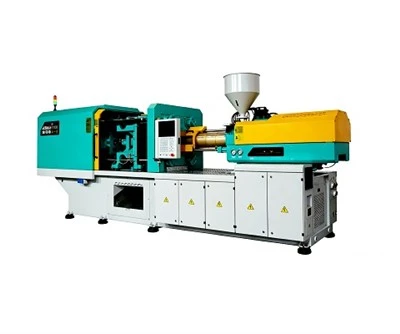
If you’re an injection molding machine supplier for paint buckets, you know the surface finish of a molded bucket isn’t just about aesthetics—it directly impacts how your customers perceive product quality, their downstream coating processes, and even their ability to market their paint. A rough, uneven surface on a paint bucket can trap paint residue during manufacturing, lead to inconsistent coating adhesion later, or leave visible marks that turn buyers away. Over the years, working with dozens of molding facilities dedicated to paint packaging, I’ve seen firsthand how small, targeted adjustments to molding processes and machine settings can transform a mediocre finish into a smooth, defect-free surface. Paint Bucket Injection Molding Machine
First, let’s ground this in why surface finish matters specifically for paint buckets. Unlike consumer plastic bins, paint buckets don’t just hold paint—their interior surfaces need to repel residual paint so cleaning and reprocessing (for recycled buckets) is easy, and exterior surfaces need to look crisp enough to display branding. A common mistake I see new operators make is treating surface finish as a “one-size-fits-all” concern, but paint buckets have unique requirements: low internal porosity to prevent paint seepage, minimal sink marks (which can create weak points), and no burn marks or flow lines that would interfere with labeling.
The foundation of good surface finish starts with the molding machine’s temperature profile, and this is where many suppliers and operators cut corners. Too often, they set barrel temperatures to just enough to melt resin, rather than optimizing for consistent flow. For paint buckets, which are typically made from polypropylene (PP) or high-density polyethylene (HDPE) due to their chemical resistance, resin viscosity is key. If the barrel’s feed zone is too cold, the resin doesn’t melt evenly, leading to streaks; if the nozzle zone is too hot, the resin can degrade, creating tiny black specks that ruin the finish. My team recommends a three-zone temperature setup for paint bucket molding: feed zone at 180–200°C, transition zone at 210–230°C, and nozzle zone at 205–225°C. This gradual heating ensures the resin flows smoothly through the nozzle and into the mold, reducing the chance of uneven layers.
Next, mold temperature is a make-or-break factor that’s often overlooked. Paint bucket molds are usually made of steel, and their surface temperature controls how quickly the resin cools after injection. If the mold is too cold, the outer layer of resin hardens before it can fill all the mold’s fine details, leading to short shots or rough edges; if it’s too hot, the resin may stick to the mold, causing ejection marks or warping. For smooth finishes, we’ve found that a mold temperature of 40–55°C works best for PP buckets and 50–65°C for HDPE. To maintain consistent mold temperature, operators should use a closed-loop water temperature control system, not a simple chiller. Closed-loop systems adjust heat and cooling in real time, so even during long production runs (which are standard for paint buckets, often 10,000+ units per run), the mold stays at a steady temp. This eliminates the “wave” effect that happens when a mold cools unevenly mid-run, a common issue that leaves visible texture on bucket surfaces.
Injection speed and pressure are another pair of variables that directly impact surface finish. Too fast, and the resin shears as it enters the mold, creating flow lines or burn marks; too slow, and the resin starts to cool before filling the cavity, leading to gaps and rough areas. For paint buckets, we recommend a two-stage injection process. The first stage is low-speed, low-pressure injection to fill 70–80% of the mold cavity. This slow fill lets the resin spread evenly across the mold’s surface without trapping air, which causes tiny pits. The second stage is high-speed, high-pressure injection to fill the remaining 20–30% and pack the part. Packing pressure is critical here—too little packing, and the part will shrink, leaving sink marks (small depressions on the exterior of the bucket) that are not only unsightly but also weak. We suggest a packing pressure of 80–90% of the injection pressure, held for 10–15 seconds, depending on the bucket’s wall thickness. A 5-gallon paint bucket, for example, has a wall thickness of about 3–4mm, so a packing hold time of 12 seconds works well to prevent shrinkage.
Air traps are a silent enemy of surface finish in paint bucket molding. When resin is injected into the mold, any air that gets trapped between the resin and the mold surface will create small, rough spots or even voids deep in the part. To reduce air traps, operators should use proper venting in the mold. For paint buckets, vents along the top edge and the inner walls of the cavity (where air tends to get pushed last) should be 0.02–0.03mm deep and 5–10mm wide. This lets air escape as the resin fills, rather than getting pressed into the surface. Additionally, using a vacuum assist during injection can pull air out of the mold cavity before resin is injected, which is especially helpful for large paint buckets (5 gallons or more) where the cavity is bigger and more likely to trap air. I’ve installed vacuum assist systems on dozens of molding machines for paint packaging clients, and the reduction in surface defects is usually between 60–80% within the first run.
Resin preparation is a step that’s often outsourced to lower-priority, but it has a huge impact on finish. Paint bucket resins are sometimes regrinded from leftover parts or off-spec units, and if that regrind isn’t dried properly, moisture in the resin will turn to steam during molding, creating tiny bubbles on the surface. Even virgin resin can absorb moisture from humidity, so drying it before processing is non-negotiable. For PP and HDPE, resin should be dried at 80–90°C for 2–4 hours in a desiccant dryer, not a hot air dryer (which can cause surface oxidation). Oxidized resin has a yellow or dull tint, which ruins the bright finish clients want for their paint buckets. I always tell my customers: a $500 desiccant dryer is cheaper than the cost of scrapping 1,000 off-spec paint buckets.
Ejection marks are another common surface flaw that takes away from a clean finish. When the bucket is ejected from the mold, metal ejection pins press against the plastic, leaving small indentations or scuff marks. To minimize this, operators should use as many small ejection pins as possible, rather than a few large ones. For a 5-gallon paint bucket, 8–10 small (5mm diameter) ejection pins spread evenly around the base work better than 2 large ones. Additionally, using a mold release agent can help, but it’s important to use a food-safe or industrial-grade release that doesn’t leave a residue on the bucket’s interior—since that residue would contaminate paint later. We recommend a silicone-based release, applied in a thin, even coat to the mold surface, not the resin, to avoid excess buildup.
Finally, regular machine and mold maintenance is key to consistent surface finish over time. A poorly maintained injection molding machine can have inconsistent platen alignment, which leads to uneven clamping force and warped parts. If the mold isn’t cleaned regularly, leftover resin can build up on the mold surface, creating a rough texture that transfers to every new bucket. My team offers preventive maintenance checklists specifically for paint bucket molding machines, which include inspecting barrel wear (worn barrels cause inconsistent resin melt), checking nozzle clogs (clogs lead to uneven flow), and polishing mold surfaces every 100,000 units. We also train our clients’ operators to spot small issues early, like a small leak in the cooling system, which can overheat the mold and ruin finish before it becomes a big problem.

If you’re a paint bucket manufacturer tired of dealing with subpar surface finishes that lead to customer complaints or rework, these adjustments can make a noticeable difference. Every molding operation is a bit different, so don’t hesitate to reach out to troubleshoot your specific setup. I’ve worked with small custom mold shops and large packaging firms alike, and I can help you optimize your injection molding machine settings, mold setup, and maintenance routine to get that smooth, defect-free finish your customers demand. Whether you’re scaling production for a new paint brand or cutting down on rework costs, there’s no one-size-fits-all solution, but we can tailor a plan to your needs. To discuss your current surface finish challenges, feel free to connect with our team for a consultation.
Medical Injection Molding Machine References
- Rosato, D. V., & Rosato, M. G. (2004). Injection Molding Handbook. Kluwer Academic Publishers.
- Frados, J. (1996). Plastics Materials and Processes: A Concise Encyclopedia. Van Nostrand Reinhold.
- Project Management Institute. (2017). A Guide to the Project Management Body of Knowledge (PMBOK® Guide) – Sixth Edition. Project Management Institute, Inc.
- International Organization for Standardization. (2019). Plastics – Polypropylene (PP) and high-density polyethylene (HDPE) blow-molded containers and injection-molded containers for food and non-food products. ISO 17751:2019.
- Tooling & Molding. (2022). “Surface Finish Optimization for Large Injection-Molded Parts.” Society of Plastics Engineers, Technical Paper.
- ASTM International. (2021). Standard Test Method for Measuring Surface Roughness of Plastics Products. ASTM D7127-21.
- Engineering Materials and Processes. (2020). “Injection Molding Process Parameters and Their Impact on Part Surface Quality.” Journal of Manufacturing Science and Engineering, Vol. 142, No. 10.
- Puckett, R. (2019). “Vacuum-Assisted Injection Molding for Defect Reduction.” Plastics Engineering Magazine, Vol. 75, No. 8.
Ningbo Ruizhan Intelligent Equipment Co., Ltd.
With abundant experience, we are one of the most reliable paint bucket injection molding machine manufacturers and suppliers in China. Please feel free to buy customized paint bucket injection molding machine made in China here from our factory. Quality products and reasonable price are available.
Address: No.491, Meidisi Road, Xincheng Village, Wuxiang Town, Yinzhou District, Ningbo, China
E-mail: aimatemachine@gmail.com
WebSite: https://www.aimatemachine.com/
