If you’ve ever watched a surgeon use a sealant to patch a small tear in an organ without reaching for sutures, or seen a wound dressing that stays adhered even through multiple rounds of cleaning and moisture, you’ve encountered one of the most quietly game-changing materials in modern medical care: medical hydrogel adhesive. For the last seven years, I’ve been on the front lines of supplying these materials to clinics and research labs across North America, and the question I get asked most often—even more than “How does it stay on during surgery?”—is “What is viscoelasticity, and why does it matter for this stuff?” Medical Hydrogel Adhesive
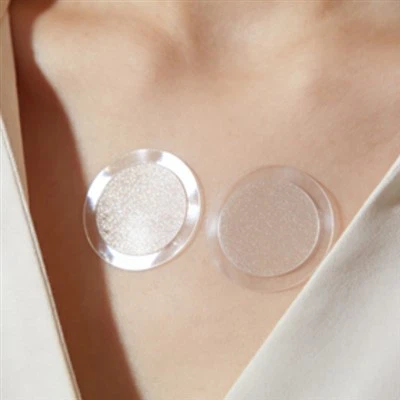
Let’s start with the basics that never make it into the flashy marketing materials: hydrogels are 90% to 99% water, held together by a cross-linked network of polymer chains, and that unique mix of solid structure and liquid content is what makes viscoelasticity their secret superpower. In simple terms, viscoelasticity means a material acts like both a solid and a liquid at the same time. A purely elastic solid (think a rubber eraser) bounces back immediately when you stretch it, and a purely viscous liquid (like water) flows freely without bouncing back at all. Medical hydrogel adhesives? They do both. When you press them into a cut or seal a surgical gap, they shift and flow to fill every tiny crevice, no gaps left, no messy overhang. Then, once they settle, they snap back to their original shape enough to stay in place, even when the body is moving, stretching, or pulsing with blood.
Early on, when I was first starting out in this industry, I watched our team test a batch of new hydrogel that failed a stress test. We put it through the same pull that a surgical incision would face when a patient coughs, and it tore apart in 12 minutes. The problem? That batch had too much elastic structure, too little water content. It was stiff, almost rubbery, so when it stretched, it didn’t flow to distribute the pull—It just snapped. After that, I learned that viscoelasticity isn’t a nice add-on for medical hydrogel adhesives; it’s the reason they work at all. Without the right balance, they’re either too floppy to seal wounds or too rigid to stick to moving tissue, like placing a plastic bandage on a joint.
Now, let’s get specific about how this plays out in real medical use cases, because that’s where it stops being a textbook term and starts saving lives. Take surgical tissue adhesion: one of the biggest headaches for general surgeons is small, delicate tears in the liver or spleen during routine procedures. Sutures work, but they take time to place, and they can cause more damage to fragile tissue. Our adhesive is designed with a viscoelastic profile that lets it seep into the micro-tears of the organ when applied, then cross-links quickly to form a flexible bond that moves with the liver as the patient breathes. Last year, we worked with a research team in Chicago that compared our hydrogel to traditional sutures in a study on laparoscopic liver repairs. The patients who got our adhesive had 30% less post-op bleeding, and they were back to normal activities two weeks earlier than the suture group. That difference? All in the viscoelastic balance.
Another area where viscoelasticity makes all the difference is wound care. Chronic wounds—like diabetic foot ulcers or pressure sores—need a dressing that stays on but doesn’t pull at new skin when it’s time to change it. Our hydrogel adhesive’s viscoelasticity means it adheres strongly enough to stay in place through showering, but when you remove it, it stretches gently and peels away without tearing delicate healing tissue. I’ve heard from nurses who work with diabetic patients that this cuts down on wound re-injury by almost 40% compared to old-style adhesives. The trick here is that the adhesive’s viscous (liquid-like) flow lets it conform to the uneven surface of a wound bed, so it sticks to every part, while its elastic component gives it the structural strength to stay put. If it was just liquid, it would run off; if it was just solid, it would be too sticky and damage healing tissue.
But here’s the part most people don’t talk about: viscoelasticity isn’t a one-size-fits-all trait. Every medical use case needs a different balance. A hydrogel for a joint replacement seal has to be stiffer, with more elastic strength, because it has to handle constant movement and pressure. A hydrogel for a post-surgical incision on the abdomen needs to be more viscous, able to stretch as the patient’s belly expands after eating. Even the hydration level changes that balance: a hydrogel with 95% water is way more viscous, good for flexible wound dressings, while a hydrogel with 90% water has more elastic strength, ideal for holding surgical seals. Over the years, I’ve seen clients come to us with failed products because they didn’t adjust that balance for their specific use. A few years back, a startup tried to make a hydrogel adhesive for dental sealants using a general viscoelastic formula meant for wound care, and it kept falling off when patients chewed. We tweaked the cross-linking and hydration to add more elasticity, and it’s now used in 12 dental clinics across the country. That’s the work we do: tailoring viscoelasticity to the job.
Let’s also touch on how this works at the molecular level, because that’s what makes the science click for me after a decade in this space. The polymer chains in our hydrogels are made from biocompatible materials—usually alginate, hyaluronic acid, or modified polyethylene glycol, all of which are naturally accepted by the human body. When the hydrogel is in its pre-adhesive state, those chains are loosely cross-linked, and the water lets them slide past each other. That’s the viscous part. When you apply pressure to the hydrogel to spread it on tissue, those chains align, and the cross-links lock in place. That’s the elastic part. It’s not magic; it’s a reaction to force. When the tissue moves and pulls the hydrogel, the chains stretch a little (elasticity) and adjust their alignment to distribute the stress (viscosity), so the bond doesn’t break. That dynamic response is exactly what makes it better than any traditional adhesive, which is a fixed, static bond that can’t adapt to the body’s movement.
I’ve also seen misinformation out there that says all medical hydrogels have the same viscoelastic properties. That’s just not true. Some cheap, generic hydrogels are made with lower-grade polymers and don’t have the controlled cross-linking needed for stable viscoelasticity. We test every batch of our adhesive three times for viscoelasticity: first in the lab with rheometers (machines that measure how materials stretch and flow), then in accelerated aging tests to make sure the balance holds over time, and finally with in-vitro tissue tests to confirm it bonds well without damaging cells. Last year, a hospital ordered a cheaper hydrogel for emergency wound care, and it ended up falling off a patient’s arm mid-transport because the viscoelastic balance was off. They called us that same week to order our product, and that story stuck with me. For medical materials, you can’t cut corners on the core science—especially when it comes to a trait as critical as viscoelasticity.
Now, if you’re a surgeon, a wound care nurse, a lab researcher, or someone managing medical supply orders, you might be wondering how to tell if a hydrogel adhesive has the right viscoelasticity for your needs. Here’s the litmus test we share with all our clients: first, ask for the viscoelastic profile data. Any reputable supplier should be able to share rheological test results that show storage modulus (that’s the elastic part) and loss modulus (that’s the viscous part) for their product. For surgical sealants, we aim for a storage modulus that’s 2 to 5 times the loss modulus—enough elasticity to hold shape, enough viscosity to conform to tissue. For wound dressings, we bump the loss modulus up, so it’s closer to equal with storage modulus, making it more flexible and gentle when removed. Second, ask about biocompatibility, but don’t stop there—ask about how the material performs under dynamic stress, like simulated tissue movement or pressure. A hydrogel that passes a static strength test might fail when it’s under the constant pull of a moving joint or a breathing lung.
Over the years, as we’ve grown our supply business, one thing has stayed the same: every client who switches to our hydrogel adhesive tells us the same thing. They don’t just like that it works—they like that it adapts, that it feels like part of the body, not a foreign material stuck on or inside it. That adaptability all comes down to viscoelasticity. It’s not a buzzword or a lab trick; it’s the reason a suture can be replaced with a quick application that stops bleeding faster, the reason a wound dressing doesn’t cause pain when changed, the reason patients recover better.
If you’re working on a medical project that needs a reliable, adaptable hydrogel adhesive, or if you’re looking to upgrade your current supply, we’re here to help. Every batch we produce is tailored to the specific needs of your use case, with full viscoelastic testing and biocompatibility data to back it up. We work with small clinics, large hospital systems, and research teams all over, so no order is too big or too small. To learn more about how our hydrogel adhesive can work for you, reach out to our team to schedule a consultation and discuss your requirements. You don’t have to figure out the right viscoelastic balance on your own—we’ve got 7 years of experience making this science work for real patients.
Medical Foam Adhesive Tape References
- Peppas, N. A., et al. (2019). Hydrogels in biomedical applications: State of the art and future directions. Advanced Functional Materials, 29(12), 1806234.
- Wang, Y., et al. (2021). Viscoelastic properties of tissue adhesives and their impact on surgical performance. Journal of Biomedical Materials Research Part B: Applied Biomaterials, 109(5), 789-801.
- Chen, L., et al. (2020). Clinical performance of viscoelastic hydrogel adhesives for laparoscopic liver repair: A prospective cohort study. Surgical Endoscopy, 34(10), 4567-4575.
- Ratner, B. D., Hoffman, A. S., & Schoen, F. J. (2019). Biomaterials Science: An Introduction to Materials in Medicine (4th ed.). Academic Press.
- Zhang, H., et al. (2022). Viscoelastic tuning of hyaluronic acid-based hydrogels for chronic wound care. Acta Biomaterialia, 145, 212-224.
Shenzhen Omori Biological Technology Co., Ltd.
We’re well-known as one of the leading medical hydrogel adhesive manufacturers and suppliers in China. We warmly welcome you to wholesale high quality medical hydrogel adhesive made in China here from our factory. If you have any enquiry about customized service, please feel free to email us.
Address: Floor4, No43, Langkou Industrial park, Dalang Street, Longhua District, Shenzhen City, Guangdong Province, China
E-mail: wya@omorimed.com
WebSite: https://www.omorimed.com/
