If you’ve ever stacked moving boxes in a corner, shipped a fragile ceramic mug cross-country, or hauled a stack of retail inventory to a store shelf, you’ve interacted with paper boxes in a way that doesn’t feel like “high-stakes engineering.” As a paper box supplier, I get asked this question all the time: How strong are paper boxes, really? It’s not a trivial question—strength is the line between a product arriving intact or getting damaged, between a shipment meeting a deadline or ending up in a landfill, between a small business cutting costs and saving or losing a customer. The answer isn’t just “they’re sturdy” or “they’re flimsy”—it’s rooted in science, material choices, and how we design them to fit exactly what you need to move or store. Paper Box
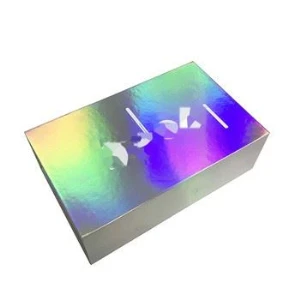
First, let’s break down what makes a paper box strong. Most people don’t realize it’s not just the paper itself, but the structure of the board that matters. Corrugated board, the stuff that makes standard shipping boxes, has three layers: two flat linerboards glued to a wavy inner layer called corrugating medium. That inner wavy layer does the heavy lifting—its ridges, called flutes, act like tiny arches that distribute pressure evenly across the entire box, instead of letting all the weight sit on a single weak spot. Compare that to a sheet of flat cardboard, which would crumple under even a few pounds because it can’t disperse force. The size of the flutes changes strength too: larger flutes (like 5-flute or 7-flute) are great for cushioning fragile items, because they bend to absorb impact, while smaller flutes (like 3-flute) are stiffer and better for stacking heavy, non-fragile items, because they resist bending under weight.
That’s where the science gets specific, and where I see customers get it wrong all the time. A lot of folks think thicker paper automatically means a stronger box, but that’s not always true. For example, a 200 lb test box made with 3-flute corrugation is actually sturdier for stacking than a 300 lb test box made with large 7-flute board. The “ECT” (Edge Crush Test) rating, which measures how much force it takes to crush a 2-inch strip of corrugated board, is a better indicator of edge strength, which is what holds a box together when you stack it. Another key measurement is bursting strength, which tests how much pressure a board can withstand before it tears—this matters more for boxes holding items that might rub against the inside, or for shipping over rough roads.
Now, let’s put that science into real-world use cases, because that’s what matters most to our customers. Last month, a small craft brewery reached out to us because their previous boxes were collapsing in their delivery trucks, resulting in broken bottles and lost revenue. We worked with them to test a few different configurations: their old boxes used 5-flute corrugation with a 23 ECT rating, which was fine for local deliveries but not for longer hauls on bumpy highways. We switched them to a 3-flute board with a 32 ECT rating, adjusted the box’s design to add reinforced corners (another small change that makes a huge difference), and kept the same overall dimensions so it fit their existing pallets. The result? Their breakage rate dropped by 72%, and they haven’t had a collapsed box in 3 months. That’s the strength of choosing the right material, not just a bigger, thicker box.
Fragile items are where people often underestimate paper boxes, too. I’ve had customers tell me, “I need to use foam peanuts instead of paper because paper is too weak to protect my things.” But that’s a misconception—when designed correctly, corrugated paper can outperform plastic foam for many fragile goods. A 2018 study from the Institute of Packaging Professionals found that properly designed corrugated boxes reduced damage to glassware by 15% compared to expanded polystyrene foam, because the wavy flutes can compress and absorb impact without transferring force directly to the item inside. For example, a box lined with custom-cut corrugated inserts (not just loose packing material) can cradle a plate or a electronic device, and the box’s outer layer will resist punctures from forks or heavy items stacked on top. I work with a lot of small electronics sellers who switched to our custom corrugated inserts and cut their return rate for damaged items by half.
Of course, there are limits to paper box strength, and it’s important to know where those are. If you’re trying to stack 50 lb boxes 10 feet high in a warehouse, a standard shipping box might not be enough. But that doesn’t mean you have to use a more expensive material—we offer heavy-duty corrugated boxes made with double-wall corrugation, which has two inner wavy layers instead of one, for extra strength. Double-wall boxes are often used for storing heavy items like appliances or industrial parts, and they can withstand stacking weights of up to 1,500 lbs, depending on their size and design. Another limit is moisture: paper absorbs water, which weakens the fibers that hold it together. A box sitting in a rainstorm or a humid warehouse can lose up to 50% of its strength in just a few hours. That’s why we offer water-resistant coated linerboards for boxes used in outdoor shipping or high-humidity environments—they don’t make the box stronger in dry conditions, but they preserve its strength when exposed to moisture, which is a critical detail for customers in agriculture or construction.
I’ve also noticed a shift in how people think about paper box strength, especially as more businesses prioritize sustainability. A few years ago, customers would only ask for the thickest, strongest box, even if they were only shipping a light product like t-shirts. Now, they want a box that’s strong enough for their needs but doesn’t use unnecessary material, because it reduces waste and shipping costs (thicker boxes are heavier, so they cost more to ship). That’s where we come in—our team doesn’t just sell boxes; we work with customers to calculate the exact strength they need, based on their item’s weight, shipping distance, storage conditions, and any potential impact. For example, a customer shipping 1 lb candles across town doesn’t need a 30 ECT box—our standard 20 ECT 5-flute box is more than strong enough, uses less material, and is cheaper to ship.
Another common question: Do paper boxes get stronger over time? Wait, no—most types of corrugated paper degrade gradually, especially in warm, humid environments. The fibers in the corrugated medium break down a little every time the box is folded and unfolded, or exposed to temperature changes. That’s why when we design boxes for moving, we recommend using new boxes instead of reusing old ones—old boxes can lose up to 30% of their strength after a single use, especially if they’ve been folded multiple times. But there are exceptions: some recycled corrugated boards have been treated to strengthen the fibers, so they can be reused a few times without losing too much strength, which is perfect for customers who want to cut down on waste without sacrificing performance.
Let’s talk about a real example of a box that’s designed for maximum strength: the heavy-duty shipping containers we make for industrial parts. These boxes use 40 ECT triple-wall corrugation, reinforced steel edges, and extra-strong tape, and they’re tested to withstand being dropped from 6 feet, stacked 12 high, and dragged over rough concrete. We recently delivered a batch of these to a construction company that was shipping metal beams to a job site, and they told us their old plastic crates were getting cracked and damaged during transport, while our paper boxes arrived in perfect condition. The construction team even reused the boxes to store small tools on the job site, which they said saved them hundreds of dollars in storage costs.
I think a lot of people underestimate paper boxes because they’re seen as a “cheap” packaging material, but that couldn’t be further from the truth. The science of corrugated board has been around for over 150 years, but we’re still innovating: new materials like recycled fiber blends, water-based adhesives, and custom flute designs are making paper boxes stronger, lighter, and more sustainable than ever. As a supplier, it’s our job to make sure customers understand that strength isn’t a one-size-fits-all number—it’s about matching the box to what you need.

Whether you’re a small business shipping products to customers, a family moving to a new home, or a warehouse storing inventory, the right paper box can make all the difference. It’s not just about “how strong is it” — it’s about how that strength protects your items, saves you money, and reduces waste. If you’re not sure what box is right for your needs, we’re here to help: we can walk you through different materials, test configurations, and find a solution that fits your budget and your requirements. Don’t hesitate to reach out to our team to discuss your packaging needs.
Corrugated Shipping Box References:
- Institute of Packaging Professionals. (2018). Corrugated Packaging Performance in Fragile Goods Shipping.
- TAPPI Press. (2020). Corrugated Board Engineering: Strength Factors and Design Considerations.
- Sustainable Packaging Coalition. (2021). Strength vs. Weight in Corrugated Packaging for Industrial and E-Commerce Applications.
Shenzhen Jinyida Printing & Packaging Co., Ltd.
With abundant experience, we are one of the most professional paper box manufacturers and suppliers in China. Please feel free to buy cheap paper box for sale here and get free sample from our factory. All customized products are with high quality and low price.
Address: Caiyun Road16, Ailian Community, Longcheng street, Longgang District, Shenzhen, China
E-mail: Sales01@jydprint.com
WebSite: https://www.jydpackworld.com/
