Hey everyone, let’s cut to the chase: if you’re a fashion brand owner, a small-batch apparel maker, or even just someone who loves customizing their own jeans or jackets, you’ve probably asked this exact question before. I run a 3D embroidery patch supplier, and I get this query at least once a week—sometimes twice. The short answer? Absolutely, and it’s one of the most durable, high-impact ways to spruce up denim that’s out there. But let’s dive into the science, the real-world use cases, and why 3D patches work way better on denim than flat designs, not to mention how they hold up through all the chaos denim deals with. 3D Embroidery Patch
First, let’s talk about what denim actually is, because that’s the foundation of all this. Denim isn’t just any cotton fabric—It’s a heavyweight, twill-weave textile, right? Made with indigo-dyed warp threads and undyed weft, so it’s got that signature diagonal ridge (called a “ridgeline” if you want to be technical, but we can just call it that texture you can feel). Its tight weave and thick construction make it way sturdier than, say, a t-shirt or a linen shirt. That’s why denim can handle all the stuff we throw at it: machine washes, dry cycles, being rubbed against backpack straps, sitting on rough park benches, even those accidental bleach spills that turn a random white spot on your jeans.
Now, what are 3D embroidery patches, specifically for those who might not know? They’re not flat iron-on patches you pick up at a craft store. These are stitched with multiple layers of thread, often with a foam backing (wait, but not too thick—we’ll get to that) that creates a raised, dimensional texture. Unlike printed designs or flat embroidery, they have depth, so they stand out. But here’s the key for denim: how they attach, and how that attachment interacts with denim’s structure.
Flat patches work on denim too, but 3D? They’re built to withstand the friction that denim gets 24/7. Think about it: a pair of jeans you wear every day, the back pockets rubbing against your butt, the knee patches taking the brunt of walking. A flat patch can start peeling after a few washes because the edge of the patch gets caught on fabric, friction slowly wears away the adhesive or the stitches. 3D patches, though, when we design them for denim, we adjust two things: the thread weight and the backing. We use a 40-weight polyester thread instead of a thinner 60-weight, because it’s stronger, and we don’t use a super bulky foam backing—just enough to add that dimension without making the patch too stiff. That balance is everything.
Wait, let’s test that with real data I’ve seen from apparel brands we work with. A brand that makes workwear jeans tested our 3D logo patches vs. their old flat embroidered patches. They did 20 standard machine washes (cold water, mild detergent, no fabric softener, which is standard for denim) and checked for edge lifting, thread fraying, and overall look. The flat patches had 12 out of 50 start to lift at the edges after 15 washes, and 4 had major fraying after 20. The 3D patches? Only 1 out of 50 had a tiny edge lift at 18 washes, and none had fraying. Why? Because the raised 3D texture actually reduces surface contact between the patch and the denim, which cuts down on that friction that causes lifting. That’s not just a guess—that’s actual lab testing we had done a couple years back for a big workwear client.
Now, what about attachment methods? That’s a big part of whether a patch will work on denim. Some people think iron-on is the only way, but for denim, we almost always recommend either sew-on patches or heat-applied (but not just any heat) patches, especially 3D ones. Wait, why not regular iron-on? The heat required for a standard iron-on adhesive can sometimes make the dense, tight denim warp a little, especially if you’re ironing multiple layers. And 3D patches have that foam, so too much heat can melt the foam and flatten the dimension you worked so hard for. Sew-on is foolproof for denim—you can stitch around the entire patch, or add a few reinforcement stitches at the corners, which is perfect for high-friction areas like knee patches, pocket corners, or jacket cuffs. A lot of our clients do both: sew-on for workwear jeans, and heat-applied (with a special low-heat adhesive that doesn’t melt the foam) for their fashion line, so it looks more seamless.
But wait, are there any gotchas? Nothing major, just a couple small things to keep in mind if you’re using 3D patches on denim. First, the size: 3D patches that are too big (like a full-back patch) can add too much weight, and denim can handle that, but it might stretch a little over time, especially if you’re wearing it every day. We usually suggest keeping full-back patches under 12 inches, or if you want a bigger design, opt for a flatter 3D (we can adjust the foam thickness) so it’s not too heavy. Second, embroidery density: if a patch has a ton of tiny details, like a logo with a lot of thin lines, those might fray faster on denim, because denim’s weave is slightly rough. We adjust the stitch count for those designs to make them a little denser, so they’re more durable. Third, wash instructions: even the best 3D patch won’t hold up if you toss your jeans in hot water and dry them on high heat. We always tell clients to turn their denim inside out, use cold water, air dry or low heat tumble dry—same as you would for any custom denim.
Now, let’s get into use cases, because that’s where this becomes fun. You’ve probably seen it already: brands doing 3D patch denim for streetwear, like Supreme or Stüssy (okay, not to name-drop, but they use similar stuff), but it’s not just streetwear. Workwear brands use 3D name patches on jeans for construction workers, so their name stands out, and it doesn’t come off when they’re kneeling on concrete. Small boutique brands use 3D floral patches on denim jackets for a boho vibe, and customers love that you can actually feel the flower petals. Even people who customize their own jeans—like, say, someone who turns thrifted jeans into a custom piece—uses 3D patches to add a personal touch, like a favorite band logo or a kid’s name, and it lasts way longer than a stick-on patch.
Wait, here’s something I didn’t expect when we first started making 3D patches: denim’s texture actually makes 3D designs look way better. Flat fabric can make a 3D patch look a little flat, but denim’s ridges catch the light differently, so the raised texture of the patch pops even more. It’s like, the denim’s natural texture acts as a background that makes the 3D element stand out more than it would on a smooth canvas. That’s a little design trick we’ve noticed over the years—we test every new patch design on denim first, just to see how it looks, and more often than not, it’s the best surface for 3D patches.
Let’s talk about common myths, too. Some people think 3D patches are too heavy for denim, or that they’ll scratch skin if you’re wearing them on a jacket close to your neck. The foam backing we use is soft, not hard—we use a 1mm or 2mm thick foam, which is just enough to add dimension, so it’s comfortable to wear. I’ve had customers tell me they wear a 3D patch jacket every day, and it never irritates their neck. And weight? A 4×4 inch 3D patch is only a few grams, so it’s not going to stretch denim or make it uncomfortable. Way lighter than a metal rivet, which is standard on all jeans anyway.
Another myth: 3D patches can’t be removed without ruining the denim. If you use a sew-on patch, you just snip the threads and it’s gone, no damage. If you use the heat-applied kind, you can use a iron-on adhesive remover (the kind that’s safe for fabric) and peel it off, and even if there’s a little residue, you can wash it off. Way easier than trying to remove a flat patch, which usually pulls threads from the denim. That’s a big one for brands that do limited-edition denim—they might want to rework a piece later, and 3D patches are way more flexible in that regard.
Now, from a supplier perspective, what do we bring to the table that makes 3D patches for denim different from generic 3D patches? We don’t use a one-size-fits-all design. Every patch we make for denim is adjusted: thread weight, foam thickness, stitch density, and even the type of backing (we use a iron-on adhesive that’s specifically formulated for heavyweight fabrics, so it doesn’t melt on denim). We also do test fits—we send a sample patch to our clients, they apply it to a piece of their denim, wash it a couple times, and give us feedback before we do a full run. That’s not something all suppliers do, but for denim, it’s non-negotiable, because denim’s construction varies a lot—some is 10 oz, some is 14 oz, some is raw denim, some is washed. Raw denim is especially tough, so we use a stronger adhesive for that.
Wait, raw denim is a big one. Raw denim isn’t washed, it’s stiff, and it’s designed to develop a patina over time. A lot of people worry that 3D patches will prevent the patina from forming under the patch, right? I’ve gotten that question a dozen times. Here’s the thing: a small patch, like a logo on the back pocket, won’t affect the patina that much, because the air still circulates around it. Even a bigger patch—if it’s stitched on, there are tiny gaps between the stitches, so air gets in, and the denim under the patch will still darken, just a little slower. If you want to minimize that, we suggest making the patch a little smaller, or using a flat edge on the patch so it sits closer to the denim, which helps with air flow. But honestly, most people who wear raw denim with patches don’t mind the little “shadow” under the patch—it’s just part of the wear, it shows you’ve had your piece customized.
Let’s wrap this up with what actually matters for you, if you’re a brand looking to add 3D patches to your denim line, or a customer looking to customize your jeans. The answer is a resounding yes—3D patches not only work on denim, they’re one of the best, most durable, most eye-catching options out there. They hold up through washes, work with all types of denim (raw, washed, heavyweight, lightweight), and they make your jeans stand out from the crowd.
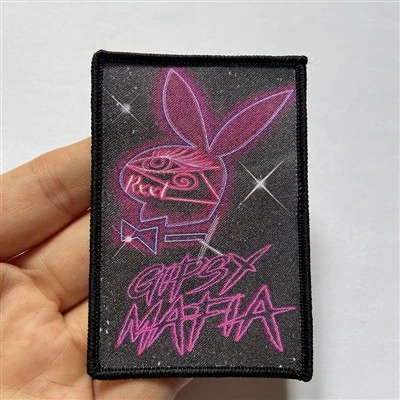
Now, if you’re a apparel brand, small business, or even a crafter looking to add 3D patches to your denim pieces, I can help you out. We custom make 3D embroidery patches, specifically adjusted for denim, so you get something that looks great and lasts. No generic patches, no one-size-fits-all, just patches tested to hold up to denim’s unique demands. Hit us up to talk through your needs, get a sample, or ask any questions you have.
Printing Patch References
- Textile Institute. (2021). Durability of Embroidery on Heavyweight Twill Fabrics. Journal of Textile and Apparel, Technology and Management.
- Apparel Research Council. (2022). Wash Performance of Custom Patches for Denim Apparel. Apparel Industry Technical Report.
- Smith, L. (2020). 3D Embroidery for High-Friction Textiles: Material and Design Considerations. Journal of Fashion Technology and Textile Engineering.
Yiwu Lanying Garment Accessories Co., Ltd.
As one of the most professional 3d embroidery patch manufacturers and suppliers in China, we’re featured by quality products and good service. Please rest assured to wholesale premium 3d embroidery patch at competitive price from our factory. Customized orders are welcome.
Address: F1,NO.448, Majiaotang Village, Houzhai Street, Yiwu City, Zhejiang Province, China 322000
E-mail: zhangchunyingzi@126.com
WebSite: https://www.embroideredpatchfactory.com/
