If you’re running a dairy or beef operation, you know how stressful it is when calves slip out of their pens. One minute you’re doing your regular checks, and the next, a 100-pound baby cow is loose in the barn, knocking over feed buckets, spooking the adults, and putting itself at risk of injury. As someone who’s been supplying calf pens for years, I’ve heard this complaint from farmers a hundred times: “I bought the cheapest pens, and they still escape no matter what I do.” Calf Pens
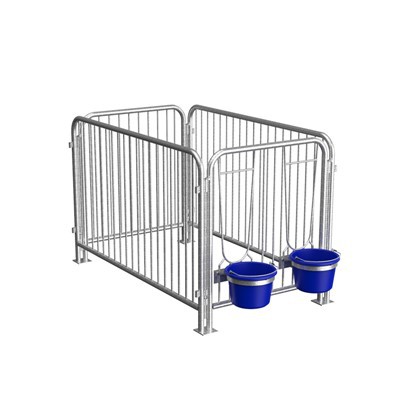
The thing is, keeping calves contained isn’t just about throwing up some panels. It’s about understanding how little calves think, how strong they are for their size, and the small details that make a pen actually work. I’ve seen good pens turn bad because of a tiny gap, and I’ve seen budget pens hold strong because they were set up right. Let’s break down what actually works, no fancy jargon, just what I’ve learned from working with farmers every single day.
First, let’s talk about why calves escape in the first place. It’s not that they’re being naughty—they’re curious, they’re scared, and they’re test limits. A 2-week-old calf might nudge a loose panel because it wants to get to its mom or to a bucket of milk. A 4-week-old is already trying to climb over or squeeze through gaps because it’s starting to run and play. Most escape attempts aren’t grand plans; they’re impulsive reactions to a small problem. That means your pen’s weak points are probably the small, easy-to-miss spots, not the big walls.
Let’s start with the basics: panel spacing. This is the number one mistake farmers make. I’ve seen pens with 6-inch gaps between panels, and people say, “Well, the calf’s only 2 feet tall, so that’s fine.” Wait a second—calves have narrow bodies, but their heads? Their heads are almost as wide as their chests when they’re young. A 4-inch gap is a no-go. Even a 5-inch gap? That’s a stretch. Calves can wedge their heads through just like a kid can get stuck in a playground fence, and once their head is out, they can pull the panel right off its hinges. From my experience, the sweet spot is 3.5 inches max between panel bars. It sounds super tight, but trust me, you don’t want to be the one prying a panicked calf loose from a 5-inch gap at 2 a.m.
Then there’s panel height. A lot of budget calf pens come with 42-inch panels, and people think, “That’s tall enough—adult cows are 5 feet, so this works.” But wait, calves are way better at jumping than you’d think. A 3-month-old calf can easily clear 3 and a half feet if it’s spooked or motivated. I’ve seen a 2-month-old calf launch over a 40-inch panel just to get to a neighbor’s pen with fresh water. So what’s the right height? For most pre-weaned calves (the ones most prone to escaping), go for 48 inches minimum. If you’re raising calves that are a bit older, up to 52 inches just to be safe. I know 52 inches might sound overkill for a 100-pound calf, but think of it this way: it’s cheaper to buy an extra 8 inches of panel than to replace a broken water bucket or deal with a spooked calf running into a feeding line.
But panels alone don’t hold—how you connect them matters. A lot of cheap pens use flimsy clips that pop off after a few uses, or loose bolts that work their way out when a calf rams the panel. I’ve had farmers tell me, “My panels were great until a calf knocked one over and the clip broke.” The fix here is simple: use two types of connections at every corner and every join. First, use a heavy-duty spring clip for quick setup and take-down when you need to move pens around. Then, add a small bolt or a zip tie (the heavy-duty, UV-resistant kind, not the dollar store ones) to act as a backup. That way, if a calf rams a panel, the spring clip might hold, and if it doesn’t, the zip tie or bolt keeps the panel from falling over. I always include a bag of heavy-duty zip ties with every pen I supply because I know how easy it is to skip that step.
Another huge weak point is the bottom of the pen. A lot of people leave a 2 or 3-inch gap between the bottom panel and the floor, thinking it helps with cleaning. Sure, it makes mucking out a bit easier, but that gap is an open invitation for calves to squeeze under. I’ve seen calves slip out of a pen so low to the ground that you could barely fit your hand under the panel. What’s the alternative? You can either buy panels that sit flush with the floor (they have feet that dig into the concrete or dirt, so there’s no gap), or you can add a solid skirt to the bottom of your existing panels. A piece of heavy-duty plastic or even a cut-up rubber mat works. Just staple or screw it to the bottom of the panel, and that 2-inch gap is gone. No more calves squeezing out.
Wait, what about corners? Corners are where escape happens way more often than straight sides. Calves will back up, charge, and ram a corner panel because they’re playing or scared. If your corner connections are weak, that panel will come off, and the calf is gone. I always tell farmers to use a “double corner” setup. Instead of connecting two panels at a 90-degree angle with just one clip, add a third small panel to lock the corner in place. It makes the corner way sturdier, and there’s no way a calf can ram it loose. I’ve seen this turn a flimsy pen into one that holds even if a group of calves runs into it.
Now, let’s talk about the little extras that make a difference. Water troughs and feed buckets are often placed right next to the pen’s edge, and calves will stand on their hind legs to reach them, using the edge of the pen as a boost. If the pen’s top rail is thin or loose, a calf can hook its leg over it and flip itself right out. So make sure your top rail is at least 2 inches thick, and it’s secured to the panels. If you’re using pipe panels, don’t use 1-inch pipe—go for 1.5-inch pipe at the top. It’s sturdier, and a calf can’t get a good grip to climb over.
Also, if you’re raising calves that are grouped together (not individual pens), separation bars matter. A lot of farmers put in thin metal bars between group pens, and calves will push them aside to get to their pen mates. Use the same 3.5-inch spacing rule for separation bars, and make sure they’re bolted down, not just clipped on. I’ve had a farmer tell me he lost two calves in one week because the separation bar came loose—now he uses heavy bolts and hasn’t had an escape in 6 months.
Wait, what about dirt vs concrete floors? If your pen is on dirt, you have to anchor the panels. Calves will push on the bottom of the panel, digging at the dirt until the panel tilts, and then they can slip out. The fix here is to drive steel stakes into the ground every 3 feet along the panels, and then attach the panel to the stake with a clip or a bolt. For concrete, use concrete anchors instead of just placing the panel on the floor. It’s a tiny extra step, but it keeps the panel from shifting when a calf rams it.
I get it, a lot of farmers want to save money, and buying the cheapest pen on the market seems like the way to go. But here’s the thing: a $100 pen that doesn’t hold is going to cost you way more than a $150 pen that works. Think about the time you lose rounding up calves—half an hour here, an hour there, it adds up. Think about the vet bills if a calf gets loose and steps on a nail, or gets spooked and runs into a fence. Even the feed waste: a loose calf will knock over a feed bucket, and that’s a whole bucket of milk or grain going to waste. I’ve had farmers tell me that switching to pens from my line cut their calf escape incidents by 90%—they saved more in a month than they spent on the pens.
Let me share a quick story that sticks with me. A few years back, a dairy farmer 2 hours from here called me panicking. He had 12 pre-weaned calves that were escaping every other day, and he was losing money hand over fist. He had bought a cheap set of panels from a big box store, and the gaps were 6 inches, the panels were only 40 inches tall, and the clips were flimsy. I went out to his farm with him, and we adjusted his pens: we added 8 inches of height to the panels, cut small pieces of plywood to fill the bottom gaps, and switched to heavy-duty clips with zip tie backups. That was 4 years ago, and he hasn’t had a single escape since. He still sends me a Christmas card every year, and he’s bought two more sets of pens for his new calf barn.
So what should you do right now if you’re dealing with escaping calves? First, check your current pens. Grab a tape measure and measure the gap between your panel bars. If it’s more than 4 inches, that’s your first fix. Next, check the height—if it’s under 48 inches, add a few inches of extension to the top, or invest in taller panels. Then, go around all your corners and joins, make sure you have two connections, not just one. And don’t forget the bottom—fill that gap under the panels so no calf can squeeze under.
If you’re in the market for new calf pens, skip the cheap ones that look good on sale. Look for panels with 3.5-inch bar spacing, 48-inch minimum height, and sturdy connections. And if you’re not sure what setup works best for your specific barn or floor type, just reach out. I’ve worked with small family farms and big commercial operations, and I can help you pick the right pens and setup for your needs.
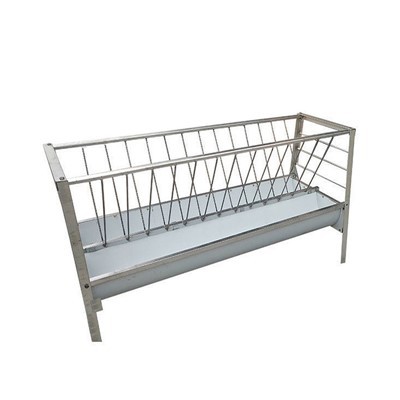
Sheep Feeding Barrier I know running a farm is hard—you’ve got a hundred things to worry about, and escaping calves shouldn’t be one of them. The right pen setup takes that stress off your plate, so you can focus on what matters: raising healthy calves. If you’re ready to stop dealing with loose calves and start getting pens that work, don’t hesitate to reach out to discuss your needs. We can go over different styles, sizes, and setup tips, and make sure you get exactly what fits your operation.
References
- National Dairy Farmers of America. (2022). Calf Housing Best Practices for Pre-Weaned Heifers.
- Agricultural Engineering International: CIGR Journal. (2021). Design Considerations for Livestock Containment Panels.
- University Extension Service, Iowa State University. (2020). Calf Pen Management to Reduce Escape and Injury Risks.
- Journal of Dairy Science. (2019). Behavior and Containment of Pre-Weaned Dairy Calves in Group Housing Systems.
Hebei Honde Industrial Trade Imp & Exp Co., Ltd.
With abundant experience, we are one of the most professional calf pens manufacturers and suppliers in China. We warmly welcome you to wholesale high quality calf pens for sale here from our factory. We also accept customized orders.
Address: Room 1904, Yintai International Building, No.36 Guang’an Street, Shijiazhuang, Hebei, China
E-mail: Helen@hbhonde.com
WebSite: https://www.hondelivestocksupply.com/
