Hey there, I’m Jake—been running a small but tight-knit solid woven conveyor belt supply operation for the last 8 years, and let’s be real: if I had a dollar for every time a new mine manager or bulk material handler asked me, “What’s the tensile strength of a solid woven conveyor belt?” I’d be sipping margaritas on a beach instead of troubleshooting belt splices this week. But I take this stuff seriously, because this isn’t just a random number—it’s the difference between your shift running smooth and a 3-hour shutdown that eats into your profits. Let’s break this down like I’d explain it to my cousin who runs a gravel yard, no stuffy engineering jargon (well, maybe a tiny bit that’s actually useful). Solid Woven Conveyor Belt
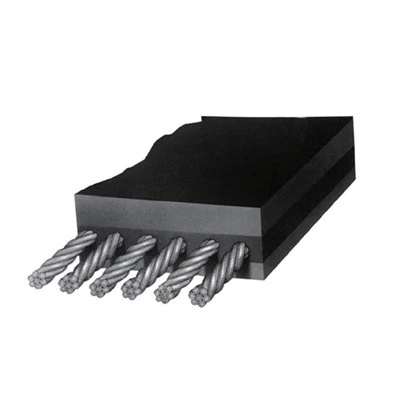
First off, let’s kill a myth right away: solid woven belt tensile strength isn’t a one-size-fits-all number. I’ve seen guys show up asking for a “1000 PIW belt” like that’s all they need, but they don’t realize PIW (pounds per inch of width, for the uninitiated) is just the common way we measure it here in the U.S. — Euro guys use N/mm, and either way, it’s tied directly to what you’re hauling, how far, and how beat up your conveyor is. Here’s the quick, no-BS breakdown: most standard solid woven belts fall between 500 PIW and 2000 PIW. But wait—don’t stop at that. Let’s get into the nitty-gritty of why that matters.
See, solid woven belts are made by weaving multiple layers of high-tenacity polyester or nylon yarn together, right? It’s not like those flimsy cheapy belts you see at the big-box store for moving boxes—this stuff is woven tight, like a heavy-duty fabric, so it stretches way less than fabric ply belts when you’re under load. That low stretch is huge because if your belt stretches too much, you’ll get misalignment, spillage, and eventually, a tear that ends your day. The tensile strength is the max force that belt can take before it snaps, plain and simple, but you never want to run it anywhere near that number—safety factor, bro. We typically recommend a 5:1 to 10:1 safety factor, meaning if your operation needs to pull 800 PIW, you go for a 4000 PIW rated belt? Wait no, wait—wait, 5:1 means divide your required load by 5, right? Let me correct that: if your conveyor is pushing 2000 pounds per inch of belt, you need a belt rated at at least 10,000 PIW. Yeah, that sounds like a lot, but cutting corners here is how you end up with a belt snapping mid-shift and a million dollars in lost material.
Now, let’s talk about when you need higher tensile strength. If you’re hauling super heavy stuff—like iron ore, limestone, or even scrap metal—you’re gonna need that 1500 to 2000 PIW range. I had a mine client out in Wyoming last year who tried to cut costs by going with a 1200 PIW belt for hauling 25-ton loads of coal over a 2-mile distance. Within 6 months, that belt was stretching so bad they had to re-tension the conveyor three times a week, and then it tore along a splice. They came back to me, got a 1800 PIW solid woven belt, and haven’t had a tension issue in 2 years. On the flip side, if you’re moving lighter stuff—like grain, sand, or packaged goods—you can get away with 500 to 1000 PIW. I do a lot of work with local grain elevators, and their belts are 650 PIW, which is more than enough for their 100-foot conveyors moving wheat.
Wait, but let’s get technical for a second—no more bro talk, promise. The tensile strength of solid woven belts is tested by pulling a 2-inch wide strip of the belt in a machine until it breaks. The number you get is the ultimate tensile strength, and as I said earlier, you never operate at that point. The reason solid woven is better than other belts is that its tensile strength is consistent across the entire width, unlike fabric ply belts where you have layers that can separate. Solid woven is a single, tightly woven fabric, so it doesn’t delaminate as easily, which is why it’s the go-to for harsh environments—mines, quarries, recycling plants, even steel mills.
Another thing that affects tensile strength: the belt’s cover. Yeah, I know, you’re thinking “cover is for protection, not strength,” but wait—if you’re running in a hot, oily, or abrasive environment, the cover material can actually impact the belt’s overall strength over time. If you get a cheap cover that breaks down in sunlight, the underlying woven fabric will start to degrade, and your actual tensile strength will drop, even if the belt was rated at 1500 PIW when you bought it. That’s why I only work with suppliers who use UV-resistant, oil-resistant covers—because if my client’s belt doesn’t hold up, they won’t be my client for long.
I get it, though—when you’re managing an operation, you have budgets to stick to, and it’s tempting to go with the cheapest belt you can find. But here’s the thing I tell every new customer: a $2000 belt that lasts 5 years is way cheaper than a $1000 belt that needs replacing every 18 months, plus the downtime costs. Last month, I had a recycling plant guy come to me after a cheap belt snapped mid-shift, shutting down his sorting line for 8 hours. He estimated he lost $12,000 in that one shutdown—way more than the difference in cost between the cheap belt and the solid woven one I sold him with the right tensile strength.
Let’s also talk about common mistakes I see customers make when asking about tensile strength. First, they don’t tell me the full picture: what they’re hauling, the distance of the conveyor, the speed, the environment. For example, a conveyor that moves heavy stone 1 mile at 50 FPM needs a higher tensile strength than one that moves light grain 500 feet at 100 FPM. Another mistake: they confuse tensile strength with working load. Working load is what the belt actually handles during operation, while tensile strength is the max it can take. I always make sure my clients understand that difference—no hidden fine print, no guesswork.
Wait, and what about splices? That’s a big one. Even if you have a belt with the right tensile strength, a bad splice can cut the overall strength by 30% or more. I teach all my clients the basics of hot or cold splicing, because a good splice is just as important as the belt itself. I offer free splicing workshops for anyone who buys a belt from me—small perk, but it’s stuff that makes a huge difference. Last quarter, I had a quarry client who was using a poor cold splice, so their belt’s effective tensile strength was only 70% of the rated number. We re-spliced it correctly, and they didn’t have to upgrade the belt, which saved them $15,000.
So, let’s recap, real quick, so you don’t have to scroll back: solid woven conveyor belt tensile strength ranges from 500 PIW to 2000 PIW, depending on application. You need to calculate your required working load, add a safety factor (5:1 minimum, 10:1 for harsh environments), and pick a belt that matches that. Don’t forget to consider the cover material and splicing, because those affect the actual strength you get in the field.
At the end of the day, I’m not just a guy selling belts—I’m a guy who’s been in the game, seen the mistakes, and wants to help you avoid them. I’ve got stock on hand for most standard tensile strengths, and if you need a custom belt for a weird application (like a conveyor that hauls molten slag? Wait, no, we don’t do molten, but close—hot steel scrap), I can get that made for you in a week or two.
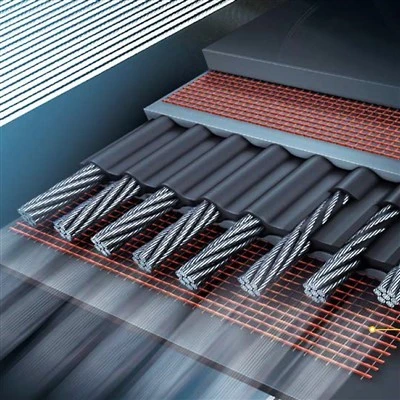
If you’re tired of dealing with belts that stretch too much, tear too easy, or shutdown your operation when you can’t afford it, hit me up. I’d love to walk through your specific needs, calculate the right tensile strength for you, and give you a quote that doesn’t have hidden fees. No pressure, just straight talk, like we’re on the job site grabbing a coffee.
Self Cleaning Conveyor Belt References
- Conveyor Equipment Manufacturers Association (CEMA). (2022). Belt Conveyors for Bulk Materials, 7th Edition.
- International Organization for Standardization (ISO). (2019). ISO 9856: Rubber or plastics-covered conveyor belts – Determination of tensile strength, elongation at break and elongation at a given force.
- Solid Woven Conveyor Belt Industry Technical Manual. (2021). Global Conveyor Manufacturers Association.
Alumina Technology (Qingdao) New Materials Co., Ltd.
As one of the most professional solid woven conveyor belt manufacturers and suppliers in China, we also support customized service. With abundant experience, we warmly welcome you to buy solid woven conveyor belt for sale here and get quotation from our factory. For price consultation, contact us.
Address: No.448, Jiangshan South Road, Huangdao District, Qingdao City, Shandong Province
E-mail: Gloria.zhang@contitech.cn
WebSite: https://www.altechconveyorbelt.com/
