When I first started working as a distribution box supplier, I got dozens of questions every week from homeowners, handymen, and even small electricians: “Can I install a distribution box myself?” It’s a fair question—for many people, a distribution box is just that gray metal panel on the wall, out of sight and out of mind, until a circuit trips or they need to add a new appliance. As someone who’s spent the last 8 years designing and distributing these boxes for residential and small commercial spaces, I can tell you the answer isn’t a simple yes or no. It depends on a lot of factors, and I’ve seen too many botched DIY installations lead to safety hazards, code violations, and even full rewires. Let’s break this down, straight from the supplier who ships these boxes to job sites every single day. Distribution Box

First, let’s get clear on what a distribution box actually does. Often called a breaker box, load center, or panel box, it’s the central hub for all electrical power in a building. It takes the main power feed from the utility company, splits it into individual circuits for lights, outlets, appliances, and HVAC systems, and each circuit has its own breaker that shuts off if there’s an overload or short circuit. That’s the core function, but modern distribution boxes also have safety features like arc-fault circuit interrupter (AFCI) breakers, ground-fault circuit interrupter (GFCI) slots, and surge protection—all designed to prevent fires and electric shocks.
Now, the legal stuff. Every region in North America (and most places around the world) has electrical codes set by organizations like the National Electrical Code (NEC) in the U.S. or the Canadian Electrical Code (CEC) in Canada. These codes aren’t just suggestions—they’re minimum standards to keep people safe. Most areas require that any electrical installation, including distribution box installation, is done or inspected by a licensed electrician. Why? Because there’s a huge difference between swapping out a light switch and working with 120/240 volt power. Touch a live wire wrong, and you could get a fatal shock; miswire a breaker, and your entire home is at risk of a fire that starts inside the wall, hidden from sight until it’s too late.
I see this all the time. A homeowner will watch a YouTube video about swapping a 100-amp distribution box, grab a box from a local hardware store, and go to work. They think “how hard can it be?” but they miss a key step: turning off the main utility feed at the pole. Or they mix up the neutral and ground wires, creating a ground fault that doesn’t trip the breaker, leading to a slow, dangerous current leaking through metal pipes or even the walls. Last year, I had a customer whose DIY installation caused a fire that destroyed their garage—they had wired the main breaker incorrectly, so the box overheated and caught fire while they were at work. They had bought a $150 distribution box from my company, but skipped the electrician, and the result was thousands of dollars in damage. That’s not a failure of the product—it’s a failure of skipping the critical expertise needed to install it right.
That said, there are some cases where a DIY installation might be okay. I’m not here to say never—just to be honest about the limits. For example, if you’re replacing an existing distribution box with an identical model, in the same location, with the same amperage and number of circuits, and you already have experience working with electrical wiring, and most importantly, you pass a local electrical inspection, that could be low risk. But even then, I’ve heard of people buying a new box and not realizing their old wiring is 15 amps, but the new box has 20-amp breakers. That’s a mismatch that causes overheating, and it’s something you only catch if you know what to look for.
Another big factor is code compliance. The NEC, for example, requires that distribution boxes are installed in accessible locations, not in closets, bathrooms, or near flammable materials. They need to have proper clearance in front of them—3 feet of space, 30 inches of width, and a height between 2.5 feet and 6.5 feet from the floor. If you install a box in a spot that doesn’t meet these requirements, it’s not just a code violation—it’s a safety issue. What if there’s an emergency and you need to shut off power quickly, but the box is behind a stack of boxes in a closet? That’s a recipe for disaster. Also, many areas require that you pull a permit before installing a distribution box. A permit means a city inspector will come check your work to make sure it meets code. If you do it without a permit, you could get fined, and if you sell your home later, the buyer’s inspector will find the unpermitted work and require it to be redone, often at a huge cost.
Let’s talk about the skill gap. Licensed electricians don’t just learn to wire a box—they go through years of training, including classroom hours and on-the-job apprenticeships, to learn about electrical theory, code, safety protocols, and troubleshooting. They know how to calculate the right amperage for your home, how to handle different types of wiring (Romex, aluminum, copper), how to test for live wires with a multimeter, and how to fix common issues like loose connections that can cause overheating. A DIYer might watch a 10-minute video and think they’re qualified, but they miss the nuance. For example, aluminum wiring, which was used in some homes built between the 1960s and 1970s, requires special connectors to prevent corrosion and overheating. If you splice aluminum wire with a standard wire nut, that’s a major fire hazard—something most DIYers don’t know, but every electrician does.
I also want to address the myth that distribution boxes are “plug and play.” When someone buys a distribution box from my company, it comes pre-assembled with breakers, but that’s just the part that goes into the box. The actual installation means running wires from the utility meter to the box, connecting the main feeder wire, grounding the box, securing each circuit wire to the right breaker, and making sure all connections are tight and properly torqued. Tightness is a big one—loose connections cause resistance, which leads to heat buildup, and that’s one of the most common causes of electrical fires. A licensed electrician knows the exact torque specifications for each connection; a DIYer might tighten them too much (damaging the wire or breaker) or too little (causing heat buildup).
Now, I’m not trying to scare people away from DIY home projects. I do a lot of small DIY work around my own home—painting, hanging shelves, even replacing a faucet. But electrical work is different. It’s not the kind of thing you can undo easily, and the consequences are life-altering. I’ve seen electricians come to job sites to fix botched DIY installs, and they tell me stories of people who almost got shocked, or who had to evacuate their homes because of a fire risk. One time, an electrician I work with told me about a home where a DIYer had installed a 200-amp distribution box, but the utility only provided a 100-amp feed. That meant the box was overloaded every time someone ran the dryer and the AC, leading to tripped breakers and eventually, a melted wire inside the wall. That mistake cost the homeowner $8,000 to rewire the entire home.
So, what’s the alternative? If you need a new distribution box, the best first step is to talk to a licensed electrician. They can assess your home’s electrical needs, tell you the right size and type of box, pull the necessary permits, and do the installation correctly. As a distribution box supplier, I work closely with electricians all the time, and we often get calls from homeowners who want to buy a box directly, but we always tell them to confirm with their electrician first. Why? Because we want them to have a safe, working installation that meets code, not a product that sits in their garage unused, or worse, causes a problem.
That said, if you’re experienced, have the right tools, and your local code allows it, there are parts of a distribution box installation that a skilled DIYer can handle, with proper supervision. But even then, I strongly recommend having an electrician inspect the work before turning on the main power. Turnaround times for inspections can be long in some areas, but it’s worth the wait to make sure everything is safe. Never turn on the main power before an inspector has signed off— that’s a rule I can’t stress enough.
Another point to consider: warranty. Most distribution boxes come with a manufacturer’s warranty, but the warranty is usually void if the product is installed incorrectly by someone who isn’t a licensed professional. If your DIY installation fails, you might not be able to get a replacement box, and you’ll be on the hook for any damage it causes. Licensed electricians also carry liability insurance, so if they make a mistake during installation, their insurance will cover the cost of fixing it—something no DIYer has.
Let’s wrap this up. The short answer: unless you’re a licensed electrician with experience in distribution box installations, and you’ve checked your local codes and permit requirements, you should not install a distribution box yourself. The risks of electrical shock, fire, code violations, and future costs far outweigh the perceived savings of doing it yourself.
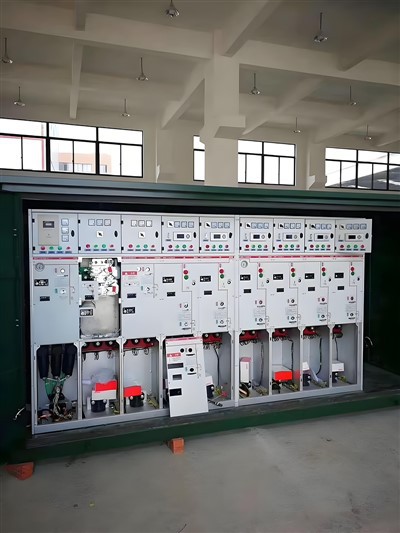
If you’re in need of a distribution box for your project, I’m here to help. We offer a range of residential and commercial distribution boxes, from 100-amp to 400-amp models, with all the safety features you need. Whether you’re a homeowner working with your electrician, or a contractor looking for bulk orders, we can provide the right box for your job. Contact us today to discuss your distribution needs, and we’ll help you find the perfect solution for your project.
Lv Distribution Board References
National Electrical Code (NEC) 2023 Edition
Canadian Electrical Code (CEC) 2021 Edition
U.S. Consumer Product Safety Commission (CPSC) Electrical Fire Safety Report, 2022
Electrical Safety Foundation International (ESFI) Home Electrical Safety Guide, 2023
National Association of State Electrical Inspectors (NASEI) Residential Wiring Standards, 2022
Anhui Nanxian Electric Co., Ltd.
With abundant experience, we are one of the most professional distribution box manufacturers and suppliers in China. We warmly welcome you to buy advanced distribution box for sale here and get quotation from our factory. All customized products are with high quality and low price.
Address: Factory Unit 03-2, Building 21, Feidong Yinfeng Industrial Park Co., Ltd., Northeast Corner of Manquan Road and Changle Road, Hefei Circular Economy Demonstration Park, Feidong County, Hefei City, Anhui Province.
E-mail: 541580567@qq.com
WebSite: https://www.nxelepower.com/
