Let me start by setting the scene—when a café owner I work with last month had their walk-in cooler die at 2 a.m., they weren’t just worried about spoiled desserts. They were worried about a $3,000 loss in perishable stock, plus the cost of a new refrigeration unit fast. That call made me realize how many business owners (and even facility managers) walk into refrigeration purchases blind, guessing at costs instead of getting real, data-backed answers. As someone who’s been supplying commercial refrigeration units for 12 years, I can tell you: there’s no one-size-fits-all price, but there are clear variables that shape what you’ll actually pay—upfront, and over time. Refrigeration Unit

First, let’s get the basics out: a commercial refrigeration unit isn’t the mini-fridge you grab from a home goods store. These are built for 24/7 operation, designed to hold consistent temperatures between -40°F (for freezers) and 50°F (for reach-in coolers) in spaces that could be 100°F in a restaurant kitchen or 65°F in a small retail storage area. That heavy-duty build is why pricing starts higher than you might expect—but the range is wider than most people realize.
I recently pulled data on 2023 unit sales from our warehouse, and the average upfront cost for a standard reach-in cooler unit is around $1,800, while a walk-in cooler unit runs closer to $5,500. But those are just averages. Let’s break down what moves the needle, because that café owner? They needed a compact, undercounter reach-in for their pastry case, which cost $1,200—not the $2,500 a large, multi-door reach-in for a grocery store deli would set back. That’s the first big lesson: unit type is non-negotiable when calculating cost.
Let’s categorize the most common commercial units to make this concrete, because I get calls every week from owners who mix up “reach-in” and “walk-in” and end up with the wrong price in their head. Reach-in units are the ones you see in grocery store aisles, café back kitchens, or small corner stores—they’re self-contained, meaning the compressor, condenser, and evaporator are all mounted on the unit itself, no extra outdoor equipment needed. That makes them easier to install, which keeps labor costs down. For a basic single-door reach-in cooler, you’re looking at $1,200 to $2,200. Add a second door, adjust the interior shelving for high-capacity use (like a butcher shop holding bulk meat), or upgrade to a reach-in freezer, and that jumps to $2,000 to $4,500. I had a customer last quarter, a local sushi restaurant, who ordered a double-door reach-in freezer with digital temperature alarms (so they’d get a text if it dropped too warm) and stainless steel interior lining for easy cleaning—total cost for the unit alone was $3,800. That alarm feature, by the way, added 15% to the price, which is a small premium for preventing $1,000+ in lost inventory.
Then there are walk-in units, which are the workhorses for restaurants, caterers, and large retail chains. These aren’t pre-built in a box—they’re modular panels that you assemble on-site, paired with a separate condensing unit that sits outdoors. That design is why walk-ins can be scaled to fit almost any space, but it also means pricing is based on size. A 6×8 walk-in cooler for a small bakery will run $4,000 to $7,000 for the unit (panels + condensing unit), while a 12×20 walk-in freezer for a distribution center can hit $15,000 or more. Last year, we supplied a 10×12 walk-in to a wedding venue that needed space for 500 pounds of event catering food—their total unit cost was $6,200, which included floor insulation to keep cold air from seeping into the venue’s concrete foundation. Insulation grade is another big factor here: if you’re in a hot climate (like Florida or Arizona), you’ll need thicker panels (4 inches vs. 2 inches) which adds 20-25% to the unit cost, but cuts energy bills by 10-15% annually. That’s a trade-off I always emphasize—those extra bucks upfront pay for themselves in a year or two.
Now, let’s talk about hidden costs, because this is where a lot of business owners get sticker shock. I once had a customer who bought a $1,000 discount reach-in cooler online, only to find out the installation required running a dedicated 220V circuit (their old home-style outlet wouldn’t work), plus adding a ventilation fan for the condenser. That added $1,200 to their total cost, and the unit broke down three months later because it was under-sized for the volume of food they needed to store. Installation costs aren’t one-size-fits-all either: a simple undercounter reach-in takes 2-3 hours to install, costing $300-$500 in labor, while a walk-in takes 8-10 hours of on-site assembly, costing $1,500-$3,000. If you’re retrofitting an old space that doesn’t have electrical or plumbing hookups for a walk-in, you could add another $2,000-$4,000 in rough-in work. That’s why I always tell customers to budget 20-30% of the unit cost for installation and basic accessories—no surprises, no headaches.
Wait, what about energy efficiency? That’s a question I get every single week, and it’s tied directly to cost. Newer units (manufactured after 2019, when EPA rules tightened standards) use 15-20% less energy than models built before that. A basic non-energy-star reach-in might cost $1,200 upfront, but its annual electricity bill is $800. An Energy Star-rated model costs $1,600 upfront, but its annual bill is $550. Over five years, that’s a $2,250 difference in energy costs—so the higher upfront unit pays for itself in less than two years. I recently worked with a coffee chain that switched all 12 of their store coolers to Energy Star models, and their monthly energy bill dropped by $1,800 total. That’s not a “nice to have”—that’s a long-term cost saver. Also, for businesses in areas with commercial HVAC incentives (many states offer tax credits or rebates for energy-efficient equipment), that can cut 10-15% off your total cost. I help customers navigate those programs all the time—last year, one customer got a $800 rebate on a $5,000 walk-in unit, bringing their total down to $4,200. It’s a small extra step, but it adds up.
Now, let’s talk about used vs. new units, because some business owners try to cut corners here. I’ll be honest: I don’t recommend used units for most commercial operations. A used unit might cost $800 upfront, but it’s often 10+ years old, uses way more energy, and has no warranty. Last month, a grocery store bought a used reach-in for $700, and it broke down 6 months later—repair cost was $1,200, plus they lost $2,000 in spoiled produce. For small businesses, that’s a devastating hit. The only time I’d suggest a used unit is if it’s from a reputable supplier, comes with a 6-month warranty, and you’ve had a tech inspect it for issues. Even then, it’s usually only a 10-15% savings over a new, basic unit—so it’s not worth the risk for most.
Another factor: special features. If you need a unit with glass doors (for display, like a drink cooler for a convenience store), add 20-25% to the cost. If you need a modular design that can be expanded later (common for growing restaurants), that adds 10% upfront, but saves you thousands when you don’t have to buy an entirely new unit. Digital temperature controls, which are standard on most new units now, add $100-$200, but they eliminate the risk of human error (like accidentally turning a dial too warm) and make it easy to track temperature logs for health inspections. A lot of small owners think those controls are a gimmick, but when the health inspector comes asking for 90 days of temperature records, you’ll be glad you have them.
Let’s put this all together with real examples, because numbers stick better than general ranges. Example 1: A 500 sq ft corner store needs a single-door reach-in cooler for a beer and snack display. They choose a basic, Energy Star-rated unit with glass doors, no extra features. Unit cost: $1,800. Installation: $400. No incentives apply. Total upfront cost: $2,200. Their annual energy cost: $600. Example 2: A 1,000 sq ft café needs a walk-in cooler for bulk food storage and a double-door reach-in for pastries. They choose 4-inch thick insulation (for their hot Texas location), Energy Star rated, with temperature alarms. Unit cost: $7,500. Installation: $2,200. They apply a $900 state energy rebate. Total upfront cost: $8,800. Annual energy cost: $850. That’s a $6,600 difference between the two setups, which makes sense for a store vs. a café.
Now, let’s address the biggest myth I hear all the time: “I can just buy the cheapest unit.” That’s almost never a good idea for commercial use. A cheap unit from a discount retailer might not be able to run 24/7 without overheating, or its compressor could fail after a year. I’ve seen too many customers regret skipping quality to save a few hundred dollars. Our units, for example, are built with commercial-grade compressors that come with a 5-year warranty (double the industry average), so you don’t have to pay for unexpected repairs right when your business is relying on the unit most.
At the end of the day, the cost of a commercial refrigeration unit depends on three things: what type of unit you need, the size and features that match your space, and whether you account for installation and long-term energy costs. If you’re a small business owner weighing your options, don’t guess at this—too much rides on keeping your perishables safe and your operations running.
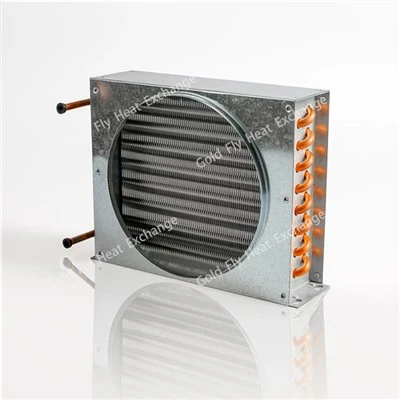
If you’re ready to get a tailored quote for your space, or just have questions about which unit makes sense for your needs, I’m here to help. We work with everything from 500 sq ft corner stores to regional restaurant chains, so I can walk you through pricing, incentives, and installation options that fit your budget. Don’t wait until your current unit dies in the middle of a busy weekend—reach out to discuss your refrigeration needs today.
Air Cooler References
Commercial Refrigeration Energy Efficiency Standards, U.S. Environmental Protection Agency, 2023
2023 Commercial Refrigeration Unit Sales Report, Refrigeration Contractors of America
State Commercial HVAC Incentive Database, Department of Energy, 2024
Shandong Gold Fly Heat Exchange Equipment Co., Ltd.
Shandong Gold Fly Heat Exchange Equipment Co., Ltd. is one of the most professional refrigeration unit manufacturers and suppliers in China, specialized in providing high quality customized service. We warmly welcome you to wholesale bulk refrigeration unit in stock here from our factory.
Address: No.166, Wanshida Road, East Industrial Park, Xingfu Town, Boxing County,Binzhou City, Shandong Province
E-mail: Chloe@goldfly.com.cn
WebSite: https://www.gold-fly.com/
