Hey there, if you’re scrolling pellet mill content, you’ve definitely stumbled on this question at some point: “Can I toss wet raw materials into my pellet mill machine?” As a pellet mill supplier, I get this DM or call at least twice a week, and it makes total sense—most farmers, feed mill owners, or small-scale wood pellet makers aren’t sitting on a fully staffed lab, so figuring out moisture levels feels like a chaotic guesswork half the time. Pellet Mill Machine

Let me cut to the chase first, since no one wants to sift through fluff: you can use wet raw materials in a pellet mill, but it’s not a free-for-all. There’s a sweet spot, and if you miss it, you’re gonna end up with a mess instead of uniform pellets. Let’s break this down like we’re chatting over a coffee (no stuffy jargon, promise—no “moisture content threshold” garbage we can’t explain simply).
First, let’s talk about what wet raw materials we’re even talking about here, because that changes everything. If you’re making animal feed pellets, “wet” might be fresh alfalfa after a rain, distillers’ grains that still have 30% moisture left from the brewery, or even vegetable scraps from a farm stand. If you’re making wood pellets, wet stuff could be green pine clippings, freshly cut sawdust that didn’t dry after milling, or even straw that got rained on before you stored it. Totally different uses, same core rule: moisture is the name of the game.
Now, what’s the actual number we’re working with? Most people will tell you 10-20% moisture for feed, 8-12% for wood pellets. I’ve heard horror stories from a guy who dumped 40% wet grass clippings into his flat die mill and spent 3 hours scraping clumpy green goop out of the die holes—no pellets, just a sticky mess that smelled like a lawn mower left out in a garbage can. Another client tried 5% wet sawdust and got pellets that crumbled as soon as they left the die, like old bread. That’s why that sweet spot is non-negotiable.
But here’s the part most suppliers won’t tell you: you don’t have to dry everything down from 50% moisture to that sweet spot. I’ve worked with feed mill owners who use a mix of wet distillers’ grains (around 35% moisture) and dry cornmeal (around 12% moisture) to hit 18% overall, no extra drying needed. Same with wood pellet guys: if they’ve got wet straw (25%) and dry wood chips (8%), mixing them at a 1:4 ratio gets them to 11%, perfect for their ring die mill. That’s a game-changer because drying is expensive—fuel costs, time, space. Why burn extra diesel to dry something that’s already wet but can work with a mix?
Wait, but hold on—what if you have super wet stuff, like 60% moisture food waste for compost pellets? I get that, and I’ve seen it work, but you can’t just feed that straight through. You need to do a quick pre-step: “conditioning” before the mill. Conditioning is just heating and mixing the material (usually with steam for feed, hot air for wood) to turn that extra moisture into something that binds the particles. For that food waste, we worked with a client who added a tiny bit of molasses (a binder, but also helps with moisture balance) and ran it through a conditioner at 85°C for 2 minutes, then it went into the mill, and they got solid pellets no mess. Skip the conditioner? You’re back to goop city.
Now, let’s talk about different types of pellet mills, because that’s another variable most people miss. If you’re using a flat die mill (great for small-scale, hobby farms, backyard operations), it’s way pickier about moisture than a ring die mill (used for commercial, high-volume runs). I’ve had a hobby farmer with a small flat die mess up 5 batches because he thought his wet hay was okay at 22% moisture—nope, flat die hates anything over 18%. A commercial feed client with a ring die, though, runs successfully with 20% moisture regularly, because the ring die exerts way more pressure on the material, so even a little extra wetness gets squeezed out as the pellet forms. It’s not magic, it’s just pressure and heat from friction inside the mill—more pressure = more forgiving of wet material, basically.
Wait, but what about the downsides if you get this wrong? It’s not just messy pellets. You’ll wear out your die and rollers way faster. That’s a big one—new dies cost a few hundred bucks, and if you’re running wet material that’s too high, the friction builds up more, so your rollers are slipping, the die holes get clogged, and you’re replacing parts every week instead of every few months. I had a guy call me panicking last month because his mill was smoking—turns out he’d run wet manure at 30% moisture through his mill, and the extra wetness caused the bearings to overheat. Fix that quick, and you’re good, but ignore it and you’re looking at a $1,000 repair bill.
Also, let’s address the elephant in the room: can you use any wet raw material? No, sorry. If it’s wet but has a lot of oil, like wet sunflower seeds, that’s different—oil is a binder, but too much oil plus extra moisture? You’ll get pellets that slide apart, not stick together. Or wet material that’s rotting, like moldy hay—mold can mess with the binding agents, and your pellets won’t hold, plus they’re bad for animal feed. So it’s not just moisture, it’s the material’s makeup too.
Here’s a quick pro tip I give all my clients that works for 9 out of 10 people: skip the fancy moisture meters if you don’t have one. Do the squeeze test. Grab a handful of your material, squeeze it as hard as you can in your fist. If it stays in a tight ball, no water drips out, and it crumbles when you tap it against a table? Perfect. If water drips out when you squeeze? Too wet. If it won’t stay in a ball, falls apart immediately? Too dry. I know it sounds silly, but it’s saved so many people from wasting time and material. I even teach this to small-scale farmers who can’t afford a $200 moisture meter—works like a charm.
Wait, but what about drying if you do have too much wet material? Do you have to haul it to a dryer? Not always. If you have a small pile of wet wood chips, spread them out on a tarp in the sun for a few days—sun drying works, as long as you stir them every day so they don’t get moldy. For commercial guys, we usually recommend a small rotary dryer or a conveyor belt with hot air, but if you’re just starting out, mixing wet and dry is way cheaper. I had a new wood pellet client last year who thought he needed a $5,000 dryer, and we told him to mix his wet clippings with dry sawdust from his neighbor’s sawmill—cost him $20 in sawdust, and he was up and running that week, no extra equipment.
Let me wrap this up so it’s not a novel: yes, you can use wet raw materials in a pellet mill, but only if you nail that moisture sweet spot, match it to your mill type, and maybe do a quick conditioning step if it’s super wet. No need to panic if your material isn’t perfectly dry—most people over-dry stuff anyway, wasting time and energy.
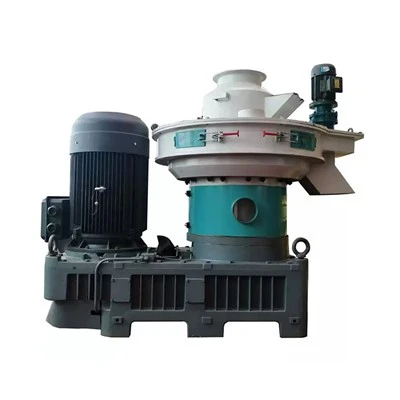
Now, if you’re still unsure—you’ve got a pile of wet material, or your mill is acting up because you messed up moisture levels, or you need help setting up a mix for your specific raw materials—hit us up for a chat. We don’t do pushy sales calls, we just help you figure out what works for your operation, no weird fine print. Whether you’re a hobby farmer with a small flat die or a commercial feed mill with a ring die, we’ve got the tips and the right equipment for you.
Grass Shredder References:
- American Society of Agricultural and Biological Engineers. (2020). Standard S269.4: Moisture Content Guidelines for Pellet Production From Agricultural Materials. ASABE.
- Pellet Mill Manufacturers Association. (2022). Operational Best Practices for Wet Raw Material Processing in Flat and Ring Die Pellet Mills. PMMA.
- University of Extension Services. (2021). Small-Scale Pellet Production: Moisture Testing and Material Mixing for Hobby and Mid-Scale Operators. Land-Grant Press.
Zhengzhou Xinyihaotong Machinery Manufacturing Co., Ltd.
As one of the most professional pellet mill machine manufacturers in China, we also support custom service. We warmly welcome you to buy high quality pellet mill machine for sale here from our factory. For price consultation, contact us.
Address: Rooms 2301–2312, Jiayi Building, Xinxiang City, Henan Province, China
E-mail: zhaoyixuan5566@gmail.com
WebSite: https://www.xyhtmachinery.com/
