Hey there, thanks for swinging by—especially if you’ve been side-eyeing Caterpillar pistons lately, whether you’re a fleet manager, parts tech, or someone just trying to figure out why that piston quote you got looks like a random number generator went haywire. I’ve been in this game for over a decade, running a family-owned Cat parts supply business, so I see every question, every panic text about a blown engine, and every “wait, why is this $800 vs $2500?” comment come through. Today, let’s cut the jargon and actually break down how much a Caterpillar piston costs—no corporate fluff, no vague “it depends” garbage you can find on Google. Caterpillar Piston

First, let’s get one thing straight: Caterpillar pistons aren’t the cheap, one-size-fits-all stuff you grab at the auto parts store for a 2005 Civic. These are built for Cat engines—think 3126s, C15s, C18s, even the big-bore mining engines that power construction sites, logging rigs, or semi-trucks hauling cross-country loads. So price isn’t just a random sticker; it’s tied to a ton of factors that most part sellers won’t tell you about. Let’s start with the basics: the biggest driver of cost is what engine it’s for. You wouldn’t pay the same for a tiny, used car piston as you would for a piston that has to withstand 2,000 psi of compression and 3,000-hour service intervals, right? Same logic here.
For the small-to-mid range on-highway engines—like the Cat C7, C9, or the older 3126 model—we’re talking about $350 to $750 per piston, straight up. Wait, “straight up” as in OEM, not the cheap aftermarket junk some guys try to pass off as Cat. Let’s clarify that: there are two main categories here, and the price gap is wild. First, OEM Caterpillar pistons—these are the exact same parts that roll off Cat’s assembly line, made to match every spec: ring grooves, material thickness, even the little notches for wrist pins. Then there’s aftermarket “compatible” pistons. We’ve sold both, but I’ll be real with you: some aftermarket stuff works, most cuts corners. For those small engines, aftermarket can be anywhere from $150 to $400 per piston. But here’s the catch: we’ve had customers come back six months later because their aftermarket piston cracked, burned oil, or ruined the liner. The $150 “deal” turned into a $5,000 engine overhaul. Don’t say I didn’t warn you.
Now, move up to the mid-range heavy duty engines—think C10, C12, C15, C16, the ones that power over-the-road semi-trucks or large construction excavators. This is where things get interesting. OEM pistons here start at around $800 and go up to $1,800 each. Wait, why the huge range? Let’s talk about the type of piston. Cat makes two main piston styles for these engines: cast and forged. Cast pistons are cheaper, made for lighter load applications, so they’re around $800 to $1,200. Forged pistons, though—those are built for pulling heavy loads, extreme heat, long hours. If you’re running a semi that does 500k+ miles a year, or an excavator digging rock 12 hours a day, you need forged. Those can hit $1,500 to $1,800 per piston. We just did a bulk order for a logging company that runs C15s through the mountains, and they went with forged OEM—$1,720 a pop, but they said it’s worth it because they only replace these every 800k miles vs. 400k for cast. Makes sense, right?
And then there’s the big boys—the engines that aren’t on highways, they’re on mine sites, power plants, or large mining equipment. C175, C27, even the 3500 series engines that weigh more than a pickup truck each. Pistons for these? We’re talking $2,500 up to $5,500 per piston. No joke. These aren’t your standard car parts. A single piston for a C175 has a steel alloy that can handle 3,500 psi of compression, a special cooling gallery that keeps it from melting during 24-hour operation, and tolerances so tight you can’t even slide a piece of paper between the piston and the liner. If you mess up that piston, you’re not just replacing parts—you’re dealing with a $500k+ engine that’s down for weeks because a tech can’t source the right part. We have a dedicated line for these big bore pistons, because if a mine calls at 2 a.m. needing a C27 piston because one cracked mid-shift, we drop everything to get it shipped same-day.
Now, let’s talk about the other stuff that bumps up the price, because this is where customers get blindsided. First, quantity. If you’re buying one replacement piston for a single engine, you pay full price. If you’re buying a set of 6, 12, or 16 pistons for an overhaul? We knock off 10% to 20% because bulk orders make our logistics easier, and we pass the savings on. Last month, a guy with an 8-cylinder C12 bought 8 pistons, saved almost $1,000 vs. buying them one at a time. Second, delivery time. If you need a piston in 2 days, you pay a rush fee—usually $100 to $300, depending on where it’s going. If you can wait 3 to 5 business days, no rush fee. We stock most common pistons in our warehouse, but for those big bore mine ones, we keep a few spares on hand, and the rest ship from Cat’s regional hub, which is faster than ordering direct from Cat for most people. Third, core charge. Oh, right—core charges. That’s the deposit you pay when you buy a piston, and you get it back when you return the old, core piston (the one you took out of your engine). For most mid-range pistons, core charge is $200 to $400 per piston. It’s not a scam—they need those old pistons to recycle or remanufacture, so it’s a way to keep parts out of landfills and save money long term. If you forget to return the core, you lose that charge, so make sure you hang onto the old piston until you get your refund.
Wait, let’s address the elephant in the room: why not just buy direct from Cat? We get that question all the time. Yeah, Cat is the manufacturer, but here’s the thing: Cat sells to dealerships, and dealerships mark up parts 30% to 50% because they have overhead (showrooms, techs, sales teams, whatever). We’re a bulk supplier, we cut out the middleman, so our prices are usually 15% to 25% lower than local Cat dealers, and we have the same OEM warranty. Also, if you have a weird engine—like an older 3406B that’s been out of production for 20 years—dealerships might not stock it, but we can source it through our network, which is a huge win. We also do remanufactured pistons if you’re on a tight budget, but I’ll be straight: reman is good for some applications, but for high-load stuff, OEM is still better. Reman pistons for mid-range engines are $400 to $600, so way cheaper, but we only recommend them for light use, like a semi that’s only hauling small loads, not a workhorse.
Now, let’s talk about common mistakes people make when buying Cat pistons. First, buying the wrong part number. Cat parts are super specific—you can’t just say “I need a piston for a C15.” There’s different part numbers for C15s with different horsepower ratings, different model years, even different emission standards. A C15 from 2007 with emissions gear has a different piston than a 2019 C15 without, and if you mix them up, it won’t fit, or it’ll cause misfires, burnt valves, or worse. We make sure every customer gives us their engine serial number, because that’s the only way to get the exact right part. Second, skimping on quality to save a few bucks. I mentioned earlier about aftermarket junk—we had a guy last year who bought 6 pistons for his C10 for $900 total, which is way cheaper than OEM’s $5,000 for 6. Three months later, his engine locked up, and the tech pulled the piston and found that the ring grooves were made of soft metal that wore down. He ended up paying $7,000 for a new engine, and he swore he’d never cut corners again. Third, not checking the warranty. All OEM pistons come with a 12-month or 12,000-hour warranty, whichever comes first. Some aftermarket ones have 30-day warranties, so if something goes wrong, you’re out of luck. We stand behind every piston we sell—if it’s an OEM part, it has Cat’s warranty, if it’s ours, we’ll make it right no matter what, no hoops to jump through.
Let’s wrap this up with a quick breakdown to make it easy, no confusing numbers:
- Small engines (C7, C9, 3126): $350–$750 OEM, $150–$400 aftermarket
- Mid-range (C10, C12, C15 cast): $800–$1,200 OEM, $200–$500 aftermarket
- Mid-range forged (C15, C16): $1,500–$1,800 OEM, $300–$700 aftermarket
- Big bore mining/power (C175, C27): $2,500–$5,500 OEM, (rare aftermarket, not recommended)
But remember, these are rough numbers—always hit us up with your engine model and serial number, and we’ll give you a exact, no-obligation quote.
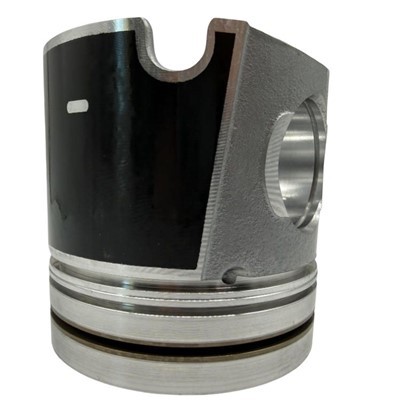
If you’re in the market for Caterpillar pistons, whether you’re replacing one bad one, doing a full engine overhaul, or need spares for your fleet, don’t waste time bouncing between dealerships or searching sketchy online marketplaces. We stock all common OEM and quality reman pistons, can get any hard-to-find part for older engines, offer bulk discounts, and ship same-day on most orders. Hit us up to chat through your needs, get a precise quote, or answer any other questions you have—no pressure, no sales pitch, just straight talk about parts that keep your equipment running.
SDEC Piston References:
- Caterpillar Inc. (2023). "Cat Engine Piston Specifications and Pricing Guide." Official Cat Parts Catalog.
- Heavy Duty Parts Association (2022). "Aftermarket vs. OEM Heavy Duty Engine Components: Reliability and Cost Analysis."
- Equipment World Magazine (2023). "Big Bore Engine Parts: Sourcing, Cost, and Application Best Practices."
- U.S. Environmental Protection Agency (2022). "Core Charge and Parts Recycling Guidelines for Heavy Duty Equipment."
Hebei Yuwei Piston Co., Ltd.
As one of the most professional caterpillar piston manufacturers and suppliers in China, we’re featured by quality products and good service. Please rest assured to buy customized caterpillar piston made in China here from our factory. Also, quotation is available.
Address: Beizhujiacun Village, Sujiuzhuang Town, Ningjin County, Xingtai City, Hebei Province
E-mail: jack@ywpiston.com
WebSite: https://www.ywpiston.com/
