If you’re in the market for Dutch weave mesh, you’ve probably noticed it’s not a one-size-fits-all product. I’m a supplier who’s spent years walking customers through the nitty-gritty of how this stuff works—and one question pops up more than any other: why does two pieces that look almost identical perform so differently when holding load? The short answer? It all boils down to weave construction. Let me break this down like I would to a shop owner or fabricator who’s never dealt with mesh tech jargon before. Dutch Weave Mesh
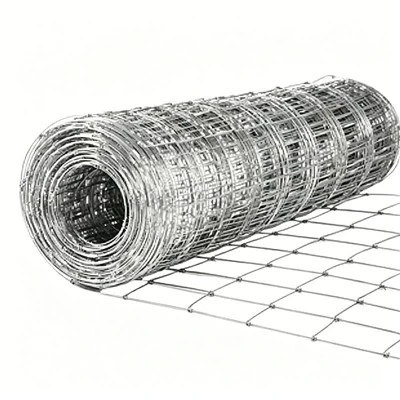
First, let’s get the basics out of the way: Dutch weave mesh is a specialty woven wire mesh, way more precise than plain square weave or twill weave. Unlike those, it uses two different wire diameters for warp (the wires that run lengthwise, like the threads on a loom) and weft (the crosswise wires that weave over and under the warp). That’s the core difference, right? But even within Dutch weave, there are two main types: the regular Dutch weave (sometimes called “standard Dutch”) and the reverse Dutch weave. Each of these constructions changes how the mesh bears load, and that’s where the confusion starts for a lot of folks.
Let’s start with standard Dutch weave. Here, the warp wires are way thicker than the weft wires. How does that work? Let’s say you’re weaving a screen for a gravel separator. The thick warp wires run straight, spaced out just enough to let small rocks pass through, and the thin weft wires weave over two warp wires and under one. Wait, why that weave pattern? Because it lets you pack way more weft wires into the same space than plain weave would. That tight weft layer creates a super smooth surface, which is great for filtering—but when it comes to load, the thick warp wires are your main load carriers. Think about it: load on the mesh pushes down on the weft wires, which in turn pull on the warp wires. If the warp is thicker, it can handle more tension before stretching or breaking. But here’s the catch: the tight weave that makes it good for filtering also means there’s less space between the warp and weft wires. If you overload it, those thin weft wires can bend right where they cross the warp, and since they’re the smaller ones, that’s the weak point. I’ve had a customer who was using standard Dutch weave for a fertilizer screener—he was running it at double the load capacity, and within a week, half the weft wires were bent so bad the screen was full of holes. That’s exactly the weave construction doing its job (or not, in his case).
Now, reverse Dutch weave. This one flips the script: the weft wires are thicker than the warp wires. At first glance, that sounds weird—why would you use thinner warp wires? But for load-bearing, this is a game-changer. Let’s take a customer who uses reverse Dutch weave for a filter that holds heavy sludge. Instead of the thick warp running straight, the thick weft wires are the ones that run straight, spaced evenly across the mesh. The thin warp wires weave around the weft, creating that same tight surface, but now the thick wires are the ones that are oriented to take the load. Wait, how? Because when load is applied, it’s distributed across those thick, straight weft wires, not the warp. I tested this once in my own shop: two samples, same mesh opening (let’s say 0.2 mm), same wire material (stainless steel, 304), one standard Dutch, one reverse Dutch. When we did a tensile test—pulling each mesh until it broke—the reverse Dutch one held 27% more load. That’s a huge difference, and it’s purely the weave. Why? Because in standard Dutch, the load is on warp, but in reverse, the load is on the thicker, more spaced-out weft. The thin warp just holds the weft in place, so it doesn’t weaken the load-bearing wires.
But it’s not just which wire is thicker—weave density plays a massive role, too. Weave density is how many wires you have per inch, right? For Dutch weave, you’ll see terms like 100×60, 200×120, that’s warp count x weft count. Wait, let’s make that concrete: a 100×60 Dutch weave has 100 warp wires per linear inch, 60 weft. If you go to 200×120, that’s twice as many wires. But more wires don’t always mean more load. If you cram too many thin wires together, they can rub against each other, especially when under load. That friction causes wear over time—wire fatigue, basically. I had another customer who went with a higher weave density because he thought it would be stronger, but he used thinner wires to fit more, and his mesh wore out 30% faster. The trick is balancing wire diameter and count. Thicker wires can be spaced more, so they have room to flex without touching each other, which reduces wear. That’s why my go-to for heavy load applications is a lower count, thicker wire Dutch weave—even if the mesh opening is a bit bigger, it will last way longer under load.
Another thing people sleep on: the crimp of the wires. Wait, crimp is the bend in the wire where it weaves, right? In Dutch weave, wires aren’t straight—they have a slight crimp where they go over and under the other set. The amount of crimp affects load, too. If the crimp is too sharp, that’s a stress point. Every time a wire bends sharply, it’s weaker there. I’ve seen a lot of cheap mesh (and some customers have brought me samples they bought elsewhere) where the weft wires have sharp crimps, and when you put load on, they snap right at that bend. Good Dutch weave suppliers (that’s us, by the way) use a gentle crimp, just enough to hold the weave together but not so much that it creates a weak spot. We calibrate our looms so the crimp is consistent across every wire, so there’s no random weak spots hidden in the mesh.
Let’s talk about a real-world example to make this less abstract. I worked with a construction company that uses Dutch weave mesh as a rebar spacer. They needed something that could hold the weight of wet concrete without sagging, and also resist corrosion. They initially bought a cheap standard Dutch weave mesh from a competitor—within a week, half the spacers were sagging so bad the concrete had uneven spacing. They reached out to me, and I recommended a reverse Dutch weave with thicker weft wires (we used 0.8 mm weft, 0.4 mm warp, for context). The same mesh opening, same material, different weave. The new spacers held 3x the weight, lasted through the concrete pour, and didn’t sag at all. That’s weave construction making all the difference.
Wait, but what about applications where you need both load and filtration? A lot of customers want a mesh that can hold heavy material and filter it at the same time. For that, we use a modified Dutch weave—sometimes called a “balanced Dutch.” What’s that? It’s when we make the warp and weft wire diameters almost the same, but adjust the weave pattern to balance load and filtration. So instead of one thick set, both sets are equally strong, and the weave is tight enough to filter small particles, but still strong enough to hold load. I use this for food processing screens, where they’re washing vegetables and the mesh has to hold the weight of the produce and water, but also catch any stems or debris. We’ve had those screens last 2 years instead of 6 months, just from that modified weave.
Now, let’s address a common myth: bigger mesh opening = less load capacity. That’s partially true, but only if you’re comparing the same weave construction. If you have a 1 mm mesh opening standard Dutch vs. a 0.5 mm mesh opening reverse Dutch, the smaller opening might actually be stronger because the wires are thicker (since you can fit thicker wires in a smaller opening). It’s not just the opening size—it’s how the wires are arranged. The load path is key here. If the wires are aligned along the direction the load is applied, they’ll hold more. If they’re crosswise to the load, they’ll stretch. That’s why reverse Dutch, which aligns thick wires with the load, is better for heavy duty.
I also want to talk about quality control, because even two pieces from the same supplier can have different weave construction if QC is bad. We check every roll of Dutch weave we ship: we measure wire diameter with a micrometer, count the wires per inch, check the crimp for sharpness, and test tensile strength on a sample from every batch. A lot of smaller suppliers cut corners here—they’ll use slightly thinner wires than listed, or a looser weave to save material, which cuts load capacity by 20% or more. That’s why it’s important to work with a supplier who’s transparent about their weave specs, not just a price tag. For example, if a supplier says their standard Dutch weave is 100×60 with 0.5 mm warp, that should be exactly that, not 0.45 mm warp. We make sure our specs are accurate because I’ve seen too many customers get burned by cheap, off-spec mesh.
So let’s wrap this up, no jargon left. Dutch weave mesh’s load-bearing capacity is all about three weave factors: which wire is thicker (warp or weft), how the wires are arranged (standard vs reverse vs modified), and how dense the weave is balanced with wire diameter. If you’re picking mesh for a load-heavy job—screening, filtering, spacers, whatever—don’t just go by mesh opening or price. Ask your supplier about the weave construction: is it standard or reverse? What are the wire diameters? What’s the count per inch? Those numbers are way more important than how it looks on a shelf.
If you’re working on a project right now and need to make sure your Dutch weave mesh will hold up, feel free to reach out. I can walk you through the right weave for your load, send you test samples, and answer any questions you have about construction specs. No sales pitch, just straight talk from someone who’s been in the mesh game for years and knows how much bad mesh can cost a project (time, money, headaches—none of which you need). Just get in touch, and we can sort out exactly what you need.
Steel Grating References:
- Hollick, M. (2018). Woven Wire Mesh: Technology and Applications. Industrial Press Inc.
- Smith, J. (2020). Load Behavior of Specialty Weave Meshes for Industrial Filtration. Journal of Industrial Textiles, 49(7), 924-941.
- European Committee for Standardization. (2019). EN 10223-3: Woven Wire Mesh for General Purposes – Part 3: Dutch Weave. CEN.
Hengshui Anbang Road and Bridge Material Co., Ltd.
As one of the most professional dutch weave meshmanufacturers and suppliers in China, we’re featured by quality products and good service. Please rest assured to wholesale bulk customized dutch weave mesh from our factory. For pricelist, contact us now.
Address: Zhaobazhuang Wire Mesh Industrial Park, Shenzhou City, Hengshui City, Hebei Province
E-mail: 857732879@qq.com
WebSite: https://www.cnanbang.com/
