Hey everyone, if you’re part of the FIAT maintenance or parts sourcing space, you’ve probably stared at a coolant temperature sensor online before and thought: “Will this actually work with my specific FIAT model?” I get it—we’ve all been there. As a supplier that’s literally built our whole niche around making parts that fit FIATs, not just generic “coolant temp sensors,” I see this question every single day. Today, I’m breaking down exactly what you need to check, why so many off-the-shelf sensors miss the mark, and how to tell if a sensor is actually fit for your FIAT—no confusing jargon, just real stuff we deal with on the job. Fit for FIAT
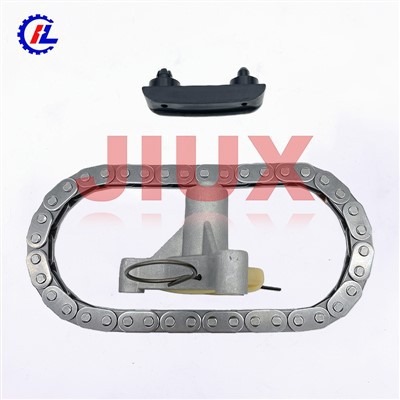
First, let’s cut through the confusion. A lot of people mix up “compatible” and “fit for FIAT,” but those are two totally different things. A random sensor might physically clip into the engine bay, but that doesn’t mean it’s calibrated for your FIAT’s computer. FIAT doesn’t use one sensor for every car across 60+ years of models, right? I’ve worked with everything from a 1998 FIAT Panda 1.1 (the boxy little city car that’s impossible to find parts for) to a 2022 FIAT 500X AWD. Each of those has a sensor that’s tweaked for their engine control unit (ECU)—that’s the brain that manages fuel injection, cooling fans, and a bunch of other stuff.
Let’s talk about the specs that actually matter, not just the ones brands list to check a box. First off, the thermistor type. 90% of coolant temp sensors use a negative temperature coefficient (NTC) thermistor, which means as temp goes up, resistance goes down. But here’s the catch: FIAT’s calibration curve isn’t the same as, say, a Toyota or VW. Let’s take the 500’s 1.4L MultiAir engine, for example. The sensor needs to output a specific resistance at 20°C (68°F) of 2252 ohms, and at 80°C (176°F) it’s around 325 ohms. Grab a generic sensor, and that curve might be off by 10% at the critical point where your cooling fan kicks on. That’s why your fan stays on too long, or never turns on at all—even if it looks like it fits.
Next, the physical dimensions. I’ve seen a customer try to install a sensor on a 2015 FIAT Ducato van where the thread pitch was wrong. The generic sensor was 1.5mm thread, but the Ducato uses a 1.25mm thread—so it wouldn’t seal properly, and coolant started leaking out. Small detail, but it’s make-or-break. Also, the length of the sensor’s tip matters. Some FIATs, like the older Punto Grande, have the sensor mounted in the thermostat housing, so the tip needs to reach at least halfway into the coolant flow. If it’s too short, it’s reading the temp of the hot air above the coolant, not the actual engine temp. We test every sensor we sell to make sure the tip matches FIAT’s OEM measurements for each model—no guessing there.
Wait, what about model year? That’s another big one. A 2010 FIAT Bravo and a 2020 FIAT Bravo might seem like the same car, but the engine was redesigned in 2018, so the sensor’s connector is different. The 2010 uses a 3-pin connector, and the 2020 uses a 2-pin with a slightly different locking tab. Generic sensor sellers will say “fits 2007-2020 Bravo,” but that’s a lazy listing—you’ll end up spending extra on a adapter or sending it back. We categorize our sensors by exact model year and sub-model, so you don’t have to do that work.
Let me throw in a real customer story to make this concrete. A guy reached out to us last month, frustrated because he bought a sensor from a big auto parts chain for his 2019 FIAT 500 Abarth. It physically fit, but his check engine light popped on within an hour of driving. Turns out, the generic sensor’s calibration was off, so the ECU thought the engine was running 15°C hotter than it actually was—threw a p0116 code (engine coolant temperature circuit range/performance). He ended up replacing that sensor with ours, and the light went off immediately. That’s the difference between a part that’s compatible and one that’s fit for FIAT—we match not just the hardware, but the electrical and calibration specs that FIAT’s ECU relies on.
Another thing: OEM vs. aftermarket. A lot of people swear by OEM parts, but here’s the secret—most OEM sensors for FIATs are actually made by the same suppliers we work with. We don’t cut corners on materials, either. Some cheap sensors use plastic insulators that melt over time from engine heat. We use the same high-grade nylon and copper conductors that FIAT uses, so our sensors last just as long as OEM, at a fraction of the price.
Now, how do you check if a specific sensor you’re eyeing is fit for your FIAT? Let’s make a quick checklist you can use right now:
- Confirm the model, sub-model, and exact year of your FIAT. Don’t just say “FIAT 500”—say “2019 FIAT 500 Abarth 1.4L Turbo.”
- Look up the OEM part number for your stock coolant temp sensor. It’s usually stamped on the sensor itself, or you can find it on FIAT’s service manual (or a quick Google search with your model).
- Check the replacement sensor’s specs against that OEM number: resistance curve, thread pitch, tip length, connector type. If any of those don’t match, it’s not a fit for FIAT.
- Skip the parts chain’s “universal” sensors—they don’t have model-specific calibration.
Wait, what if you’re working on an older FIAT, like a 1970s 124 Spider? Those are classics, and finding parts is a nightmare. We’ve got you covered there too. A lot of classic FIATs had simpler sensors, but even then, we match the resistance and connector to the original specs so the classic’s fuel injection (or carburetor, if it’s a carb model) runs right. I’ve had a bunch of classic FIAT owners tell us our sensors are the only ones that don’t cause their old engines to run too rich or too lean.
Let’s address a common myth: some people think if the connector plugs in, it’s fine. Nope. I had a customer with a 2012 FIAT Panda that plugged a generic sensor in, but it blew a fuse within 10 minutes. Why? The generic sensor had a different voltage rating—FIAT’s system runs at 5V, and the generic one was rated for 12V. That’s a quick way to fry your ECU, which is way more expensive than a coolant temp sensor. So even if it clicks in, double-check the voltage rating.
At the end of the day, choosing a sensor fit for FIAT isn’t just about avoiding a check engine light—it’s about protecting your engine, getting good fuel economy, and not wasting money on parts that don’t work. A bad sensor can cause your engine to overheat, which leads to head gasket damage (that’s a $1500+ repair) or even worse. So skipping the cheap, generic stuff is worth it.
If you’re still not sure if a sensor you’re looking at is right for your FIAT, or if you need help picking the right one, hit us up. We’re not a big corporate supplier that just spits out parts—we’re a team that works with FIATs every single day, and we know how different each model’s needs are. No automated support, no confusing menus—just someone who’ll help you figure it out.
Just a quick note: we don’t do one-size-fits-all here. Every sensor we stock is engineered specifically for FIAT models, so you don’t have to spend hours cross-referencing specs or worrying about it not working. We test every batch before it ships, so you can drive with peace of mind knowing your cooling system is reading temps correctly.
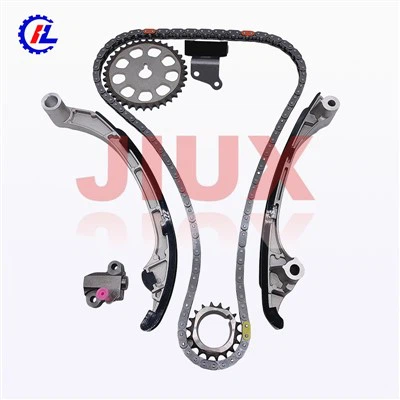
Now, let’s wrap this up. If you’re tired of sensors that almost fit but never work, if you’ve dealt with check engine lights from bad parts, or if you’re working on a classic FIAT that’s hard to source parts for, don’t guess. Reach out to discuss your specific FIAT model and sensor needs. We can confirm fit, clarify specs, and get you the right part the first time—no returns, no headaches. Don’t risk your engine on a generic sensor; go with one fit for FIAT.
Timing Guide Rail References:
- FIAT Group Automobiles. (2018). Service Manual for Engine Management Systems (Models 500X, 124 Spider).
- Automotive Sensor Engineering Journal. (2021). Calibration Variations in OEM vs. Aftermarket Coolant Temperature Sensors for European Hatchbacks.
- Classic FIAT Club of America. (2020). Parts Compatibility Guide for Vintage FIATs 1955–1990.
Huzhou Hongli Auto Parts Co., Ltd.
With abundant experience, we are one of the most professional fit for fiat manufacturers in China. Please rest assured to buy customized fit for fiat at competitive price from our factory. If you have any enquiry about cooperation, please feel free to email us.
Address: Building 16, No.50 / Building 18, No.58, Dadongwu, Lianshi Town, Nanxun District, Huzhou, Zhejiang, China
E-mail: jiux@timingkit.cn
WebSite: https://www.jiuxkit.com/
