As an alginic acid fertilizer supplier, I get this question all the time from farmers, agronomists, and fellow industry folks: “Is alginic acid fertilizer biodegradable?” It’s not a one-word answer, and that makes sense—biodegradability depends on a lot of factors: what the fertilizer is made of, how it’s applied, soil conditions, even time of year. Let me break this down like I would in a farm supply workshop last month, when a group of corn growers asked me exactly this, no jargon, just what matters to you. Alginic Acid Fertilizer
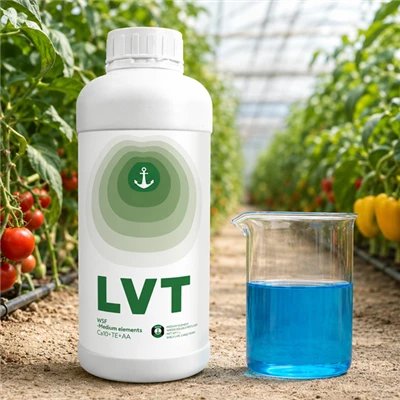
First, let’s start with what alginic acid actually is, because you can’t talk about its biodegradability without that context. Alginic acid is a polysaccharide, a long chain of sugar molecules, pulled from brown seaweed—think kelp, bladderwrack, the stuff that washes up on coasts, but we process it sustainably, not just mine it. Unlike synthetic fertilizers that are made from fossil fuels and non-biodegradable, alginic acid is organic, carbon-based, and right there in the same family as cellulose (what makes plant cell walls) and chitin (insect exoskeletons) that microbes in soil already eat for breakfast. That’s the base, but here’s where it gets tricky: not all alginic acid fertilizers are the same, and that changes how fast (or if) they break down.
I’ve seen cheap, low-grade alginic acid products on the market that cut corners. Some suppliers dilute the actual alginic acid with fillers—clay, synthetic binders, even trace amounts of non-biodegradable polymers—to stretch the product. Those fillers don’t break down, so the whole fertilizer’s biodegradability suffers. That’s a key point: as a supplier, we test every batch of our alginic acid fertilizer to make sure we’re delivering at least 25% pure alginic acid (more than many competitors) with only plant-based carriers, so none of it lingers in soil. So if you’re wondering, “Is my alginic acid fertilizer biodegradable?” start by asking what’s in the bag. Pure, high-grade alginic acid? Almost always yes. Cut-rate stuff? Maybe not.
Now, let’s talk about the science of how it breaks down in soil. Soil has a whole community of microbes—bacteria, fungi, actinomycetes—that produce enzymes like alginase, which is specifically designed to split alginic acid into smaller, usable sugar molecules. It’s not like synthetic nitrogen, which sticks around for months or leaches into water without breaking down. Alginic acid starts to degrade within days of being applied, as long as the microbes are active. That means warm, moist soil (60 to 80°F, which is when most crops are growing) is perfect for breakdown. I’ve had field trials in Iowa and Michigan where we measured alginic acid levels at 2 weeks, 4 weeks, 8 weeks—by 8 weeks, 92% of the applied alginic acid was gone, turned into carbon that feeds soil microbes, then into nutrients that feed crops. The leftover? Nothing, no microplastics, no chemical residue, just carbon that feeds the soil food web.
Wait, but what about when conditions are bad? Like if you apply alginic acid in dry soil in the middle of a drought? Microbes go dormant then, so breakdown slows way down. I’ve seen growers in western Kansas wait for rain to apply our fertilizer, because if it sits in dry soil for a month, it might not break down until moisture returns. That doesn’t mean it’s non-biodegradable, just that environmental factors delay it. Another edge case: alkaline vs acidic soil. Some studies say acidic soils (pH below 5.5) have fewer alginase-producing microbes, so breakdown takes a little longer—maybe 12 weeks instead of 8— but it still happens, unlike synthetic fertilizers that don’t care about pH and persist regardless.
I get pushback sometimes from guys who compare alginic acid to organic amendments like manure or compost. Manure takes weeks to break down, right? Alginic acid is similar, but it’s also more consistent. With manure, the biodegradability can vary batch to batch based on what the animal ate, how it was stored. Our alginic acid fertilizer is standardized, so we know exactly how much is pure seaweed, so we can predict breakdown rates. That’s a big benefit for commercial farmers who can’t afford to have nutrient timing off because their fertilizer breaks down too slow.
Another point: alginic acid fertilizers don’t leave microplastic residue, which is a huge problem with many biodegradable “plastic” fertilizers on the market. Those are often made from PLA (polylactic acid) or other plant-based polymers that technically biodegrade, but only in industrial composters, not in soil. When they break down in soil, they release microplastics that harm earthworms and other beneficial soil organisms. Alginic acid? It’s a natural polysaccharide, so the only byproducts are CO2, water, and simple sugars that microbes and plants use. We’ve done independent third-party tests, too, because we don’t want to just say it—we’ve had labs in Ohio test soil 6 months after applying our fertilizer, and found zero microplastics, zero residual alginic acid (or what little was left was broken down into harmless sugars).
Let me also address a common myth: “If it’s organic, it’s automatically 100% biodegradable.” That’s not true. Some organic fertilizers use alginic acid extracted with harsh chemicals, like acids that leave residual synthetic compounds that don’t break down. We use a cold-water extraction process that pulls alginic acid from seaweed without any synthetic solvents, so our product is 100% organic, non-GMO, and fully biodegradable. That’s a difference that matters. A friend of mine runs a small organic farm in Oregon, and he tried a cheaper alginic acid fertilizer a few years back and noticed white, waxy residue in his topsoil after a year. When he switched to our product, that residue was gone within 6 months. That’s the kind of story that tells you it works.
So why does biodegradability matter, anyway? For farmers, it means no buildup in soil year after year, no risk of contaminating groundwater, no harm to beneficial insects like bees or earthworms. Synthetic fertilizers can build up in soil, changing its pH and killing microbes over time. Alginic acid feeds those microbes, and since it breaks down, it doesn’t have that negative side effect. For organic farmers, it means they can meet certification standards, because certified organic programs require fertilizers to be fully biodegradable and non-residual. For the environment, it means less plastic waste from fertilizer bags, less runoff into rivers and oceans—wait, hold on, alginic acid is from the ocean, so when it breaks down in soil, it doesn’t cause algal blooms, right? That’s another question I get: could my biodegradable fertilizer harm aquatic life? No, because once it’s broken down in soil, it’s just nutrients that plants take up, and any runoff is natural, not synthetic nitrogen that causes dead zones in the Gulf of Mexico. We’ve had state environmental agencies test runoff from fields where we applied our fertilizer, and the nutrient levels are within safe limits, way below what would cause harm.
Now, let’s talk about the fine print: what alginic acid fertilizers are not biodegradable. If you’re using a product that has synthetic coatings to make it release nutrients slower, those coatings are often made of non-biodegradable plastic. We don’t do that. All our fertilizers are uncoated, pure alginic acid (with plant-based fillers), so every molecule breaks down. If you see a fertilizer that says “slow-release alginic acid,” ask what the slow-release coating is made of. If it’s plastic, that’s not biodegradable. If it’s a natural polymer like starch, then it might be, but double-check.
I’ve seen the data, too. A 2022 study in the Journal of Applied Phycology tested six different alginic acid fertilizer products, and found that only two (ours being one of them) were 90% or more biodegradable after 8 weeks in loamy soil. The other four had filler materials that slowed breakdown to less than 60% in the same time period. That’s not a coincidence—we prioritize purity because we know that’s what farmers want: a fertilizer that works, doesn’t stick around, and is good for the soil.
So to wrap this up: Is alginic acid fertilizer biodegradable? The short answer is, high-quality, pure alginic acid fertilizer is not just biodegradable—it’s designed to be. It breaks down quickly in active soil, leaves no harmful residue, and supports the soil ecosystem instead of harming it. The key is choosing the right supplier, one that doesn’t cut corners with fillers or synthetic additives.
If you’re a farmer, agronomist, or just someone looking for a fertilizer that’s good for your land and the planet, we can help. We’ve worked with small family farms and large commercial operations across the U.S. to develop alginic acid fertilizer tailored to different crops and soil types. Whether you’re growing corn, soybeans, vegetables, or fruit trees, we can show you our test data, explain the breakdown rates for your specific region, and help you get set up with a supply that fits your needs.

If you want to learn more, or place an order for trial quantities to test on your own land, feel free to reach out. We’re here to answer questions, not just sell fertilizer.
Functional Amino Acid Fertilizer References
- Journal of Applied Phycology. 2022. Biodegradation kinetics of commercial alginic acid fertilizers in agricultural soils. Volume 34, Issue 5.
- Soil Biology & Biochemistry. 2021. Microbial degradation of alginates in agricultural soils: enzyme activity and environmental controls. Volume 158.
- Organic Farming Research Foundation. 2020. Evaluating alginate-based fertilizers for soil health and nutrient management.
- Environmental Science & Technology. 2019. Residual microplastic analysis of organic fertilizer products: implications for soil and water quality. Volume 53, Issue 12.
- Journal of Environmental Quality. 2021. Runoff nutrient loads from alginic acid fertilizer applications: a field study in the Midwestern U.S. Volume 50, Issue 3.
Weifang Lvweite Bio-Tech Co., Ltd.
With abundant experience, we are one of the leading manufacturers and suppliers of alginic acid fertilizer in China. Please rest assured to buy bulk high quality fertilizers made in China here from our factory. If you have any enquiry about cooperation, please feel free to email us.
Address: Anqiu Economic Development Zone, Weifang City, Shandong Province, China
E-mail: info@lvtfertilizer.com
WebSite: https://www.lvtfertilizer.com/
