If you’re running a mono layer film blowing production line, waste probably feels like one of those unavoidable costs you just have to live with—right? I get it. Early on, I worked on the equipment side of this industry, so I’ve sat in meetings where plant managers banged their desks over 12% scrap rates, not knowing where the leak was. The truth is, cutting mono layer film blowing waste isn’t just about “being green”—it’s putting more money back in your pocket, plain and simple. Let’s break this down into actionable, stuff-that-actually-works steps, no jargon or fancy corporate fluff. Mono Layer Film Blowing Machine
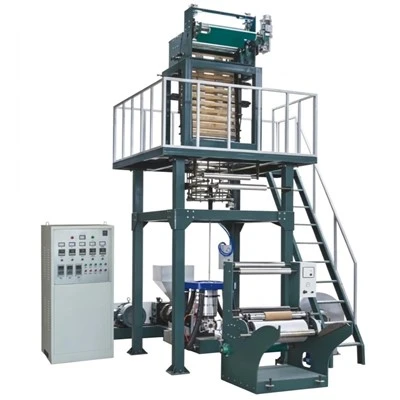
First, let’s be clear on what mono layer film waste we’re talking about here. It’s not just bad batches of film that get tossed. It’s edge trim that gets caught, off-spec roll ends, startup scrap from when you switch resins, even wasted material from poorly calibrated cooling systems. I’ve seen shops lose 15% of their total output to this stuff—money going straight to the landfill because of small, fixable gaps in their process. As a mono layer film blowing machine supplier, I’ve helped dozens of plants trim that waste by 6-10% without buying a whole new line, and most of it starts with how you set up and tweak your equipment.
Let’s start with the big one: resin selection and preprocessing. So many plant managers grab the cheapest resin they can find, not realizing that inconsistent pellets are a huge waste driver. If your pellets have too much moisture (especially if you’re working with polyethene or polypropylene), that causes bubbles in the film, leading to rejects. If the resin has random impurities or uneven melt flow index (MFI), your extruder can’t process it consistently, so you get flimsy, thin or thick spots that you can’t sell. I always tell customers: skip the super cheap resin if it’s inconsistent. Pay a tiny bit more for resin with a tight MFI range and minimal contaminants. It sounds counterintuitive, but I’ve watched one plant cut startup scrap by 40% just by switching to a more reliable resin grade.
Also, preprocessing steps matter more than you think. Drying pellets isn’t just for bioplastics—even regular PE and PP can hold moisture that causes defects. I worked with a shop last year that was skipping drying because they “didn’t have time” before runs; their scrap rate was 11%. After adding a small, cheap desiccant dryer and cutting the drying time from 8 hours to 2, their waste dropped to 4% in three months. No huge investment, just a tiny tweak. And if you’re recycling edge trim on-site? Make sure you’re cleaning it properly before feeding it back into the extruder. If there’s leftover adhesive or dirt on the trim, that contaminates the new resin, leading to more scrap.
Next, extruder and die calibration—this is where 30% of film waste usually comes from, and it’s so easy to mess up. The die is the part that melts resin into a thin tube, right? If the die lip isn’t perfectly aligned, you get uneven film thickness—one side is too thick (wasting resin) and the other is too thin (rejected). A lot of machine operators just eyeball the die alignment, but that’s a bad move. I recommend using a micrometer to check die gaps every time you switch resins, and doing a full alignment check once a month, even if nothing feels off.
Then there’s the extruder temperature profile. Too hot, and the resin degrades, leading to brittle film that breaks easily. Too cold, and it doesn’t melt evenly, causing lumps. I’ve seen operators stick to a one-size-fits-all temperature schedule for every job, which is a disaster. For example, LDPE needs a lower melt temp than HDPE, so adjusting that for each resin type cuts off-spec film by a lot. Also, make sure your extruder’s screw speed matches your line speed. If the screw is turning too slow for the line, you get inconsistent melt; too fast, and you overwork the resin. A quick calibration check here saves more waste than most people realize.
Cooling systems are another underrated area. The cooling ring is what solidifies the film tube after it exits the die. If the airflow from the cooling ring is uneven, the tube will wobble, leading to thickness variations. I’ve had customers complain that their film is all “off” and can’t be sold, only to find out their cooling ring had a clogged nozzle—so half the ring was blowing air, the other half wasn’t. A 10-minute cleaning of the cooling ring nozzles every two weeks fixed their 7% waste rate overnight. Also, keeping the cooling water at the right temperature is key. If water is too warm, the film takes longer to solidify, so it stretches unevenly. Too cold, and you get too much shrinkage later, which causes defects when the film goes to convert it.
Now, startup and shutdown procedures. This is where a lot of waste happens—startup scrap can be 50-100 meters of film every time you switch jobs, which adds up fast. The old way was to run the line at full speed right after startup, making a ton of scrap until it stabilized. But here’s a trick: slow the line speed by 20-30% during startup, and gradually ramp it up once the film thickness and tube shape is consistent. I tested this with a customer last year; their startup scrap went from 80 meters per run to 15 meters, just by slowing down startup. Also, don’t shut down the line unless you have to. If you’re switching to a similar resin, you can often keep the line warm and just adjust the MFI and temperature, instead of doing a full shutdown. That cuts shutdown scrap too.
Edge trim management—this is the part of the film tube that gets cut off the sides to make the final roll. It’s usually 5-10% of your total output, but it’s not a waste if you reuse it. A lot of plants just bag it up and send it to a recycler, but you can grind it up and feed it back into the extruder. The key here is consistent grinding. If the trim is ground into too big of pieces, it can cause blockages in the extruder, leading to downtime and more waste. I recommend a granulator with a screen that grinds trim into 3-5 millimeter pieces—perfect for reusing. Also, make sure you’re collecting all the trim, not just most of it. A few kilograms left on the line every run add up to tons of waste a year.
Operator training—let’s be real, even the best machine won’t run well if the person operating it doesn’t know what they’re doing. I’ve seen operators ignore a tiny thickness variation because they think it’s “normal,” which turns into a full roll of scrap. The good news is you don’t need to send operators to a fancy 2-week course. We do 1-day on-site training for our customers, covering things like how to check die alignment, how to adjust temperatures for different resins, and how to spot early signs of defects before they become big batches of waste. One customer’s team went from getting 3 rejected rolls a month to 1, just after a quick training session.
Also, regular maintenance—you can’t forget this. Clogged filters in the extruder, worn die lips, old cooling rings—these things build up over time and cause waste. I tell customers to do a full maintenance check every 6 months: replace worn parts, clean filters, check die alignment, inspect cooling nozzles. I had a customer who waited 18 months to do a major maintenance check, and their waste rate jumped to 13%. After replacing a worn die lip and cleaning the cooling ring, it dropped back to 5%. That’s a clear example of how small maintenance steps prevent big waste.
Wait, let’s talk about a common mistake I see: chasing yield at all costs. Some operators crank up line speed to make more rolls per hour, but that leads to thinner, inconsistent film, more defects, and actually lower total output. It’s a balance—faster line speed isn’t always better. I worked with a plant that upped their line speed by 10% and thought they’d make more money, but their waste went up 4%, so they ended up making less sellable film. A smarter move is to run the line at a speed that’s consistent, not the maximum. That way, you get fewer defects, less waste, and more stable output.
Let me put this in perspective. If you’re producing 100,000 kilograms of mono layer film a month, and your waste rate is 10%, that’s 10,000 kilograms of film going to waste every month. If you cut that waste by 5%, that’s an extra 5,000 kilograms of sellable film a month—almost 60,000 kilograms a year. At an average price of $1.5 per kilogram, that’s $90,000 extra a year. That’s not pocket change. And most of these changes don’t cost a lot—many are just small tweaks to processes you’re already doing.

If you’re interested in testing these changes on your line, we can help. As a mono layer film blowing machine supplier, we don’t just sell equipment—we work with you to adjust your processes, calibrate your machines, and train your team to cut waste without sacrificing quality. Whether you’re running a small shop or a large production facility, we’ve got tailored solutions that fit your setup. If you’d like to chat through your specific production line and see where the waste is coming from, feel free to reach out to discuss your needs.
ABC Three Layer Film Blowing Machine References
- Plastic Film and Packaging Association. (2022). "Reducing Manufacturing Waste in Extrusion Processes". Industry Technical Bulletin.
- European Plastics Converters. (2021). "Mono Layer Film Production: Efficiency and Waste Reduction Best Practices". Operational Guidelines.
- Smith, J. (2020). "Extrusion Calibration for Consistent Film Thickness". Journal of Plastic Film & Sheeting, Vol. 36, No. 2.
Ruian Jianhao Precision Machinery Co., Ltd.
As one of the most professional mono layer film blowing machine manufacturers and suppliers in China, we’re featured by quality products and good price. Please rest assured to wholesale durable mono layer film blowing machine for sale here from our factory. Welcome to contact us for customized service and quotation.
Address: No. 8, Jianshe Road, Beiyu Village, Shangwang Street, Ruian City, Wenzhou City, Zhejiang Province
E-mail: 1832333027@qq.com
WebSite: https://www.jianhaomachinery.com/
