Hey there, if you’ve ever spent any time looking at woven fabrics—whether for apparel, upholstery, or industrial uses—you’ve probably heard people throw around terms like “twill weave” and “2/2 twill.” When I first got into this business, I’ll admit, I thought it was just some random industry jargon, like a secret code only people in the weaving game could crack. But after 12 years as a 2/2 twill weave supplier, I’ve learned that 2/2 isn’t just a number—it’s the backbone of so many fabrics that people use every single day, and understanding it makes a huge difference when you’re picking the right material for a project. Today, I want to break this down like I’d explain it to a new customer who just walked into my warehouse, no stuffy textbook talk, no confusing jargon. Let’s start with the basics, ‘cause you can’t figure out what 2/2 means without knowing how a basic twill works. 2 2 Twill Weave
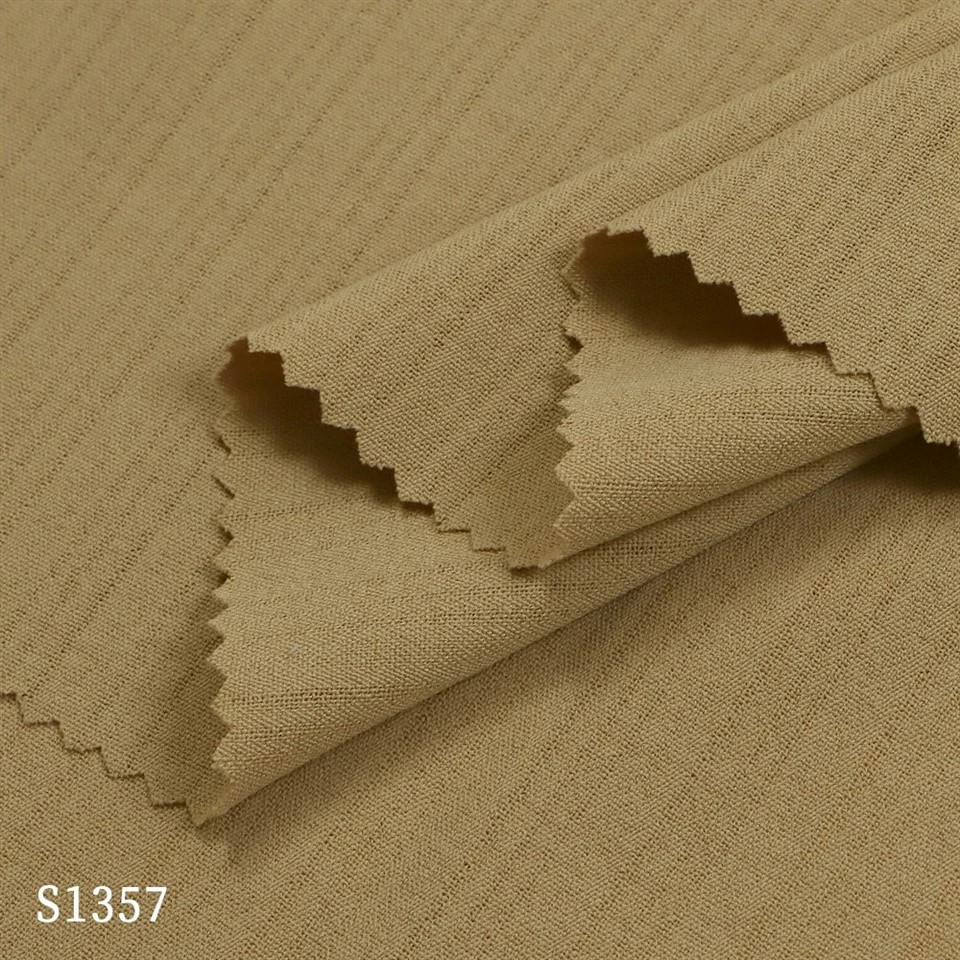
First off, every weave is built on two sets of yarns: warp yarns, which run lengthwise along the fabric, and weft yarns, which go back and forth crosswise, like weaving a basket. The “twill” part of twill weave is all about how those two sets cross over each other—instead of the plain, crisscrossy over-one-under-one that makes plain weave (think bed sheets or t-shirt fabric), twill skips a yarn to make that distinct diagonal line you see on denim, chinos, even that nice canvas for furniture. That diagonal is called a “twill line,” and it’s what makes twill fabrics feel sturdier, a little more flexible, and less likely to pucker than plain weave. Now, that’s where the numbers come in. When we write something like 2/2 twill, that’s the shorthand for how many warp and weft yarns are crossing over each other at any point—specifically, it’s a two-up, two-down pattern. Let me paint you a quick picture, no fancy diagrams needed. Imagine you’re standing above the loom, watching warp yarns lined up in a straight row in front of you. The first warp yarn goes over 2 weft yarns, then under 2 weft yarns. The second warp yarn does the exact same thing: over two, under two. But since weaving is all about repeating that pattern to make a whole piece of fabric, it’s not just two warp and two weft—it’s a cycle, right? Every four warp and four weft yarns, the pattern starts over. That’s why you’ll hear old-school weavers call this a 4-end, 4-pick twill—“end” is another word for warp yarn, “pick” is weft.
Now, let’s talk about why this matters, ‘cause numbers don’t mean squat if they don’t affect the fabric itself. When I explain 2/2 twill to my customers, the first thing I mention is its balance. A lot of twills are either more warp-heavy or more weft-heavy, but 2/2 is evenly matched. That’s what makes it so versatile. Take denim, for example—wait, most denim is a 3/1 twill, right? That’s 3 warp over 1 weft, so it’s stiffer, holds that deep blue color really well, and has that characteristic stretch when you break it in. But 2/2 twill? It’s got a little more give, not as heavy as 3/1. Let’s say a furniture maker comes to me, needing fabric for a dining room chair that’s gonna get bumped, sat on hard, and maybe dragged across hardwood floors. 2/2 twill is perfect here ‘cause the balanced weave spreads out the stress—you don’t have all the weight pulling on one set of yarns, so the fabric is more durable, less likely to fray at the edges. Another common use: technical workwear. Think about a mechanic’s coveralls, or a warehouse worker’s pants. Those need to be tough enough to resist snags from bolts or conveyor belts, but not so thick that the worker can’t bend over or climb ladders. That’s 2/2 twill’s sweet spot. It’s got a smooth, slightly lustrous surface (not as shiny as satin, but way less matte than plain cotton) that also makes it easy to wipe clean—huge for anyone working with grease or dirt.
Wait, but not all 2/2 twills are the same, right? That’s where I have to be honest with customers—just ‘cause it’s 2/2 doesn’t mean it works for every job. Let’s break down the variables. First, the yarn count. If you’re using fine, combed cotton yarns, a 2/2 twill will be light enough for a summer shirt or a dress. I supply a 2/2 twill in 60s count cotton that’s been pre-washed so it doesn’t shrink more than 2%—perfect for custom button-downs that need to look crisp but feel soft. But if you crank up the yarn count to heavy-duty polyester, or a blend of cotton and recycled polyester, that same 2/2 weave becomes a 1000D industrial fabric for conveyor belts or warehouse tote bags. I had a customer last month who makes those heavy-duty grocery tote bags for a major chain, and he switched from 3/1 twill to our 2/2 twill ‘cause it holds 20 pounds of groceries without stretching out of shape, and it’s way easier to print their logo on—no weird gaps in the weave that mess up the ink. Another thing: direction. Wait, twill lines can be right-handed or left-handed, right? That depends on whether the warp yarn is going over two weft yarns to the right or left. Most standard 2/2 twill is right-handed, but some upholstery makers want a consistent direction across a whole piece, so I make sure to mark every roll with the twill line so they don’t accidentally cut pieces that don’t match up. I learned that the hard way early on—once I shipped a batch to a furniture maker who ended up with 10 rolls that had a mix of right and left twill, and they had to reupholster 50 chairs at their own cost. Now I triple-check every roll before it leaves the warehouse, no exceptions.
A lot of new people in the industry mix up 2/2 twill with other 2-number twills, so let’s clear that up. 2/1 twill is two over, one under—way more warp-heavy, stiffer, used for things like work pant legs that need to hold their shape. 1/2 is the opposite, one over, two under, more weft-heavy, used for some lightweight linings. Even 2/1 is way different than 2/2 ‘cause the unbalanced tension makes the fabric pull in one direction a little. But 2/2’s balance means it drapes evenly, doesn’t have that “twist” you get with unbalanced twills, which is why it’s so popular for apparel that needs to fit well, not just look good. I had a designer reach out last year who was making a line of unisex utility jackets—she tried a 3/1 twill, but it was too rigid for the jacket’s cinch waist design, and when customers adjusted the waist, the fabric creased weirdly. She switched to our 2/2 twill, and she told me later that the fabric held the cinch shape perfectly, no weird creases, and customers said it was the most comfortable utility jacket they owned. That’s the stuff that makes my job worth it—when a number on a loom translates to a product that solves someone’s problem.
Wait, I should also mention the “balanced” part of 2/2 twill, ‘cause that’s where its strength comes from. In weaving, if the warp and weft yarns have the same size and tension, the weave is balanced—so each yarn is carrying the same amount of the load. That means when you pull on the fabric, it doesn’t give unevenly, it doesn’t stretch out, and it’s way less likely to tear. I tested this a few years back, just out of curiosity: I took a 2/2 twill roll and a similar-weight plain weave roll, put 10 pounds of weight on each. The plain weave stretched almost an inch, and after 10 minutes, the edge started to fray a little. The 2/2 twill stretched a quarter of an inch max, and no fraying at all. That’s the difference when you’re talking about fabric that’s gonna be used day in and day out. For industrial uses, that’s non-negotiable—if a conveyor belt fabric stretches too much, the belt slips off the rollers, which costs factories thousands in downtime. For apparel, it means the fabric doesn’t bag at the knees after wearing a pair of pants for a week, which is why I supply 2/2 twill for several workwear brands that specialize in long-lasting clothes that don’t fall apart after a month.
Now, let’s be real—there are common misconceptions about 2/2 twill, too. A lot of people think it’s “basic” because it’s not as flashy as a jacquard weave or as heavy as a denim. But that’s the point. It’s a workhorse weave, and workhorses are the ones that get the job done when you don’t need a fancy design, you need reliability. I had a customer call me once panicking because she’d ordered a “2/2 twill” from another supplier that was way stiffer than expected, and it pilled after one wash. Turns out that supplier was cutting corners—they used lower-quality, shorter-staple cotton yarns, so even though it was technically 2/2 twill, it didn’t have the same tension or density. A proper 2/2 twill should have a consistent weave, no gaps between yarns, and the threads should lie flat, not bunch up. That’s why I only work with mills that test every batch for weave density—we aim for 120 ends per inch and 100 picks per inch for our standard cotton 2/2 twill, which is the sweet spot for durability and softness. If you go too low on the density, you get gaps that let dust and dirt in; too high, and it feels like cardboard.
Another thing I love about 2/2 twill is how versatile it is for finishing. You can dye it any color, from deep navy to bright red, because the balanced weave lets the dye soak in evenly, no light spots or uneven color. You can wash it, pre-shrink it, treat it with water repellent or stain resistance—all of which is stuff I offer for my products. I have a batch of 2/2 twill that’s been treated with a durable water repellent, perfect for rain jackets or outdoor gear that needs to keep water out but still breathe. And because the weave has small gaps (not as tiny as plain weave, not as big as a looser twill), it’s breathable—way more than a solid plastic coating, so it doesn’t make you sweat when you’re working outside on a hot day. That’s a huge plus for the workwear brands I partner with—they don’t want their customers overheating mid-shift, but they also need the fabric to keep rain or spills out.
So, to wrap this up, what does 2/2 mean in twill weave? It’s not just a random number. It’s a balanced, 2-over, 2-under repeating weave cycle that creates a consistent diagonal line, makes the fabric durable, flexible, drape well, and works for everything from apparel to furniture to industrial uses. It’s the kind of weave that’s easy to take for granted until you need a fabric that just does what it’s supposed to do, no frills, no surprises. As a 2/2 twill supplier, I tell every customer that comes to me: if you’re not sure what weave you need, start with 2/2. It’s the workhorse that solves 90% of the problems people come to me with.
Now, if you’re working on a project—whether it’s a line of work pants, custom upholstery, industrial tote bags, or anything in between—and you want to talk about what 2/2 twill can do for you, feel free to reach out. I don’t do pushy sales talk, I just help you pick the right fabric for your needs, no hidden fees, no weird fine print. We can talk through yarn types, finishes, quantity needs—whatever you’ve got going on. Just get in touch whenever you’re ready.
Broken Twill References:
- Collier, B., & Tortora, P. G. (2018). Understanding Textiles (8th ed.). Pearson.
- Ashdown, S. P. (2017). Woven Fabric Technology: Principles and Developments. Woodhead Publishing.
- Holder, G. L. (2020). Textile Weaves: A Practical Guide for Weavers and Designers. Bloomsbury Visual Arts.
- International Textile Manufacturers Federation (2021). “Standard Terminology for Woven Fabrics.” ITMF Technical Bulletin.
Shaoxing Huichao Textile Co., Ltd.
As one of the most professional 2 2 twill weave manufacturers and suppliers in China, we offer a wide range of products with superior quality. Please feel free to wholesale bulk high-end 2 2 twill weave in stock here from our factory. Good service and reasonable price are available.
Address:
E-mail: darrenzhong@huichaotextile.com
WebSite: https://www.huichao-textile.com/
