If you’ve ever worked in industrial settings, you’ve probably stared at a mess of wires, adapters, and connection points thinking “there’s no way all these fit without mixing up the wrong ones.” That’s where keyed industrial connectors come in—they’re one of those unglamorous but make-or-break parts of any manufacturing line, automation setup, or heavy equipment. Let’s break down what they actually are, why they matter so much, and how they save us (as connector suppliers) from tons of headaches in custom and bulk orders. Industrial Connectors

First, let’s get real: a keyed connector isn’t some magic, overly complicated piece of tech. It’s a standard industrial connector (think the ones you use to tie together power lines, sensor wires, motor controls, or even robot arm wiring) with a tiny, intentional physical “block” or “notch” on the plug or receptacle that only lets you plug it in one way. No forcing, no guessing, no accidentally jamming a power connector into a sensor port and frying a whole $500 sensor. If you’ve ever messed up a basic connector and shorted out a small circuit, you get why this is a big deal.
Let’s contrast that with a basic unkeyed connector, like the generic RCA cables you use for old TVs—they’re symmetrical so you can plug them in upside down, which works fine for a 12V audio signal, but total disaster for a 480V power line. Keyed connectors fix that by adding a physical “key” that lines up with a matching “keyway” on the port. For example, a power connector might have a single notch on the bottom of the plug, so it only slots into ports with a notch at the bottom. A sensor connector for a PLC might have two notches on the left, so you can’t plug a motor line into it. It’s simple, but it’s a game-changer for industrial environments where mixing up connections isn’t just annoying—it’s dangerous.
Now, why do industrial teams rely on these more than regular consumer connectors? Industrial spaces are messy, high-stakes places: factories run 24/7, downtime costs thousands per minute, and equipment uses way higher voltages than your home appliances. If a line goes down because a tech plugged the wrong wire in, that’s not a quick fix—you might have to shut down an entire production shift. Keyed connectors eliminate that human error. As a connector supplier, I can tell you that this is the #1 question we get from new clients: “How do I make sure my guys don’t cross-wire these?” Keyed connectors are the top answer.
Let’s talk about the different types of keys, because there’s more variety than you’d think, and that’s by design. The most common is the mechanical key, which is that little notch or protrusion I mentioned earlier. You’ll see single-key, dual-key, even four-key configurations—each key is a different size or placement, so you can have multiple different connectors that all look almost identical but will only plug into their exact match. For example, a packaging line might have 10 different connectors: power, sensor, Ethernet, actuator, all same size, all same shape, but different keys so you never mix them up. There’s also polarizing keys, which are similar but specifically meant to prevent reverse polarity—critical for DC power lines where reversing positive and negative can fry electronics in seconds. Some newer keyed connectors even have electronic keys, where they check for a signal match before letting power through, but most industrial setups still stick to mechanical keys because they’re cheap, reliable, and easy to install without extra wiring or programming.
Wait, but who uses these? Let’s name the industries so you can see how universal they are. Manufacturing and automotive are big—think assembly lines, robot welding arms, conveyor belts. Oil and gas uses them for sensor wiring on drilling rigs, where even a tiny wiring mistake can lead to safety risks. Food and beverage? Super important, because their connectors have to be washdown-rated, and keying keeps power lines from mixing with food-grade sensor lines that get exposed to cleaning chemicals. Renewable energy too—solar farms and wind turbines have hundreds of small connections, and keyed ones mean techs don’t have to trace wires for hours to fix an issue. We supply a lot of those keyed M12 connectors for solar inverters, and our clients swear by them because they cut installation time by 30% on average.
Now, as a supplier, let’s be honest about the benefits for both end users and us. For end users: less downtime, fewer broken parts, faster installs, less training for new techs. A new guy can walk onto a line with keyed connectors and not have to memorize 20 different wire colors—he just looks for the key, lines it up, and plugs it in. For us? It means we can offer custom keying for bulk orders, which is a huge win for factories that run specific lines. If a manufacturing plant needs 500 keyed connectors that only match their exact line, we can machine those keys to their specs, no extra cost or lead time hassle. We also keep a ton of standard keyed connectors in stock, so if someone needs a replacement fast, they don’t have to wait 2 weeks for a custom part—they can grab it same-day and get their line back up.
What are the common mistakes people make with keyed connectors? I hear this all the time. First, people think all keyed connectors are the same. No—keying is standardized, but different brands might use different key placements. A keyed connector from Brand A won’t fit a keyed port from Brand B if their keys are positioned differently, because there’s no universal key standard. That’s why it’s better to stick with a single supplier for your line, so all keys line up. Second, people try to force a keyed connector into the wrong port. If it doesn’t slide in easily, don’t wiggle it—stop, because you’ll bend the key, break the connector, or even damage the port. Third, they don’t label them even though they’re keyed. A little label that says “Motor 12 Power” on each connector takes 2 seconds and makes troubleshooting way easier, even if the key is there.
Another thing that makes keyed connectors different is their ruggedness. Industrial connectors aren’t the same as the ones you buy at a hardware store. Keyed ones are built to handle temperature extremes, moisture, dust, vibration—all the garbage that factories throw at them. A standard connector might fall apart after a few months on a vibrating conveyor, but a keyed industrial connector is rated IP67 or higher, so it can get hosed down, sit in rain, or work in -40°F weather no problem. We test all our keyed connectors before shipping, because if one fails in the middle of a shift, that’s our client’s problem, not theirs.
Wait, let’s talk about a real example to make this concrete. A few months back, we had a client in the automotive industry who was dealing with 2 hours of downtime every month from wire cross-wiring. They had three different connectors for their car frame welding line, all same size, all same color, so techs were mixing them up and shorting the line. We suggested switching to keyed connectors: one key for power, one for sensor, one for the welding actuator. That cut their downtime to under 10 minutes per month, just for checking the key before plugging in. They ended up ordering 2,000 of those connectors in bulk, and now they refer us all the time. That’s the kind of win keyed connectors deliver—small part, big impact.
Is there any downside to keyed connectors? Only if you don’t plan for them. If you’re setting up a whole new line, you have to account for the keying in your design, not just pick any connector. You also can’t just swap out a keyed connector for an unkeyed one mid-line, because it won’t fit the port. But those are small considerations compared to the upside. For most industrial applications, the cost of a keyed connector is barely more than a basic unkeyed one—like a few cents more per unit, which pays for itself in saved downtime in a month.
So, if you’re in the industrial space, whether you’re a plant manager, an electrician, a maintenance tech, or someone designing automation systems, keyed industrial connectors aren’t something to overlook. They’re the unsung hero that keeps lines running, keeps people safe, and saves you money. We see it every day: clients who used to waste thousands on downtime now rely on keyed connectors as their go-to for all new builds and replacements.
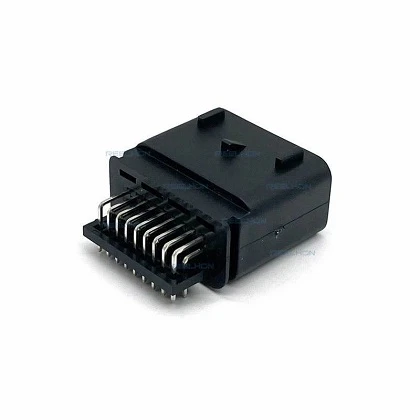
If you’re looking to upgrade your connections, order replacements, or get custom keying for your line, we’re here to help. We carry a full range of keyed connectors, from M12 and M8 types for small sensors all the way up to heavy-duty high-voltage connectors for motors and power lines. We can work with your specs, ship fast, and answer any questions you have about keying standards, ratings, or installation. Don’t let simple human error bring your line down—reach out to us to talk through your connector needs.
Industrial Connectors Reference:
Industrial Connectors: A Guide to Selection and Application. International Electrotechnical Commission, 2021.
Keying Standards for Industrial Wiring Systems. National Association of Electrical Distributors, 2022.
Downtime Costs in Manufacturing: 2023 Industry Report. Manufacturing Extension Partnership, U.S. Department of Commerce.
Modelon Precision Industry (Suzhou) Co., Ltd.
With abundant experience, we are one of the most professional industrial connectors manufacturers and suppliers in China. Welcome to buy customized industrial connectors at competitive price from our factory. If you have any enquiry about pricelist, please feel free to email us.
Address: 1st Floor, Building 22, No. 2628 North Gate Road, Kunshan City, Jiangsu Province, P.R.China
E-mail: jessica_huang2025@163.com
WebSite: https://www.modeloncn.com/
