If you’ve ever ordered a TB test kit for your clinic, hospital, or community health program, chances are you’ve stopped mid-process at some point and wondered: Could this result be wrong? As someone who’s worked directly with TB test kits for the past 12 years—first in clinical research, then as a supplier focused on making reliable testing accessible to low-resource regions—I’ve fielded this exact question from nurses, lab techs, and public health coordinators hundreds of times. The short answer is yes, a TB test kit can give a false positive, and the reasons are rarely the fault of the kit itself. Most often, they tie back to how the test is stored, administered, or interpreted. Let’s break this down clearly, since misinformation about false positives leads to unnecessary patient stress, wasted resources, and even delayed care for people who actually have TB. Tuberculosis Test Kit
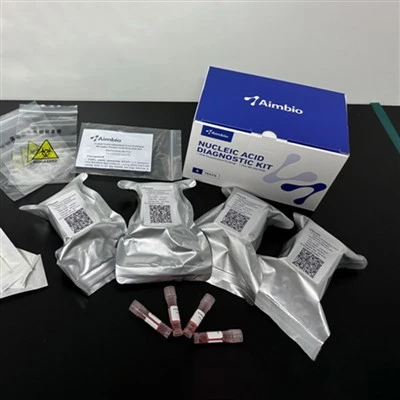
First, let’s define what a false positive actually means for TB testing. TB is tricky because it presents two main forms: latent TB infection (LTBI) and active TB disease. Latent TB means your body has the TB bacteria but isn’t multiplying or making you sick—you can’t spread it, but it can activate later if left untreated. The two most common types of TB tests are the tuberculin skin test (TST) and the interferon-gamma release assay (IGRA), which is a blood test. A false positive is when a test says you have TB (either latent or active) when you don’t. For context, no test is 100% accurate—all have margins of error, and TB tests are no exception. The goal is to keep that margin as small as possible, which is why we (as a test kit supplier) prioritize quality control and clear usage instructions.
Let’s start with TST false positives, since these are the most common and often the most confusing. The TST works by injecting a small amount of TB protein (called PPD) just under the skin, then measuring the reaction 48 to 72 hours later. A positive reaction is a raised, hard bump (induration) of a certain size, depending on the person’s risk factors. A false positive here usually isn’t because the PPD is faulty—it’s because of something called “cross-reactivity” with other mycobacteria. These are bacteria that live in soil and water, like the ones that cause tuberculosis in animals or the “atypical mycobacteria” that don’t cause TB in people, but your immune system can still react to them. If you’ve been exposed to those, your body might produce the same type of immune response that it would to TB, leading to a positive TST even if you never had TB. That’s a big one for people who live in areas with high rates of non-TB mycobacteria, like tropical regions or places with poor water quality.
Another TST false positive culprit is improper administration. If the needle isn’t inserted deep enough, the PPD leaks out, making the reaction hard to read accurately. If you read the test too early (before 48 hours) or too late (after 72 hours), you might mistake a mild, temporary bump for a positive reaction. I’ve seen this happen dozens of times—last year, a nurse at a rural clinic in Kenya contacted our team upset because 3 of their 200 patients had positive TSTs, but follow-up IGRA tests came back negative. When we walked through their process, we found they were reading tests at 24 hours, not 48. That’s a simple fix that cuts down on false positives drastically.
Now, IGRA blood tests—these are more expensive, but they’re less prone to cross-reactivity than TSTs, right? Well, they’re more specific, but they can still have false positives, especially if the kit isn’t stored correctly. IGRA kits rely on specific temperatures to keep the reagents stable. If a kit is left in a hot car during transport, or stored in a fridge that’s too cold, the proteins in the kit can degrade, leading to abnormal immune responses in the patient’s blood sample. For example, if the antigen in the kit breaks down, it might trigger a reaction in a patient who never had TB, resulting in a false positive. We’ve seen this with kits that were shipped to remote areas without temperature monitoring—one client in Afghanistan told us a batch had to be discarded because the fridge at their clinic broke for 12 hours, and subsequent tests had a 15% false positive rate, way higher than our standard 2% threshold for IGRA kits.
There are also patient-related factors that can cause false positives, regardless of the kit. People who have had the BCG vaccine (the only TB vaccine, given to millions of kids globally) often react to TB tests. BCG is made from a weakened strain of TB bacteria, so your immune system can recognize it as TB and produce a positive TST, even if you don’t have actual TB. That’s why for people who’ve had BCG, IGRA tests are preferred—they’re less likely to cross-react with BCG. But even IGRA tests can give false positives in people with other immune system conditions, like HIV (wait, no—actually, HIV more often leads to false negatives, but in some cases of severe immune suppression, it can cause unusual reactions that are misread as positive). Or people who have had a recent viral infection, like the flu or COVID, might have a temporary immune boost that leads to a false positive.
A common misconception I hear is that a false positive means the kit is “bad.” As a supplier, I want to be clear: a bad kit is rare. All our kits go through three rounds of quality testing before they leave our warehouse, and we follow WHO guidelines for TB test performance. The WHO’s 2023 TB test report notes that for well-stored and properly administered tests, false positive rates are typically under 3%, which is within accepted clinical limits. When we do get a call about high false positives, we first check if the kit was stored at the correct temperature, if the test was administered at the right site and read at the right time, and if the patient has risk factors like BCG vaccination. 9 times out of 10, the issue is not the kit—it’s the process around it.
Let me give you a real example from last quarter. A clinic in Peru reached out saying their TST false positive rate was 12% for their pediatric patients. We sent a training team to walk through their process, and what we found was that their nurses were using a ruler to measure the redness of the bump, not the induration. Redness is not what counts—induration is the hard, raised part, which is smaller. For kids who’d had BCG, a mild red reaction was being misclassified as positive, leading to unnecessary further testing. After retraining the staff on how to read TSTs, their false positive rate dropped to 2%, right where it should be. That’s the kind of issue our team helps with regularly—we don’t just sell kits, we provide training and support to make sure our customers get accurate results.
Now, what can you do if you get a positive TB test result and suspect it’s a false positive? First, don’t panic. A positive result is just a flag, not a diagnosis. The standard next step is a follow-up test—usually another type of TB test, like an IGRA for TST positives, or a chest X-ray and sputum test to rule out active TB. If you or your patient has symptoms like a persistent cough, weight loss, or night sweats, those would point more toward an actual TB case, but if there are no symptoms and only a positive test, a false positive is far more likely. As a supplier, we always advise our customers to follow WHO or local health ministry guidelines for confirmatory testing, because that’s how you cut through the noise of false results.
I also want to address something that’s important to us: transparency about kit limitations. We never oversell our TB test kits as perfect. Every kit comes with a detailed instruction manual, a temperature log, and a contact for our support team if you run into issues. We also share the most recent performance data for our kits on our website, so clinics can see exactly how our tests perform in different regions. For example, our IGRA kits have a specificity of 96% in people with BCG vaccination, which is higher than the WHO minimum of 90%, meaning fewer false positives in that high-risk group. That’s a key selling point for us, because we know that specificity matters when you’re testing thousands of people in low-resource areas.
Another point: regulatory approvals. Our test kits are prequalified by the WHO, which means they meet international standards for safety and performance. We also comply with FDA regulations for our US-distributed kits, and CE marking for Europe. That’s why the false positive rates we report are reliable—we don’t cut corners on manufacturing, which is something to look for when choosing a TB test kit supplier. A lot of cheaper, unregulated kits on the market have higher false positive rates because they use lower-quality reagents, which degrade faster and cross-react more easily.
Let’s circle back to the original question: Can a TB test kit give a false positive? The honest answer is that yes, it can, but not because it’s a faulty kit in most cases. False positives are almost always a result of how the test is used, stored, or interpreted, or patient-related factors like BCG vaccination or exposure to non-TB mycobacteria. The good news is that most false positives are preventable with proper training, correct storage, and follow-up testing to confirm results.
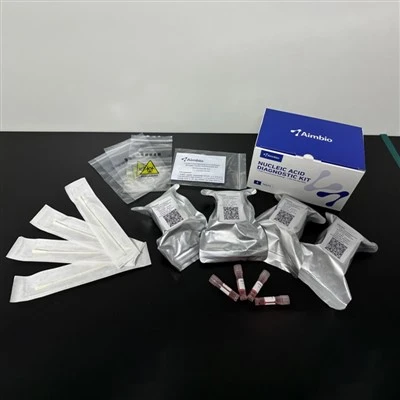
If you’re a clinic, hospital, or public health organization looking for a reliable TB test kit supplier, we’re here to help. We offer competitive pricing, free training for your staff, and 24/7 support to troubleshoot any issues with testing. Whether you need TSTs for routine pediatric screening or IGRAs for high-risk adult populations, our kits are designed to be accurate, easy to use, and suitable for use in both urban and remote settings. Don’t let fear of false positives hold you back from providing critical TB testing to your community—we can work with you to make sure your testing process is accurate and reliable.
References
Respiratory Tract Test Kit World Health Organization. (2023). Global TB Report: TB Testing and Care. World Health Organization.
Centers for Disease Control and Prevention. (2022). Tuberculin Skin Testing: A Guide for Clinicians. U.S. Department of Health and Human Services.
American Thoracic Society. (2021). Interferon-Gamma Release Assays for Tuberculosis Infection Testing. American Journal of Respiratory and Critical Care Medicine.
Food and Drug Administration. (2022). Regulatory Considerations for Tuberculosis Test Kits. U.S. Food and Drug Administration.
Hangzhou Aimbio Technology Co., Ltd.
Hangzhou Aimbio Technology Co., Ltd. is one of the most experienced tuberculosis test kit manufacturers and suppliers in China, featured by quality products and good price. We warmly welcome you to buy customized tuberculosis test kit made in China here from our factory. If you have any enquiry about quotation, please feel free to email us.
Address: Room 101, Building 2, No. 658 Bin’an Road, Binjiang District, Hangzhou, Zhejiang, China
E-mail: b2b@aim-bio.com
WebSite: https://www.aimbio-products.com/
