If you’ve ever walked through a heavy machinery manufacturing shop, you’ve probably seen those giant floor-type boring milling machines towering over parts as big as a truck chassis or a marine engine block. And if you’ve ever had to pick one for your own shop, you’ve definitely stared at two main options: conventional floor-type machines and CNC floor-type machines. I’ve spent the last decade selling these machines to shops all over the world, and I can’t tell you how many times I’ve gotten a call from someone saying, “Wait, I thought all big boring mills were basically the same?” Let me break this down straight—no sales fluff, no confusing jargon, just the real differences that’ll make or break your next purchase. Floor Type Boring Milling Machine
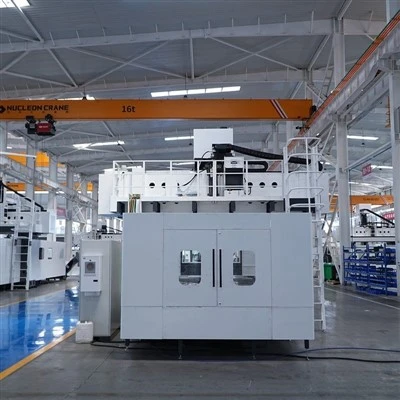
First off, let’s ground this in what a floor-type boring milling machine even is, because that’s the base line. Unlike knee-type mills where the table moves up and down on a fixed column, floor-type machines bolt their heavy column to the floor, and the boring spindle is attached to a long ram that slides in and out along the column. Some even have a rotary table that spins big parts while you work, which is key for massive, heavy parts that you can’t just flip easily. Now, the two types differ almost entirely in how you control that movement, and that’s where all the real pros and cons live.
Conventional floor-type machines, often called manual or “old school” machines, use handwheels for every single movement. You turn a big wheel to move the ram left, right, forward, or back, another one to adjust the height of the head, and a third to jog the rotary table. When you need to drill a hole that’s exactly 12 inches deep and 6 inches left of a corner, you measure with a ruler or a digital scale on the ways, crank the handwheel until the numbers line up, and hope you counted right. I worked on a conventional boring mill as a machinist back in 2012, and I still remember a job where I had to bore 8 identical holes in a large pump housing. I measured each one individually, took notes, and by the time I was done, my wrist was cramping so bad I could barely hold a coffee mug. And guess what? One hole was 0.002 inches off—small enough you can barely see it, but enough that the pump leaked when we tested it. That’s the thing about conventional machines: they’re only as good as the person operating them. No two machinists will set the exact same feed rate or movement speed the same way, so consistency is a huge gamble.
Now let’s jump to CNC floor-type machines. These aren’t the clunky, tiny CNC mills you see on hobbyist workbenches—they’re built to handle parts that weigh 20 tons or more, same as conventional ones. The big difference here is the control system: instead of handwheels, you’re programming every movement digitally. You input coordinates, feed rates, spindle speeds, and tool changes into a G-code program, and the machine does exactly what you tell it to, every single time. I sold a CNC floor-type mill to a mining equipment shop last year that needed to bore 16 identical holes in a 15-ton dragline bucket. The machinist there programmed the job once, loaded the big bucket onto the rotary table, hit “run,” and by the end of the shift, every single hole was within 0.0005 inches of the spec. That’s not a fluke—that’s CNC consistency.
But here’s the part most new buyers miss: it’s not just about precision. It’s about how they handle complex jobs. Conventional machines can do basic jobs, sure. If you need to bore a single hole, or cut a simple slot in a big bed frame, a manual machine will get it done—eventually. But if you’re cutting a custom shape, like a spiral groove in a marine propeller hub, or multiple holes that line up with a curved surface, conventional machines are a nightmare. You’d have to make custom jigs, measure constantly, and risk errors every step of the way. CNC machines, though? They can hold every curve, every angle, every precise measurement in the program, so you don’t have to reinvent the wheel for every new job. I had a customer who switched from conventional to CNC for aerospace parts a few years back—they used to take 3 days to machine a single wing rib, and now it takes 8 hours. That’s not faster just because the machine is stronger; it’s because you don’t waste time adjusting handwheels and double-checking measurements all day.
Now let’s talk about the human side—operators and training. Conventional machines are way more intuitive for someone who’s been machining for 10, 15, 20 years. A seasoned machinist can walk up to a conventional floor-type mill, feel how the handwheel turns, and make adjustments on the fly for a tricky cut. But that’s a skill that takes years to learn, and the pool of master machinists who can run big conventional mills is shrinking fast. Kids getting into machining these days don’t want to crank handwheels all day—they want to program, which is where CNC wins. CNC machines are also easier to train people on, to an extent. Once you learn G-code basics and how to operate the control panel, you can run most CNC floor-type mills, even if you haven’t been machining for decades. That said, you still need a good machinist to write the right program—CNC doesn’t fix a bad part design, it just executes the program you give it. I’ve seen more than one job where a CNC mill cut a perfect hole that was in the wrong place, because someone input the wrong coordinates. So it’s not “no skill needed”—just a different kind of skill.
Cost is another big one, and it’s not just the initial price tag. Conventional floor-type machines are way cheaper upfront, right? A used conventional mill from the 90s might run you $50k, while a new CNC one with the same capacity is $200k+. But you have to factor in the hidden costs. A conventional machine needs a lot more operator time—if each job takes twice as long because you’re taking measurements manually, your labor costs go up. You also waste more material if you make a mistake, and those big steel parts aren’t cheap—one bad 10-ton casting can cost you $10k or more in scrap. CNC machines have higher upfront costs, but over time, they cut down on labor, reduce scrap, and let you take on more complex jobs that you couldn’t do with a conventional machine, which means more revenue. I had a shop owner tell me last year that he paid off his CNC floor-type mill in 18 months, because he could take on jobs from aerospace companies that his competitors with conventional machines couldn’t bid on. That’s the ROI no one talks about when you’re just looking at the sticker price.
Wait, let’s not forget flexibility. If you’re a small shop that does a little bit of everything—farm equipment parts, custom metal gates, small construction components—conventional machines might be enough. You can handle small, one-off jobs without having to write a whole program every time, which is a huge plus. But if you’re a shop that does high-volume identical parts, or custom jobs with tight specs, CNC is non-negotiable. I worked with a job shop that used to bounce between conventional mills for custom orders and older CNC mills for high-volume parts, but a few years back they switched all their big boring work to CNC. They found that even with small custom jobs, the time saved from less measurement and setup meant they could take on more work without hiring more people.
There are also maintenance differences, which I see a lot. Conventional machines have way fewer electronic parts—all handwheels, gears, motors that are easy to fix. If a handwheel starts sticking, a machinist can take it apart and grease it in an hour. CNC machines have control panels, drives, linear scales, and other electronic components, so if something breaks, you might have to wait for a technician to come out, which is more expensive. That said, modern CNC machines are way more reliable than old ones—they have built-in diagnostic tools that tell you when a part is wearing out, so you can fix it before it breaks, which cuts down on downtime. I tell all my customers: if you’ve got a shop that runs 1 shift a day, conventional maintenance is fine, but if you run 2 or 3 shifts, the diagnostic tools on CNC machines will save you way more time and money.
Now, let’s address some myths I hear all the time. First myth: CNC machines can handle any size part. No, they’re still floor-type machines—their capacity is based on how big the spindle and rotary table are, same as conventional. A 10-foot CNC floor-type mill can’t handle a 20-ton part any better than a conventional one. Second myth: conventional machines are less powerful. No, the power is in the spindle and the drive, not the control method. A conventional mill with a 50 horsepower spindle is just as strong as a CNC mill with the same spindle. Third myth: one is always better than the other. It totally depends on your shop. If you’re a small job shop with 2 guys, doing a mix of one-off and small batch, conventional might make more sense. If you’re a mid-to-large shop doing high volume or complex parts, CNC is worth the investment.
I’ve sold both types of machines for over a decade, and I can tell you the best fit comes down to three questions: what kind of parts are you making, how much volume do you have, and what’s your long-term plan for the shop. If you’re just starting out, or only need big mills for occasional simple jobs, a conventional machine will get the job done. But if you want to grow, take on bigger, more profitable jobs, and reduce labor costs, CNC is the way to go.
At the end of the day, both conventional and CNC floor-type boring milling machines have their place. I’ve seen a shop that stuck with conventional for 20 years and still makes good money doing custom farm parts. I’ve also seen a shop that switched to CNC and tripled their revenue in 5 years taking on aerospace and defense contracts. The mistake people make is assuming one is universally better—you have to match the machine to your needs, not the other way around.

If you’re trying to figure out which one makes sense for your shop, I’m here to help. No pressure, no sales pitch, just honest talk about what’ll work for your specific work, budget, and goals. Reach out to set up a time to chat, and we can go over your needs, walk through different machine options, and make sure you make a choice that doesn’t leave you stuck down the line.
Moving Beam Gantry References:
- Manufacturing Engineering and Technology, Kalpakjian, S. and Schmid, S.R.
- CNC Machining Fundamentals, American Machine Tool Distributors’ Association
- Metalworking Machinery Guide, Association for Manufacturing Technology
- Conventional vs. CNC Machine Tools: A Practical Comparison, Modern Machine Shop, 2022
- Floor-Type Boring Mill Capacity and Application Best Practices, Machinery Handbook, 31st Edition
5Axis (Shandong) CNC Equipment Co., Ltd.
As one of the most professional floor type boring milling machine manufacturers and suppliers in China, we also accept customized orders. Please feel free to buy cheap floor type boring milling machine for sale here from our factory. For price consultation, contact us.
Address: No.2000, Beixin West Road, Jinghe Street, Tengzhou City, Zaozhuang City, Shandong Province
E-mail: summer@good5axis.com
WebSite: https://www.china5axis.com/
