Hey folks, if you’ve ever worked with line laser modules—whether you’re a construction pro, a carpenter laying tiles, a fabricator aligning parts, or even a hobbyist setting up a workshop—you’ve probably had that one moment: squinting at a laser line that’s so thin, it vanishes against a textured wall, gets lost in dust, or just doesn’t stand out when you need it to mark something fast. I get it, because I’m on the other end of this too—my team sells line laser modules, and every week we get the same question: “Can your line laser modules even produce a thick line? I don’t want some wispy thing that’s impossible to see on site.” Line Laser Modules
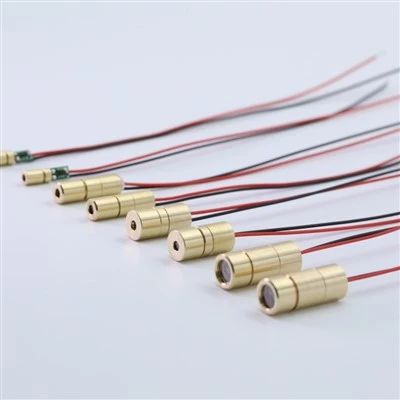
Let me cut to the chase: The short answer is… sometimes, but it’s not as simple as cranking a dial and making the line fatter. Most people assume a line laser is just a thin, straight beam, but there’s a lot going on behind the scenes when we design these modules—stuff that directly affects how thick the line ends up being, how well it performs in different environments, and whether it’s actually useful for your job. I’m gonna break this down like I would with a customer on the phone, no jargon overload, just the real stuff we deal with every day.
First, let’s start with the basics of how a line laser works, because if you get that, the thick line question makes way more sense. A standard line laser module starts with a diode that shoots out a tiny, high-intensity laser beam—usually a few millimeters wide at the diode itself. Then, we pass that beam through a lens system, most often a Powell lens (that’s the thing that turns a point beam into a straight line) or a cylindrical lens. The Powell lens is the go-to for most of our line modules because it spreads the beam evenly along the line, so you don’t get a super bright dot in the middle that fades out at the ends. The width of the line, though, isn’t just set by the lens—three big factors play into it: working distance, wavelength of the laser, and the module’s power.
Working distance is the big one that most people overlook. If you’ve got a line laser sitting right on a bench, 6 inches from your work, that line’s gonna be way thinner than the same laser 20 feet across a room. That’s just physics: when you spread a beam over a longer distance, it naturally diffracts, or spreads out. We test this all the time in our workshop. Take our standard 520nm green line module (green’s brighter than red, by the way, so it makes for a better visible line) set at 10mW: at 1 foot away, the line is barely 0.5mm thick—super thin, good for precise cuts like jewelry making or watch repair. But move that same module 20 feet away, and that line jumps to almost 5mm thick. At 50 feet? It’s about 12mm thick. Suddenly, that thin bench laser becomes a nice, bold line you can see even if you’re standing across a jobsite. So if you’re worried about a thick line, don’t just look at the line width rating on the specs sheet—check what distance that rating is for. Most of our modules list line width at a 10-foot working distance, but we can adjust that for longer ranges if that’s what you need.
Next up, wavelength. This is why green lasers are way better for thick, visible lines than red ones (though we do have red modules for certain use cases). Green light has a shorter wavelength than red, which means it scatters more off particles in the air—dust, mist, even tiny bits of drywall dust on a construction site. That scattering is what makes the line look thicker, because the light bounces into your eyes from more angles, not just straight along the beam. I remember a customer last month who does tile installation in old basements—super dusty, dimly lit spaces. He’d been using a red line laser that kept vanishing under his work lights, and he switched to our 520nm green module, and he texts me every week saying how the line’s so thick he can mark tiles in seconds, no more squinting. Compare that to a 650nm red laser: same power, same distance, the line will be about 30% thinner and way harder to see in dusty or low-light spots. That’s not just us selling green modules—we’ve tested this with every wavelength we carry, and the numbers back it up. Power is tied to this too, obviously. A 50mW green laser is gonna be brighter, scatter more, and make a thicker line than a 5mW one of the same wavelength, as long as it’s not too over-powered for the lens. Wait, hold up—don’t make the mistake of cranking power to 100mW just for a thick line. Too much power can cause eye strain, or even damage if you’re working close, and some lenses can’t handle high power without distorting the line, making it wavy instead of straight.
Now, what if you need a thick line at a super close distance? Like, if you’re using a laser on a CNC machine, or marking a sign right next to the laser, not 20 feet away? That’s where standard line modules fall short, because at short working distances, the line is naturally thin. So what do we do for customers in that spot? We have a couple of custom options. One is a module with a beam expander: that takes the tiny diode beam and widens it before it hits the line-generating lens. So instead of a 1mm beam going into the Powell lens, you’ve got a 5mm beam, and when it spreads out, it makes a line that’s already thick, even close up. Another option is a dual-line module that overlaps two lines slightly. Wait, that’s a trick a lot of people don’t know—if you shift the angle of two separate line lasers just enough that their lines overlap by a couple millimeters, the combined line looks way thicker than either single line. We did this for a customer who does edge trimming on wood panels; he needed a 10mm thick line right at the cutting blade, and our dual-line setup worked perfectly, no messy thickening of the beam that would throw off his cuts.
But let’s be real—there’s a limit to how thick a line you can get with a standard line laser module, and that’s a good thing. If the line’s too thick, it’s not precise anymore. If you’re aligning small parts, or cutting a thin metal sheet, a thick line is useless—you need that thin, sharp line to mark the exact spot. The key is matching the line thickness to your use case. A framer building a house needs a thick, visible line across the entire wall, so a green module at 30 feet makes sense. A watchmaker needs a 0.3mm line right on their bench, so a low-power red line module is better. A sign maker might want a medium thickness, so we can adjust the lens to spread the beam just right.
I’ve had customers tell me they tried cheap line laser modules from big online marketplaces, and the line was either way too thick, wavy, or vanished in 10 feet. Why is that? A lot of cheap modules use low-quality lenses, no Powell lens at all—just a simple cylindrical lens that makes a line, but it’s uneven, and the thickness is inconsistent along the line. Also, they cut corners on the diode: a cheap green diode might not actually be 520nm, it’s a lower wavelength that doesn’t scatter well, so the line looks thinner and dimmer, even if they label it as 10mW. We test every single module we ship, before it leaves our shop, so you know the line thickness is consistent, the line is straight, and it’s visible in the environments you work in.
Wait, one more thing: environmental factors that affect how thick a line looks, not just the module itself. If you’re working outside in bright sunlight, even a 50mW green line will look thinner than it does indoors, because the ambient light is way stronger. In that case, we have high-power outdoor line modules, up to 100mW, that use anti-reflection lenses to cut down on glare, so the line looks thick and bold even in direct sun. Or if you’re working in a space with smoke or heavy dust, a high-power green line will scatter so much that it looks almost 2x thicker than it would in a clear space. That’s all good, but you have to pick the right module for your space, not just assume a thick line is the same everywhere.
Let me wrap this up for anyone still wondering. Yes, line laser modules can produce a thick line—but it’s not a one-size-fits-all answer. It depends on how far from the laser you’re working, what wavelength you pick, how much power you need, and even the environment you’re in. If you need a thick line for a big jobsite or outdoor work, a high-power green line module with a Powell lens is your bet. If you need a thick line close up, we can tweak the module with a beam expander or dual-line setup. If you’re working indoors with small parts, stick with a thin, precise line—thicker isn’t always better.
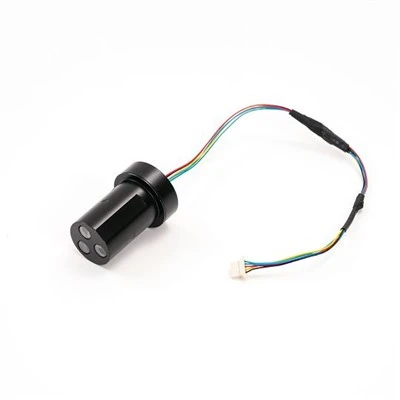
I’ve seen way too many people waste money on cheap modules that don’t deliver, or buy a module that’s way overkill for their job just to get a thick line. We build our line laser modules to solve real problems, and if you’re not sure what you need, just reach out. We can answer your questions, walk through what works for your specific use case, and even adjust a module if you need something a little different. Don’t squint at a thin line that’s hard to see—let’s get you the right line laser module for your work.
Line Laser Modules References
- Optical Engineering Society (SPIE) – Line Laser Module Design and Performance Characteristics, 2021
- Laser Safety Institute – Visibility of Laser Lines in Industrial Environments, 2022
- Journal of Precision Engineering and Manufacturing – Beam Spreading Techniques for Custom Line Lasers, 2020
Changshu Desheng Optics Electronics Co., Ltd.
As one of the most professional line laser modules manufacturers and suppliers in China, our products have good reputation in the market. Please feel free to buy advanced line laser modules for sale here from our factory. Good service and quality products are available.
Address: 8A, Yineng science and technology industrial park, No.183, Yinhe Road, Southeast Development Zone, Changshu, Jiangsu Province, China.
E-mail: desheng1@dershinelaser.com
WebSite: https://www.ds-lasers.com/
