Hey there, let’s cut through the jargon for a sec—if you’ve ever stared at a massive, clawed chunk of steel chewing through rock or dirt and wondered how on earth it doesn’t just get stuck or collapse the whole tunnel, you’re not alone. I’m not a rock scientist, but I’ve been selling tunnel drilling rigs (TDRs, let’s call ’em that) for 12 years, so I’ve crawled into enough operator cabs, fixed enough broken cutters, and explained this thing to enough civil engineers to break it down without boring you to tears. No stuffy manuals here, promise. Tunnel Drilling Rig

First off, let’s get one thing straight: a tunnel drilling rig isn’t that same thing as a boring machine you see in movies digging subway tunnels under a city—wait, okay, it is, but the small, crew-sized ones. The big full-face TBMs (tunnel boring machines) are for subway lines or water mains that stretch miles straight; we supply the medium-to-large TDRs that work for everything from mountain tunnel roads to utility lines that curve a little, and yeah, even some small subway extensions. The key is this thing isn’t just a drill—it’s a whole moving, working factory strapped to steel tracks. Let’s walk through how it actually runs, step by step, like we’re standing right next to one on a worksite.
First step: setting it up. You can’t just fire this thing up on dirt. The crew clears the work face, that’s the spot where it’ll start digging, and builds a little “launch box” out of concrete or steel to hold the first section of the tunnel lining. Then they drive the TDR right into that box, get it leveled and aligned—off by even half an inch over 100 feet and you’re digging a crooked tunnel that’ll mess up all the pipes or tracks later. We supply a laser alignment kit that’s basically a super precise laser pointer aimed at a sensor on the TDR’s front; if it veers off, the rig’s control panel beeps, simple as that.
Now the main event: the digging part. This is where all the action happens. The front end of the TDR is what we call the cutter head. It’s a round, flat plate (or sometimes shaped like a head of a spade for softer rock) covered in metal teeth or rolling cutters—think of a giant cheese grater, but way tougher. For hard mountain rock, those cutters are little round steel wheels with sharp edges, like tiny tank tread wheels, that spin as the whole cutter head turns. For soft dirt or sand, it’s more like big, pointed teeth that dig in and tear the material up. The cutter head spins at like 2 to 10 rotations per minute—slow, but that’s all it needs to bite into stuff. I’ve seen one chew through granite like it’s butter, no joke.
But here’s the part most people don’t get: the TDR isn’t just spinning and digging. It’s pushing forward nonstop. That forward push comes from hydraulic jacks, hundreds of them, tucked around the inner frame of the rig. Once the TDR pushes forward a few feet, the crew slides a steel tunnel liner segment (usually concrete or precast steel) into place behind it, bolted to the previous segment, so the whole thing doesn’t collapse. It’s like building the tunnel walls as you go, which is genius—no dangerous falling rock because you’re putting up the barrier right where you just dug.
Now, what happens to all the dirt and rock? You can’t leave that lying around the tunnel face. The cutter head chews it up into tiny pieces, and there’s a conveyor belt (or sometimes a system of augers, those big spiral screws) right behind the cutter head that carries all that muck back through the rig to the back end. For softer ground, we use slurry systems, too—they mix the dirt with water to make a mushy slurry so it’s easier to move away, no dust, no big rocks bouncing around. We supply those slurry pumps too, which is why I know all the little details.
Wait, let’s not skip the control part. The operator isn’t just sitting there turning a key. Modern TDRs (the ones we sell, anyway) have a touchscreen control panel that shows you exactly how fast the cutter is spinning, how much pressure the jacks are pushing with, how much muck is coming out, even the tunnel’s alignment in real time. If the TDR hits a patch of really hard rock, the pressure sensors on the cutter send a signal to the control panel—more pressure from the jacks, more power to the cutter, no need to guess. Old rigs used to be all manual, but those days are gone; operators aren’t just muscle anymore, they’re techs who know how to read a screen.
Let’s talk about what makes these rigs different from, say, a drill on a construction site. A regular drill just spins a hole straight; a TDR is mobile, can turn corners, works in tight spaces, and does all the cleanup and lining at the same time. No stopping to haul away rock, no stopping to build walls—one continuous process. That’s why contractors love ’em.
Now, I’ve seen this thing mess up sometimes too, not just work like a charm. Last year, we had a crew digging a tunnel through limestone that had a hidden water pocket. The TDR’s sensors didn’t pick it up, so when the cutter hit it, water gushed in. But we supply extra sensors for that—pressure sensors that can detect water or soft spots, and hydraulic stabilizers that can keep the rig from shifting if that happens. The crew shut it down fast, set up a pump, and kept going. That’s part of the job, right? The rig’s a tool, not a magic fix-all.
So, let’s break down the basics you need to remember: 1) Cutter head spins to chew up rock/dirt. 2) Hydraulic jacks push the rig forward. 3) Conveyors/augers move muck away. 4) Liner segments go up as you dig to keep the tunnel from collapsing. 5) Controls keep it aligned and safe. That’s it, super simplified.
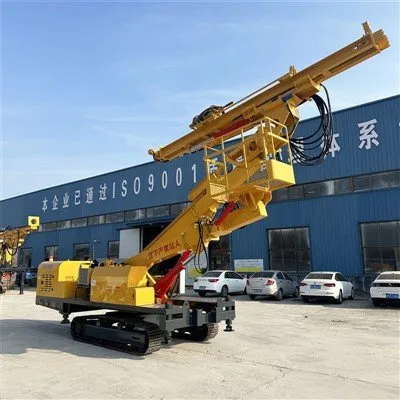
Now, if you’re a contractor looking to take on a tunnel project, or a municipal guy needing to upgrade water lines, or anyone who’s tired of dealing with boring (pun totally intended) old equipment that gets stuck or slows you down, let’s chat. We supply TDRs for every job—small utility lines to big mountain roads, with all the sensors, liners, and backup systems you need to keep the project on time and on budget. No hidden fees, no complicated contracts, just a rig that works when you need it to. If you’ve got questions about specs, pricing, or even how to set one up for your specific site, hit us up. We’re here to help.
Solar Pile Driver References:
Tunnel Drilling Rig Operation and Maintenance Manual. International Construction Equipment Association, 2022.
Geotechnical Considerations for Tunnel Boring. Journal of Underground Construction, Vol. 18, No. 3, 2021, pp. 45-62.
Hydraulic Systems for Heavy Construction Machinery. Industrial Hydraulics Magazine, Vol. 47, No. 6, 2023, pp. 18-25.
Jining Tongzhao Machinery Co., Ltd.
Jining Tongzhao Machinery Co., Ltd. is one of the most professional tunnel drilling rig manufacturers and suppliers in China, also supports customized service with low price. Please feel free to wholesale advanced tunnel drilling rig for sale here from our factory. Contact us for pricelist.
Address: 160 meters north of Hongxiang Road, east of Jiamei Road, Jining Economic Development Zone
E-mail: 13668674521@163.com
WebSite: https://www.cntzmachine.com/
